
How long do your Christmas trees last? Or more accurately, how long should they last?
Most people can count on their tree surviving a couple weeks indoors, but with the right species and proper care, some of the most common Christmas tree varieties can last up to six weeks—clear into the New Year and sometimes beyond.
Note
This is all without “tree food” or any other additive that claims to help your tree last longer. If you’ve read my tips on how to extend the life of a Christmas tree, you know that fresh water—and plenty of it—is the most important thing it needs.
Several species of evergreens have excellent needle retention after they’re cut and brought inside. You’ll see in the chart down below, however, that one variety trumps all others in terms of freshness and longevity.
The longest lasting Christmas tree is, by far, a Leyland cypress.
This feathery, soft-needled conifer is popular in the southeastern United States and the most common Christmas tree grown in Georgia. It can also be found on Christmas tree farms in Southern California, where it’s well adapted to the warmer climate.
Under optimal conditions, a freshly cut Leyland cypress can last up to two months with no needle drop!
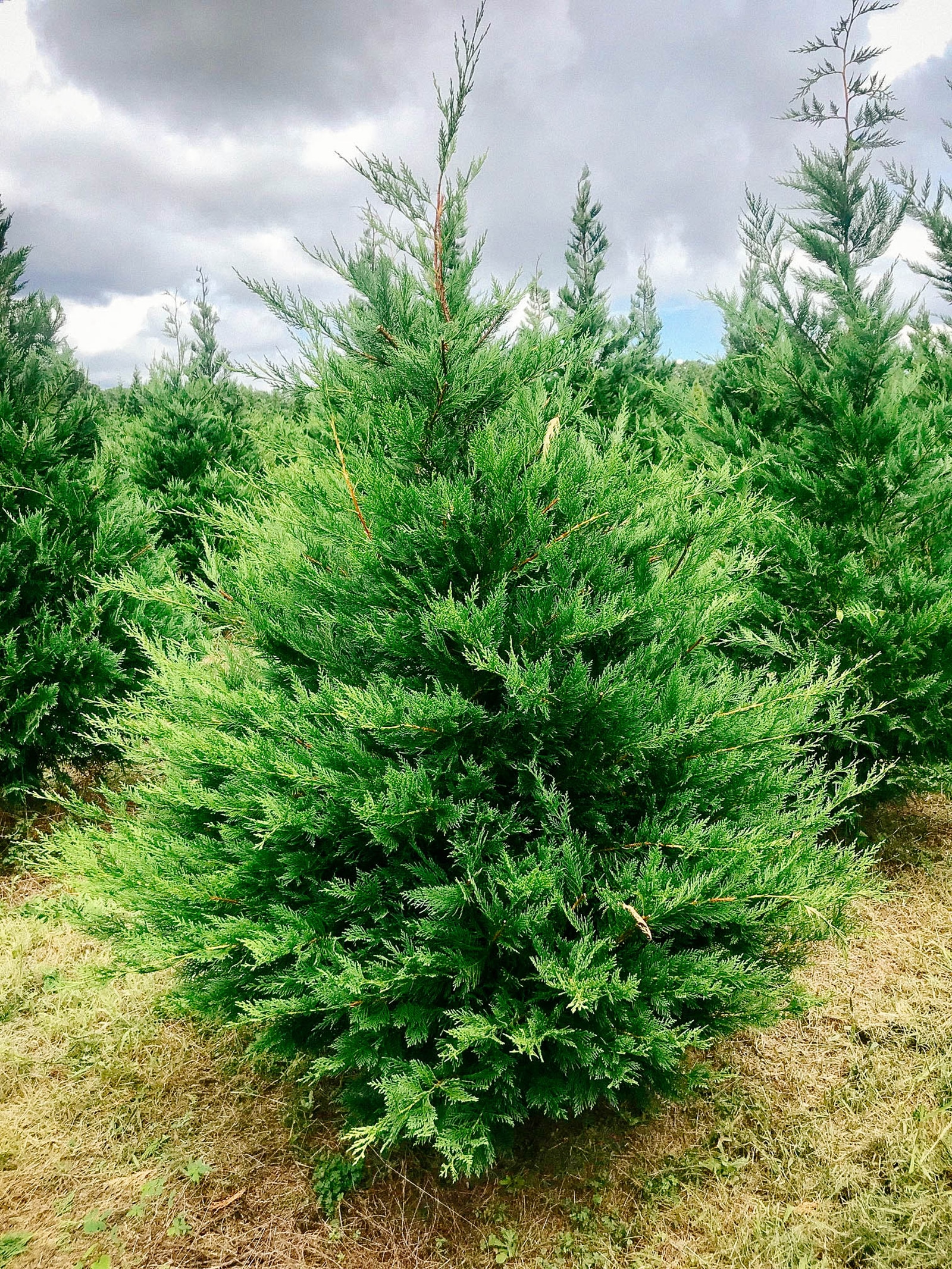
Leyland cypress trees are also the least irritating species as far as holiday evergreens go, since they have very little aroma and don’t produce sap or pollen, making them an ideal choice for people with so-called “Christmas tree syndrome” or Christmas tree allergies.
Outside of warmer regions, however, you’re not likely to find a Leyland cypress at your local tree lot or retailer. In the rest of the country, fir trees reign supreme for being the longest lasting Christmas trees.
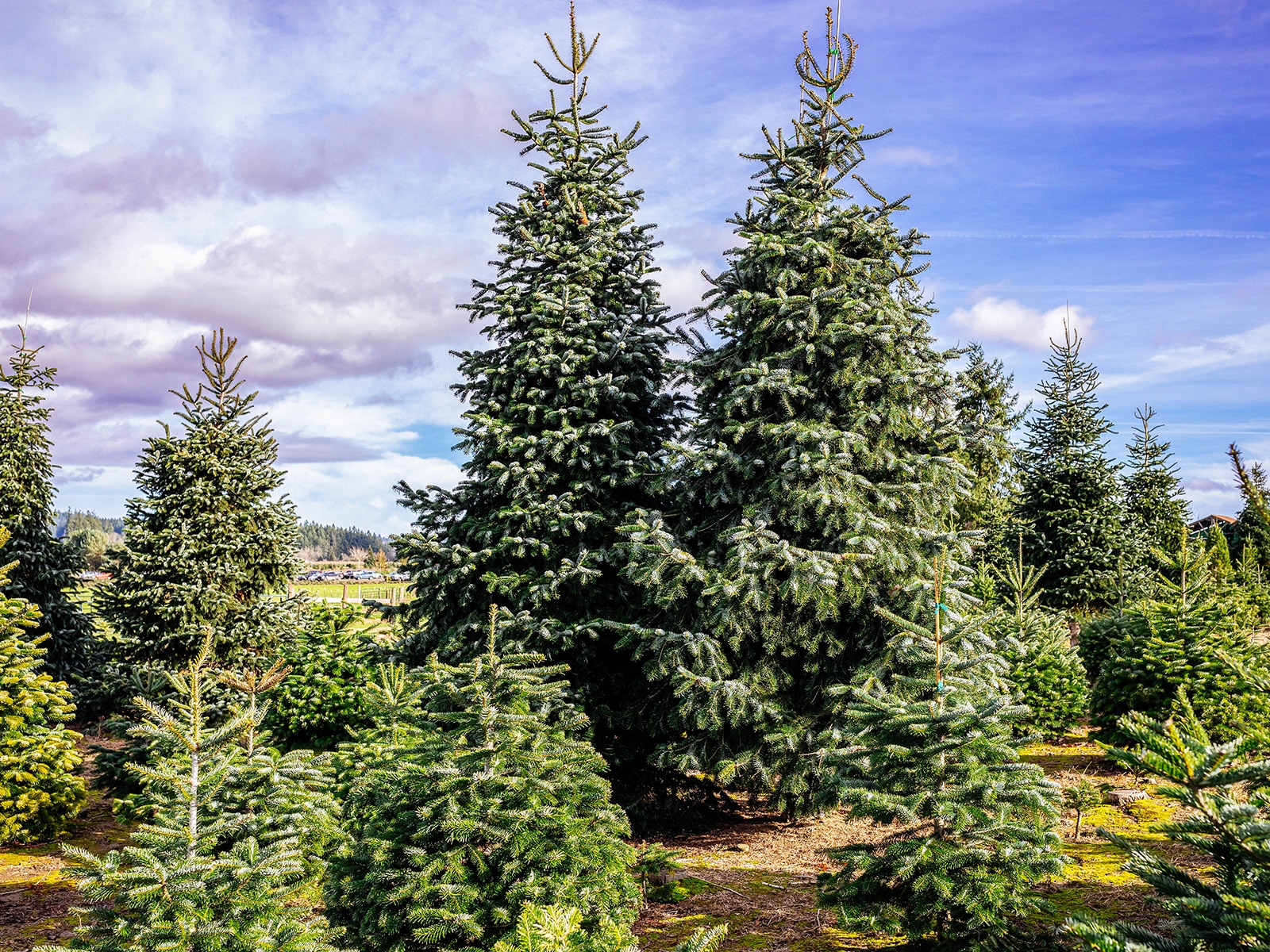
Fraser firs, in particular, can easily last six weeks in your home under optimal conditions.
They’re one of the most popular commercial varieties, accounting for about a third of all Christmas trees sold in the US each year, and it’s not just because they stay green for a long time. Fraser fir trees have that classic, conical Christmas tree shape and evergreen scent that brings all the holiday feels.
While Fraser firs are predominantly grown in North Carolina, they can be found on tree farms as far west as Oregon (though they aren’t native there).
If you’re looking for an equally long-lasting alternative to the Fraser fir, consider a Nordmann fir or Korean fir, two other Christmas tree species that can retain their needles for six weeks with proper care. Maybe you prefer the wider, more layered shape of a Nordmann or the more compact profile of a Korean fir tree; both of these varieties are becomingly increasingly common around the country.
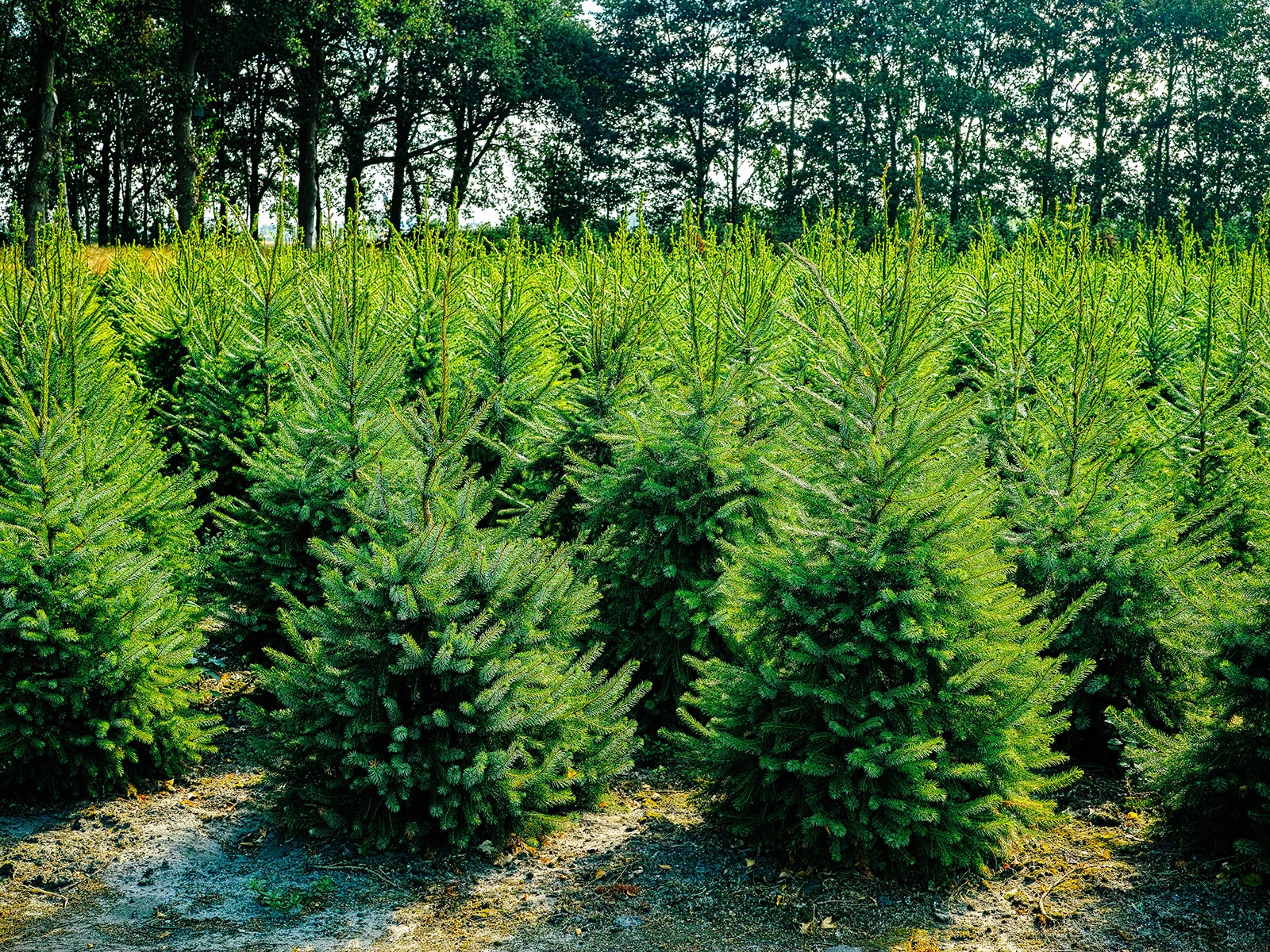
Here’s a quick overview of Christmas trees to consider for their longevity. All of these species will stay green for at least four weeks with minimal needle loss.
The longest lasting Christmas trees
| Leyland cypress | 6 to 8 weeks |
| Fraser fir | 6 weeks |
| Nordmann fir | 6 weeks |
| Korean fir | 6 weeks |
| Noble fir | 4 to 6 weeks |
| Balsam fir | 4 to 6 weeks |
| White fir (concolor fir) | 4 to 6 weeks |
| Douglas fir | 4 to 6 weeks |
| Silver fir | 4 to 6 weeks |
| Subalpine fir | 4 to 6 weeks |
| Canaan fir | 4 to 5 weeks |
| Grand fir | 4 weeks |
| Lodgepole pine | 4 weeks |
| Monterey pine | 4 weeks |
| Western white pine | 4 weeks |
| Eastern white pine | 4 weeks |
| Arizona cypress | 4 weeks |
So now you know what will last—but what should you avoid if you’re hoping your tree makes it into January? The species below, while beautiful, generally have shorter lifespans once they’re cut and will dry out quickly, no matter how much water you give them.
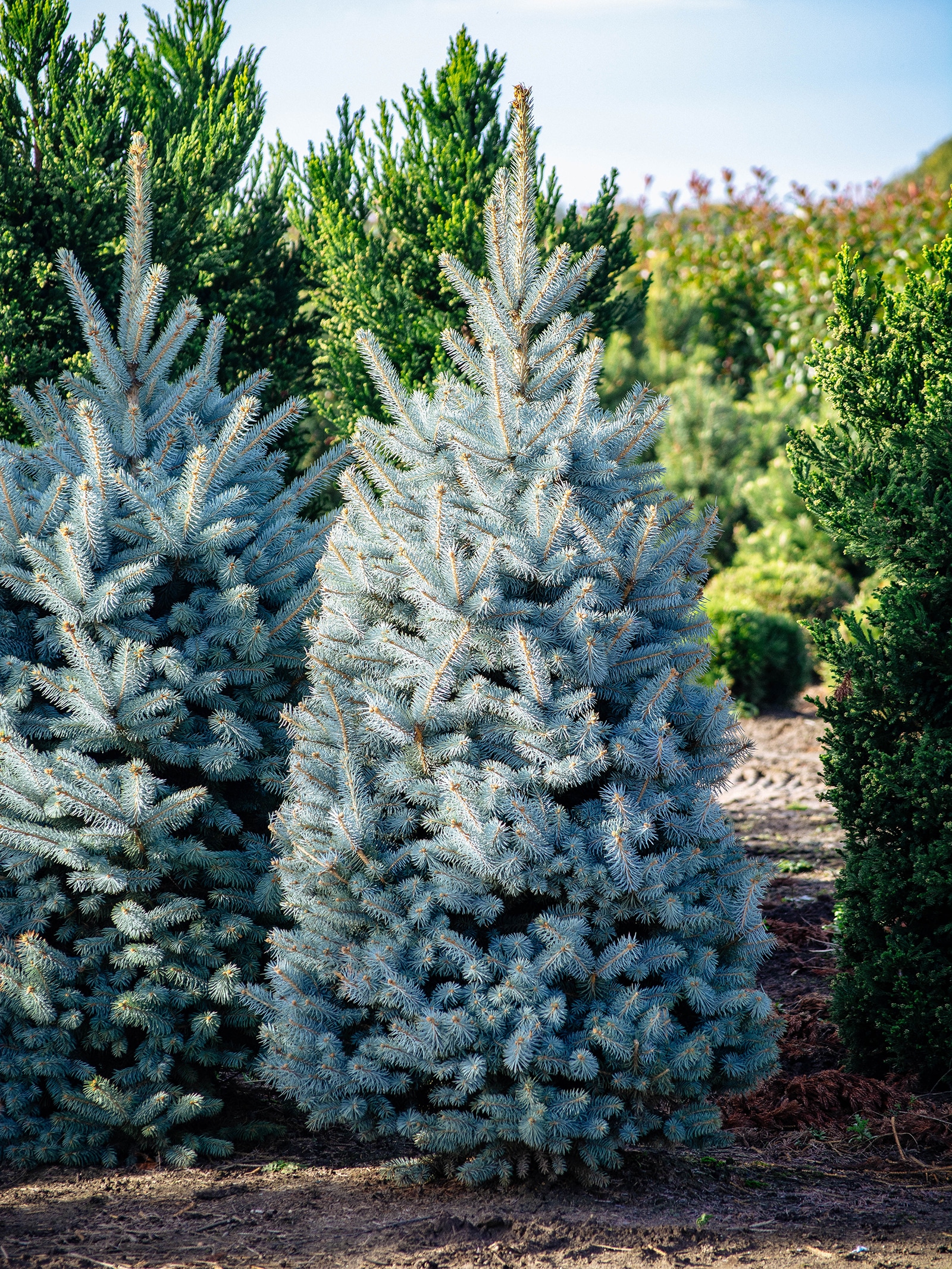
The shortest lasting Christmas trees
| Virginia pine | 3 weeks |
| Scotch pine | 3 weeks |
| Norway spruce | 3 weeks |
| Blue spruce | 2 to 3 weeks |
| Engelmann spruce | 2 to 3 weeks |
| White pine | 2 to 3 weeks |
| Eastern red cedar | 2 to 3 weeks |
| Deodar cedar | 2 to 3 weeks |
| Incense cedar | 2 to 3 weeks |
| Hemlock | 2 to 3 weeks |
I should also point out that how and where you get your tree is just as important as choosing the right species. There is a difference between a tree you chop down yourself and a tree you buy from a tree lot. The freshly cut tree will almost always last a lot longer.
Many other variables factor into a Christmas tree’s longevity, including its initial health and even how cold the weather was when the tree was harvested (which is all the more reason to cut down your own tree in a forest or on a farm, if you’re able).
Disclosure: If you shop from my article or make a purchase through one of my links, I may receive commissions on some of the products I recommend.
So use this guide as a starting point for selecting your Christmas tree, and remember to check the water level every day to ensure it makes it through the holidays! I use and highly recommend this deluxe tree stand, which not only holds vast amounts of water, it makes it ridiculously easy to set up a tree in seconds—even by yourself.