


In a previous post that I wrote about winterkill temperatures, I shared data from my own garden on what types of cold-hardy vegetable crops can withstand frigid weather without any frost protection.
Related: There are plenty of cold-hardy herbs that go without protection too
But as I explained in another post about growing food all winter without a greenhouse, a simple cover can help your plants survive much colder temperatures than they otherwise could if left unprotected.
Here in my zone 5 microclimate, I like to use a midweight frost cover over my low tunnels. Though the fabric provides an environment that’s only slightly warmer than the ambient temperature outside, it also increases the relative humidity inside the tunnels and protects plants from dry winter winds.
Note
Low tunnels are also known as mini hoops, quick hoops, or caterpillar tunnels. They’re constructed from PVC or metal pipes bent in an arc over garden beds, then covered with fabric row covers (also known as frost blankets) or clear plastic sheeting to insulate plants.
My sea kale, for example, usually dies back when the temperature drops to 25°F if it’s growing out in the open. But that same sea kale can survive in a low tunnel that registers 15°F inside when the outside temperature is 10°F. That’s pretty impressive!

So you might be thinking… Well, if a piece of fabric can offer that much protection, plastic or glass must be better, right?
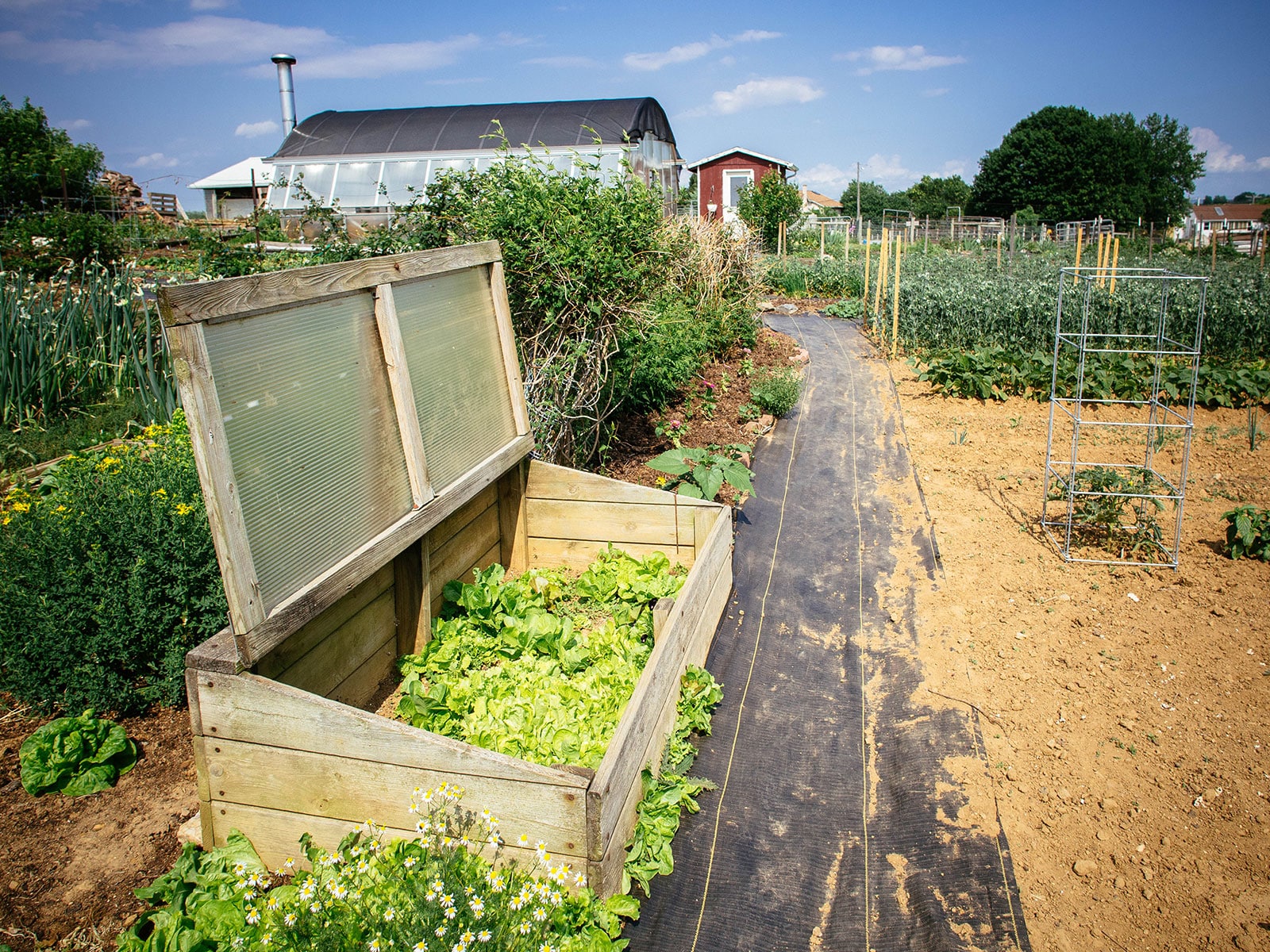
Which is why many people opt to use cold frames to keep their gardens going over winter. These compact structures are much less expensive to build or buy than greenhouses and can be used in small spaces.
Cold frames vary in design and materials, but are essentially a raised bed with a hinged lid made from glass or polycarbonate panels. They can be cheap and simple boxes built from scrap lumber and repurposed old windows, or permanent architectural elements in a garden made from brick or concrete.

But are they necessarily better than low tunnels?
Cold frames have their place (especially in areas that get more than a foot of snow) and if they work in your climate, I’m not here to talk you out of it. But if you’re considering alternatives that help you garden in winter more effectively, here’s why low tunnels might be a better fit.
1. Low tunnels offer more growing space than cold frames.
Growing food in winter means you have to grow a lot more salad greens than you normally would in summer, simply because a winter garden can’t compete with summer’s warmth and abundant sunshine.
Cold frames, however, typically don’t come any larger than 3×5 feet. If you’re hoping to harvest fresh greens out of your cold frame all winter, it’s going to take much more than a 3×5 bed to feed you (much less a family).

In contrast, you can build low tunnels over all of your existing garden beds, if you wanted to, and keep them productive all winter long.
2. Low tunnels offer more growing space—and at a lower cost.
A pre-built cold frame will limit you in size and set you back at least $100. Even if you went the DIY route, consider the time it takes you to source free (or cheap) lumber and recycled windows and the effort required to build the frame.
A low tunnel, on the other hand, can be 4 feet wide by however many feet long you need it to be. And it can constructed in as little as 30 minutes after a single trip to the hardware store to buy PVC conduit, clear plastic sheeting, and plastic clamps.

3. NO DIY skills necessary.
Speaking of DIY, low tunnel construction requires no saws, no screws, no drills, no levels. Can you dig a shallow hole with a trowel? Congratulations, you can erect a low tunnel.
While a cold frame requires building some type of structural support for the hinged lid, a low tunnel can be assembled right on the ground (no raised bed necessary).

4. You can put a low tunnel anywhere.
Because it’s a box, a cold frame needs to sit on level ground. Sure, you can build one on a slope, but that takes a bit more woodworking knowledge.
Thankfully, you don’t need to design a low tunnel to accommodate uneven ground. It can work in a yard on a hill and because it’s lightweight, modular, and portable, you’re not restricted on where you can build one or move it later on.
Disclosure: If you shop from my article or make a purchase through one of my links, I may receive commissions on some of the products I recommend.
5. Low tunnels let maximum light in.
By design, low tunnels are transparent on all sides, allowing any available sunlight to stream in. This is important because once day length drops below 10 hours in winter (a low-light period known as Persephone days), maximizing sunshine becomes a priority!

In a traditional cold frame, the opaque walls can significantly shade parts of your bed during the day, especially with the lower angle of the sun in winter. This can result in poor growth or none at all.

You can find cold frames with clear panels (like this one), but they’re typically priced like mini greenhouses while being less stable.
6. Taller plants are not a problem.
You don’t often see cold frames with tall sides, since the walls will shade the plants inside. They’re generally around 12 inches tall at the front and 18 inches tall at the back to provide enough of an angle for the sun to come through.
While this lower height is fine for spinach, lettuce, and other low-growing leafy greens, your sprouting broccoli and cabbages will outgrow a cold frame fast. If the leaves end up touching the glass or plastic on a cold frame one freezing night, they too will freeze.
But a low tunnel? You can build one 3 to 4 feet tall, depending on the length of the conduit you use, allowing for taller crops inside.
7. Low tunnels fit well in small spaces.
Once winter’s over, what do you do with your cold frame? Well, you could remove and store the lid somewhere, but that can get pretty cumbersome if you have several lids. Or you could leave the lid propped open and hope the wind doesn’t blow it away.
A low tunnel, on the other hand, is as portable as it gets. You can simply remove the fabric or plastic cover, roll it up, and store it on a shelf for next year. If you want to store the hoops as well, you can pull them out of the ground and lay them flat against the shed, where they’re out of the way.
8. Low tunnels are useful year-round, even when it’s hot.
You don’t actually need to put your low tunnel hoops in storage—I never do, and mine are actually screwed to the sides of my garden beds. That’s because in early spring, you can switch to floating row covers to protect brassica seedlings from cabbageworms, and then in the middle of summer, clip a piece of shade cloth over the hoops to prevent blossom drop on your tomatoes or keep leafy greens from bolting too early.
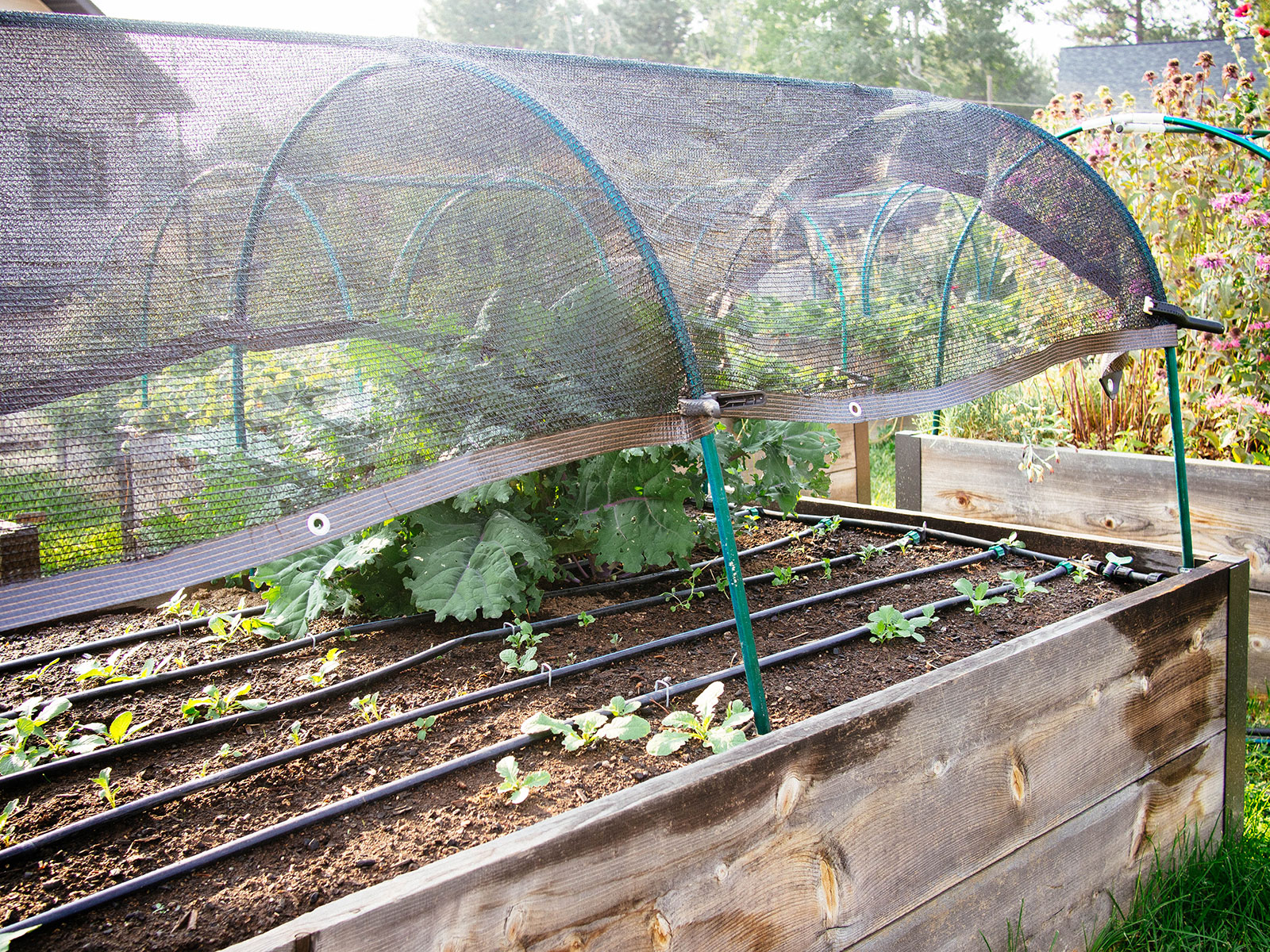
In the shoulder seasons, I often keep frost blankets clipped to the top of my low tunnels (out of the way) so I can pull them down as needed if a cold snap is expected.
You can even attach netting to the ridge bar for peas to climb. Having a versatile frame in place like this gives you more options for protecting or trellising your plants.
9. Speaking of hot… a cold frame can get dangerously so.
Any time the weather gets above 40°F on a sunny day, you will need to vent your cold frame or risk damage to your crops. This means more work and more attention paid to the forecast, particularly if you have to remember to close it back up in the evening. Automatic vent openers (similar to those used on greenhouse windows) can help with this task, but at additional cost if you DIY.
In contrast, fabric row covers on a low tunnel offer breathable protection, eliminating the need to vent. Air and water can pass freely through fabric, so you also get the benefit of winter rains and melting snow.

(I should add that if you use plastic over your low tunnel, you also need to watch the weather and vent as needed. Most of the time, one or two layers of medium-weight frost cloth should be enough protection for your cold-hardy crops all winter.)
So when are cold frames a better option than low tunnels?
Even though low tunnels work better for me in terms of functionality and cost, I do have to give a leg up to cold frames in one regard. If you live in an area that gets heavy snow, a cold frame will be more structurally sound. Low tunnels may collapse under a wet, heavy load, so you have to stay on top of them more frequently.
Here in Central Oregon, we typically only get a few inches of snow at a time before it melts. And even when we have the occasional dump of a foot or more, it’s easy enough to get out there with a broom and brush the snow off before it accumulates.
You can reduce the risk of tunnel collapse by spacing your hoops no more than 4 to 5 feet apart, especially at the ends, which are more prone to “caving in.”

Keep in mind that electrical metallic tubing (EMT, otherwise known as steel conduit) will hold up better than PVC and doesn’t add that much more to the cost. So if you build your own low tunnel, spring for metal. You can use 1/2-inch EMT, which comes precut in 10-foot lengths, and easily bend it into a 4-foot-wide arch with this hoop bender.
Metal low tunnel
Supply list
Have you used low tunnels and cold frames for winter growing? Which do you prefer?






I haven’t tried low tunnels yet although my cold frames made from scrap wood are pretty high, about knee high. The deer and other animals go right through floating row cover fabric (though maybe stronger fabric like old sheets might work) so I use cheap window plastic with a floating row cover over the plants inside. Nothing really survives weeks of 0 F weather. We’re pretty cloudy here. Not much sun. Although I was able to harvest mache in early December. It actually looks pretty good now but I know it is frozen. So I am waiting for some nice warm 20 F weather before looking inside. The ground is pretty frozen here. I am in zone 5 also but we get weeks of 0 F weather.