


I used to struggle with growing carrots—not because I couldn’t get them to grow straight or big enough, but because I couldn’t get them to germinate consistently. Because of how tiny carrot seeds are, they can be tricky to sow and sprout (especially if you have sticky fingers or often forget to water).
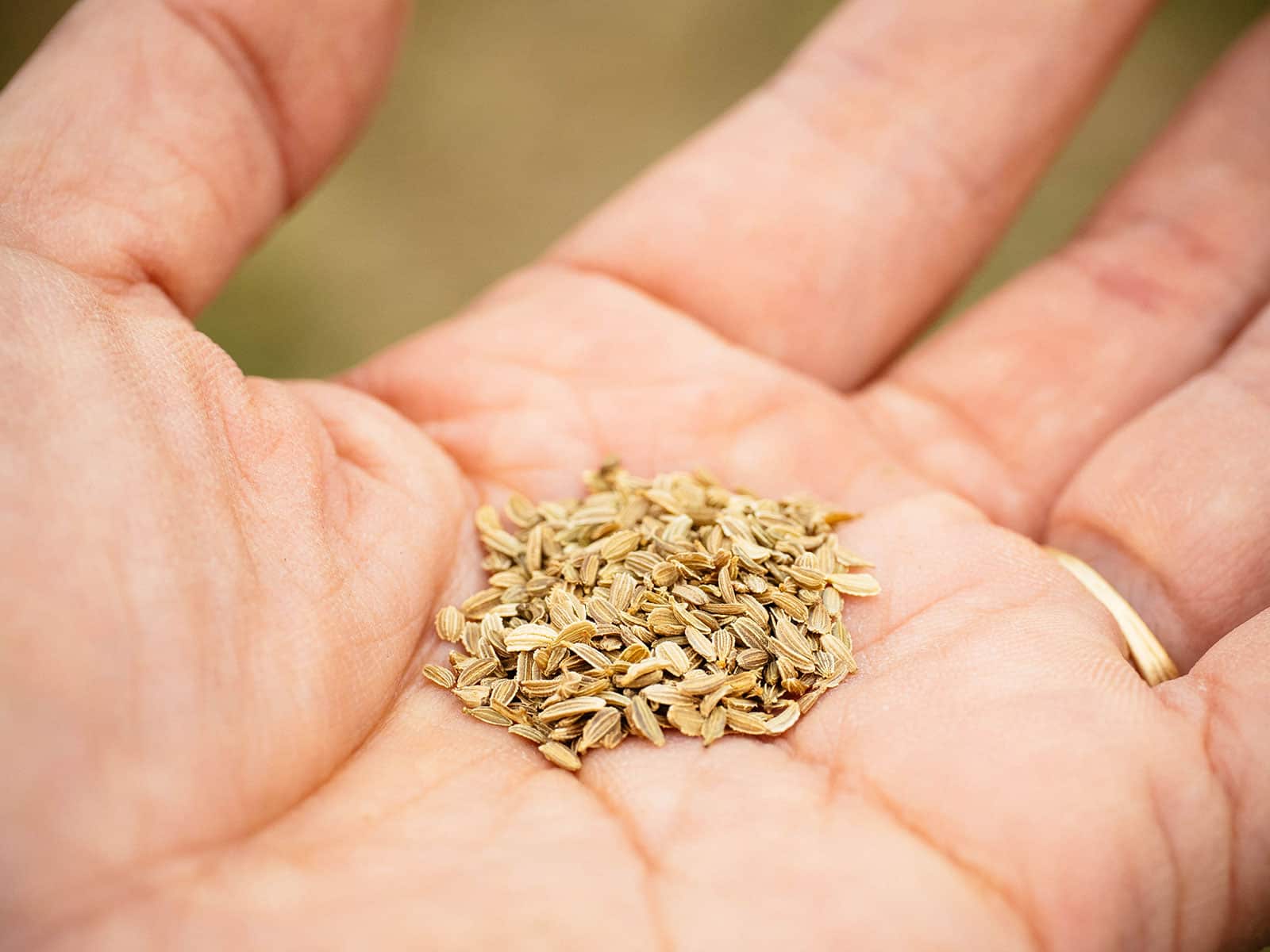
Carrot seeds are also notorious for having poor germination when it’s too hot or too dry.
But I’ve got a planting technique that not only results in nearly 100 percent germination every time, it doubles my yield and gives me an early harvest of sweet baby carrots.
It starts with knowing when to plant, and a key fact about carrots is: They taste (and grow) best when allowed to mature in mild weather.
So, don’t plant too late (or too early).
Sow your carrot seeds in early spring once your soil temperature is at least 40°F, but ideally between 65°F and 85°F.
Waiting for the soil to warm up a bit speeds up germination time, from about a week at 75°F versus three weeks if you sow in cooler soil. And the longer it takes for carrot seeds to sprout, the higher the chances of your soil drying out.
An early spring planting means your carrots will be ready to harvest before you need the garden space for tomatoes. For even better flavor, sow another crop in late summer so your carrots mature in fall and go through a couple of hard freezes, which naturally sweeten them.
Disclosure: If you shop from my article or make a purchase through one of my links, I may receive commissions on some of the products I recommend.
Start with loose, well-draining soil.
Carrot roots reach deep into the ground, so make sure you prepare your planting bed thoroughly. Remove any rocks, large sticks, or other obstructions.
There’s no need to dig over your bed though—just make sure the soil is reasonably smooth and add a couple inches of fine compost on top.
Sow carrot seeds directly in the garden.
If you start carrot seeds indoors and transplant seedlings later, you risk root disturbance and transplant shock, which is why I recommend sowing carrot seeds directly in the soil.
Thoroughly water the planting area to moisten the soil, then use a hori hori knife, dibber, or Cobrahead tool to make shallow rows, roughly 1/4-inch deep and 8 inches apart.
Recommended
Cobrahead
More than a weeding tool, the CobraHead is a versatile cultivator that can loosen hard soil, dig narrow trenches, edge, and plant. It’s also made in the USA!
Quick tip
If you have drip irrigation in your bed, plant your seeds along the drip line to help them stay moist.
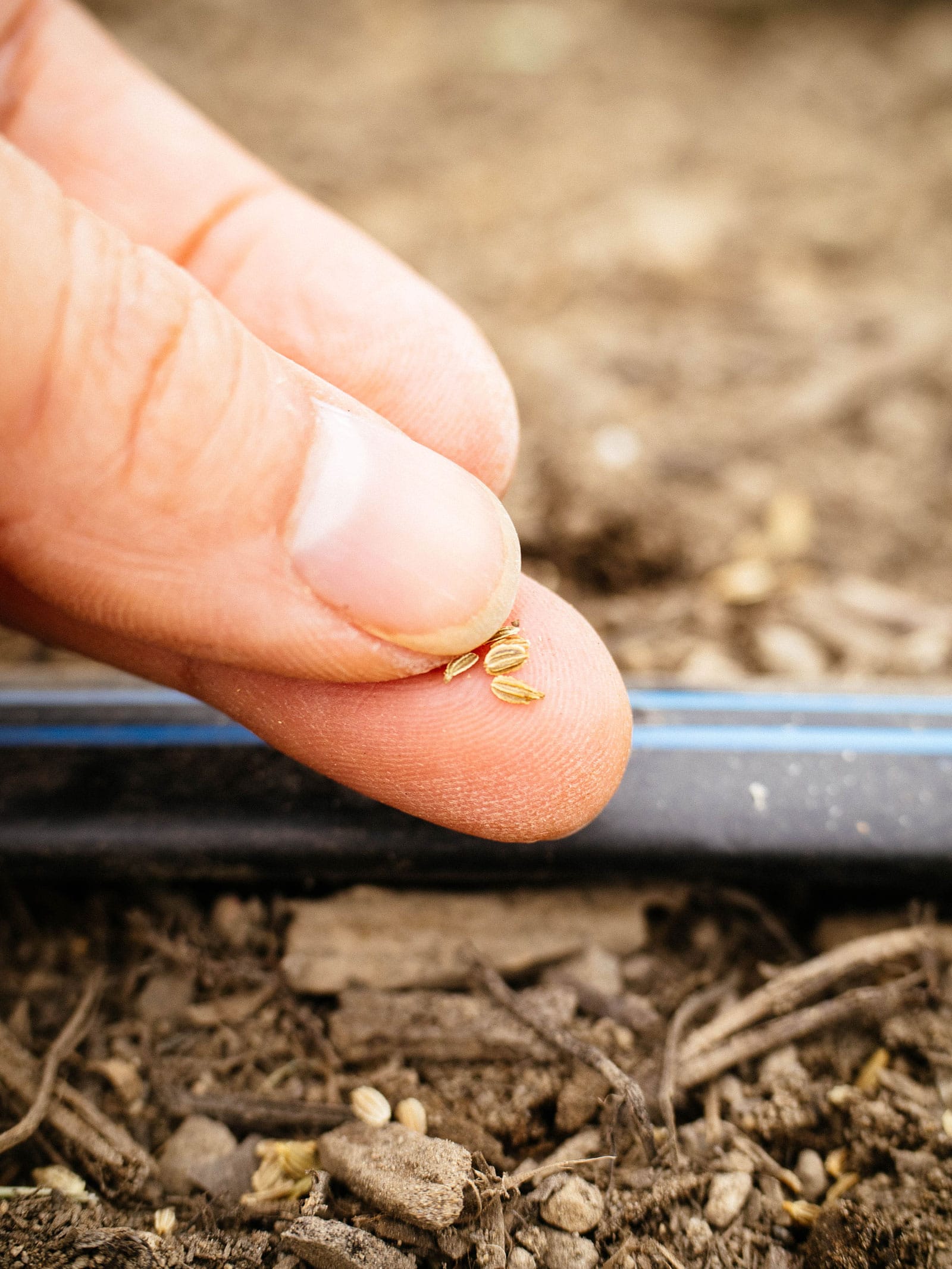
Take a pinch of carrot seeds between your thumb and middle finger, and gently roll your fingers back and forth, sprinkling seeds down each row. Try not to dump a bunch of seeds in a pile (although I know that’s sometimes hard to do!).
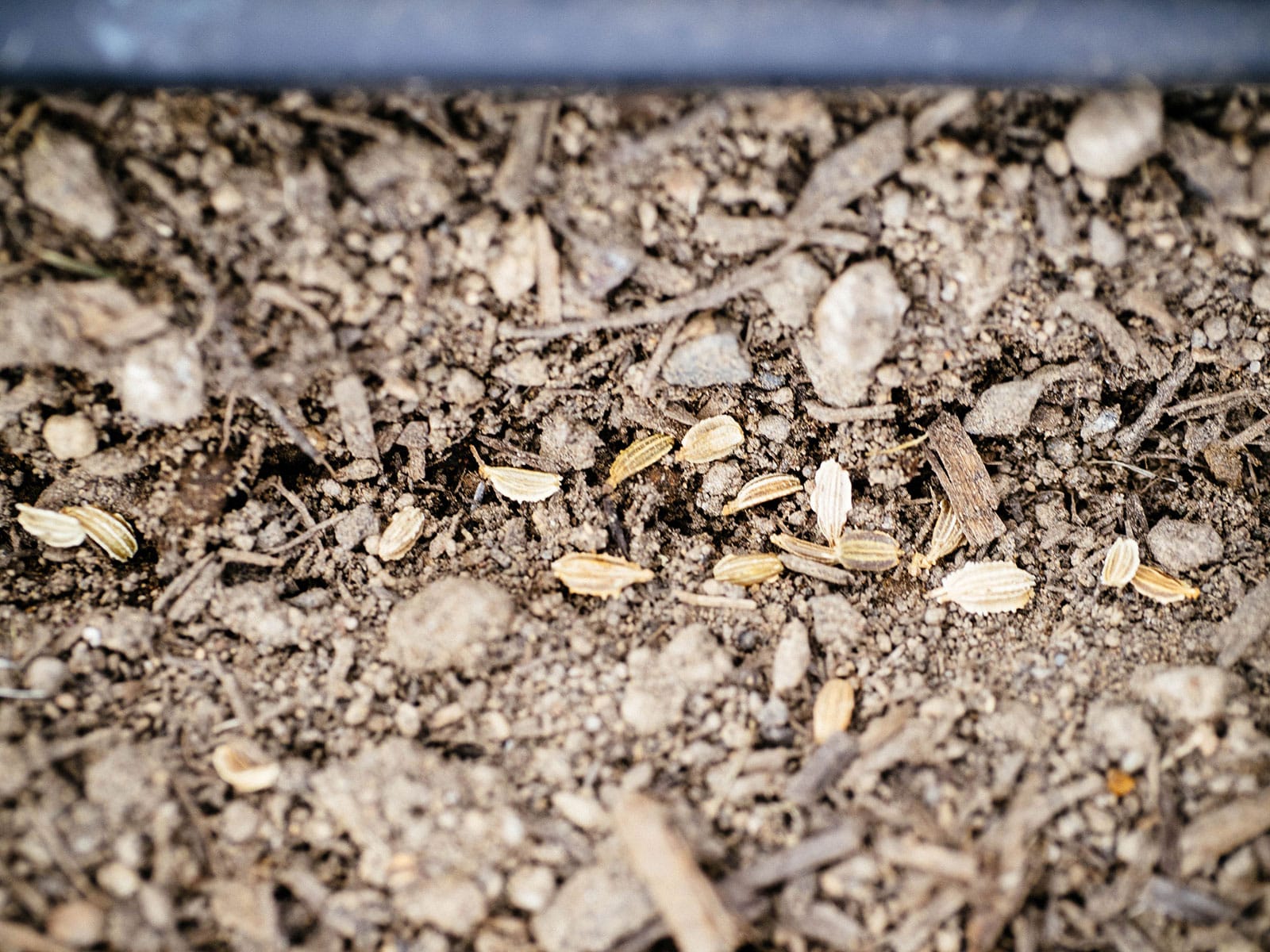
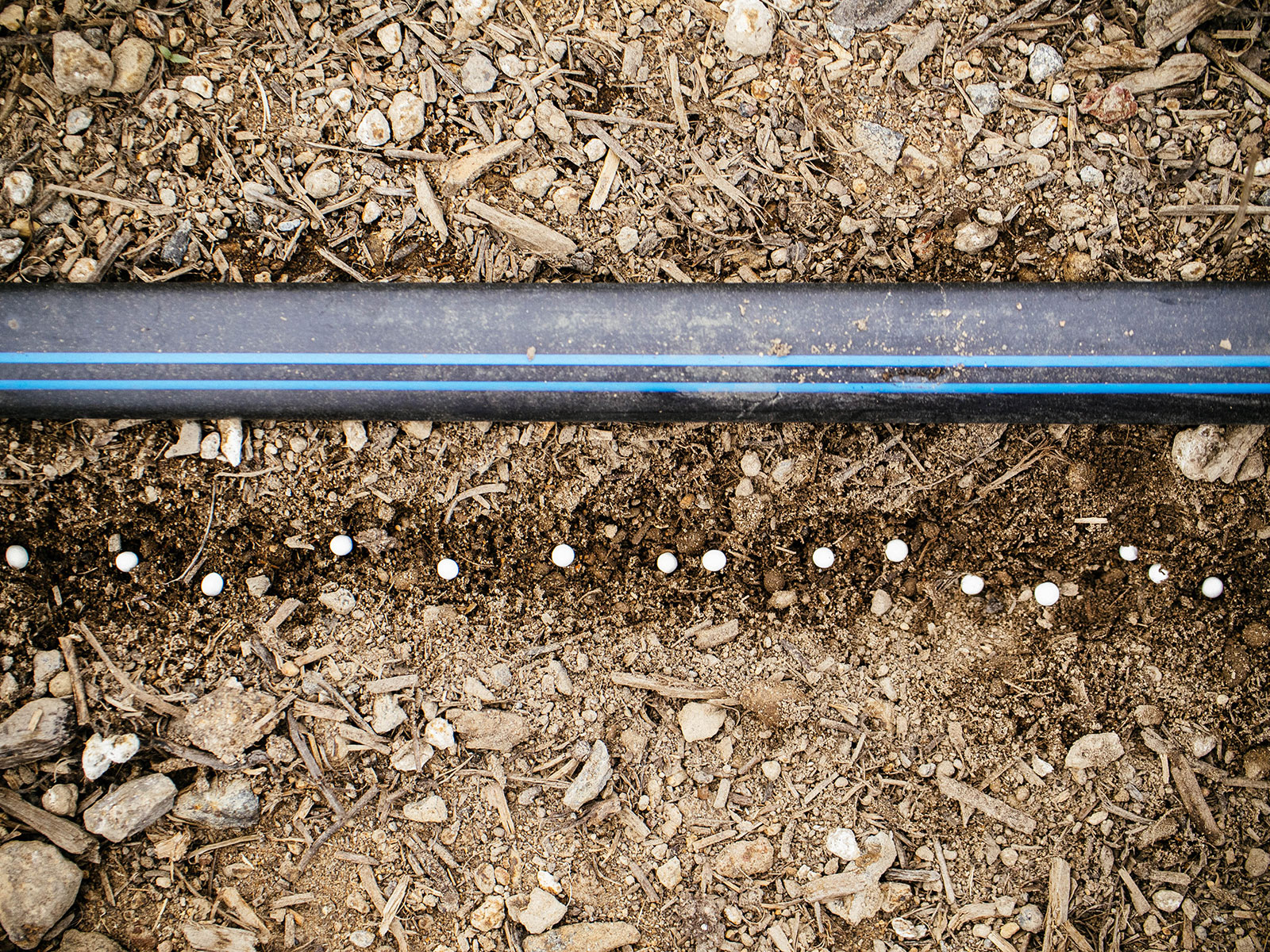
If you tend to have a heavy hand, you can try pelleted carrot seeds. Pelleted seeds are the same tiny seeds coated in a dissolvable coating (usually clay) to make them larger, rounder, and easier to handle. This makes them less tedious to sow and prevents seed waste, though you do get far fewer pelleted seeds in a packet than you would non-pelleted seeds.
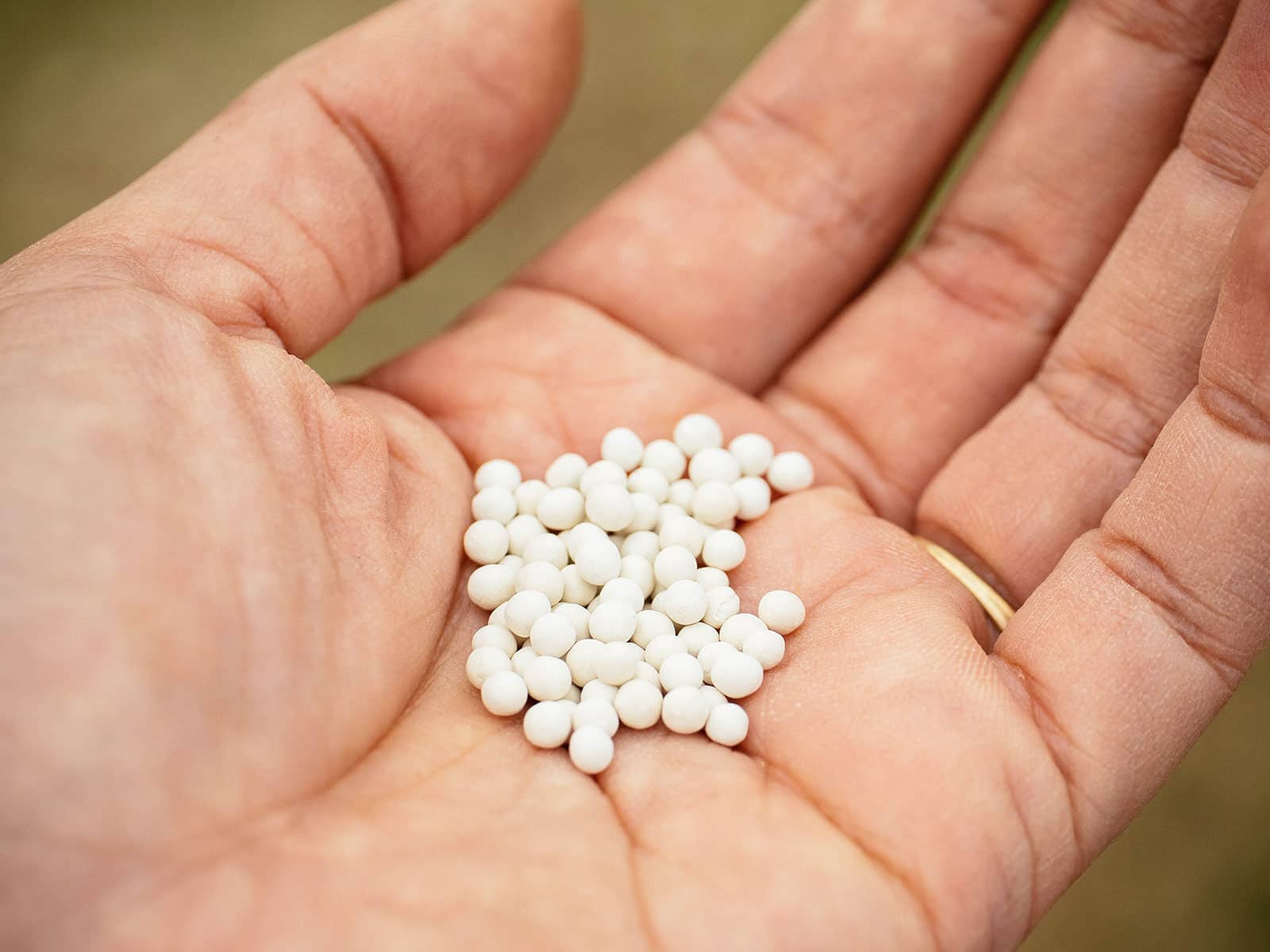
If you use pelleted carrot seeds, drop them into your rows about 1 inch apart.
Where to buy
Pelleted carrot seeds
Cover the seeds lightly and keep them consistently moist.
Fill the rows back in with 1/4 inch of that fluffy compost you spread on top earlier and water with an even, gentle spray so you don’t wash away the seeds.
It’s important to keep carrot seeds constantly moist while you wait for germination. This usually means daily hand watering (since drip irrigation isn’t doing enough at this point) to prevent the soil from drying out and forming a crust, which affects seedling emergence.
If you live in an arid climate or you’re sowing seeds in summer, one trick I’ve learned is to place a piece of floating row cover over the planting area, right on top of the soil and secured along the edges with clips, landscape staples, or heavy objects, to help retain moisture.
Simply water on top of the cover as needed. Once most of your carrot seeds germinate, you can remove the cover.
Or if you have some straw around, a very light and loose, 1/4-inch layer also works to hold in moisture, and carrot seedlings will grow up and through it.
Thin your seedlings early.
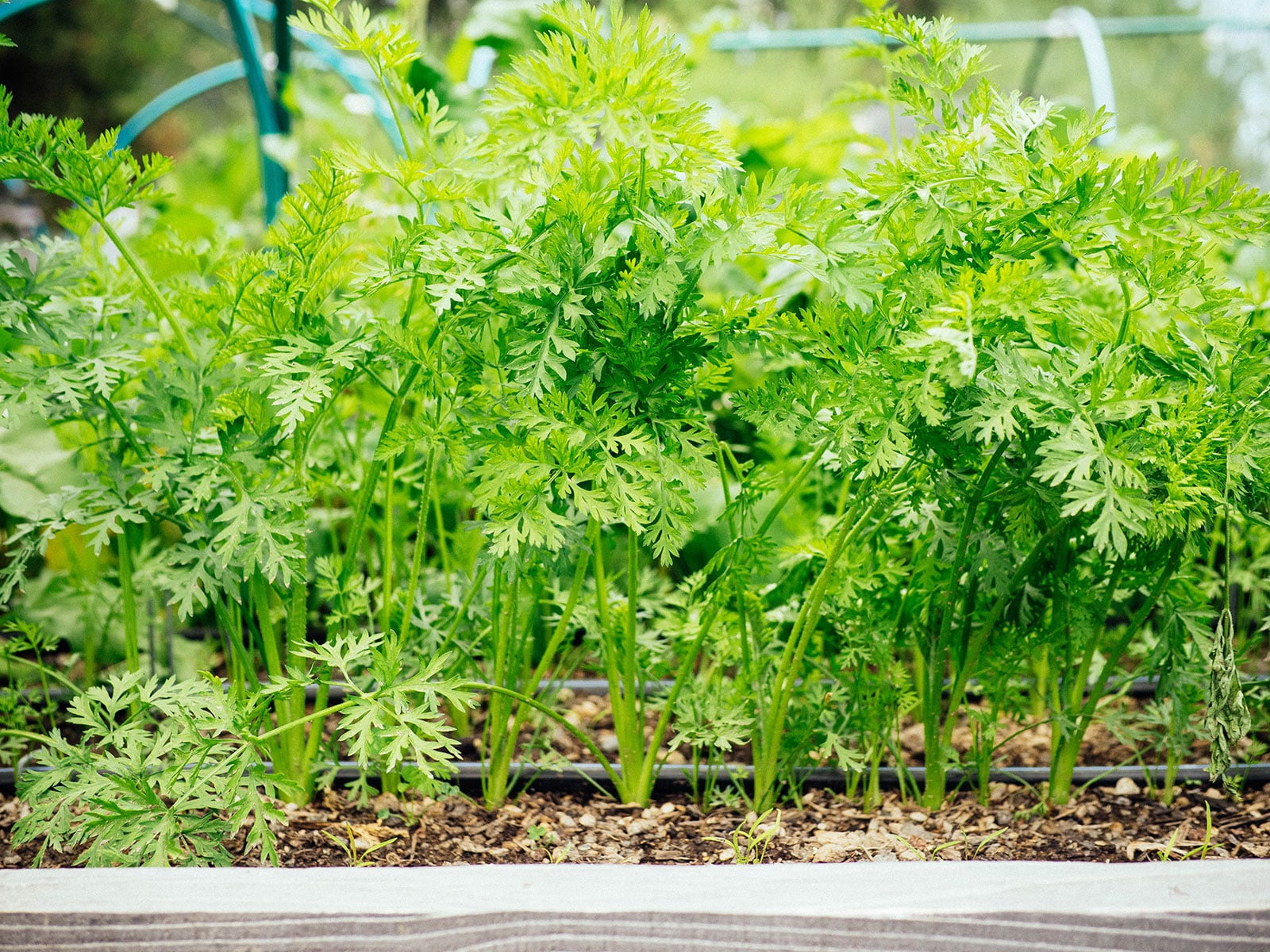
Once your carrot seeds sprout, you can thin out the seedlings so they’re spaced 2 to 3 inches apart. This ensures your carrots have enough room to grow out and down, but maintains a denser planting so you don’t have to add mulch.
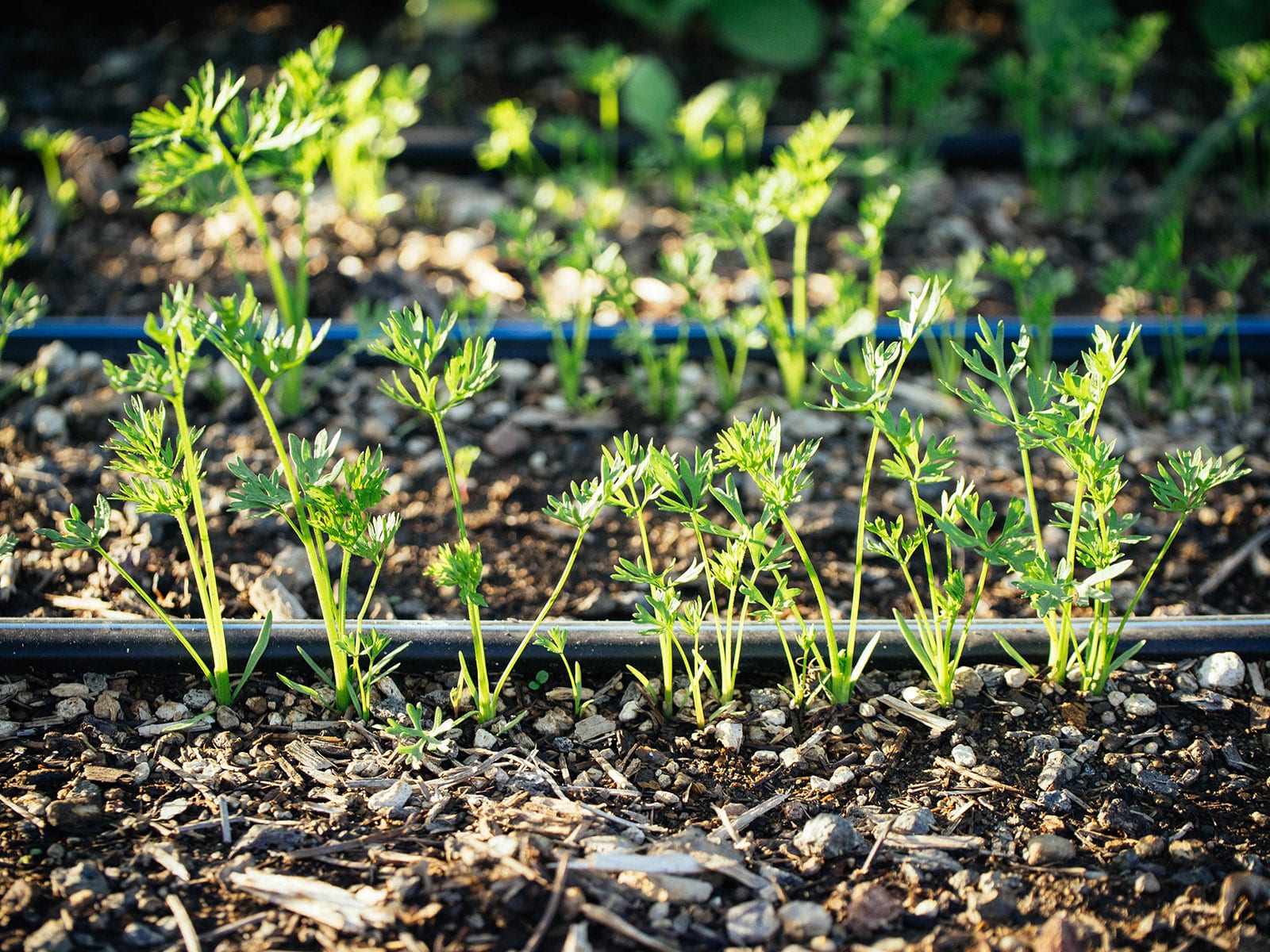
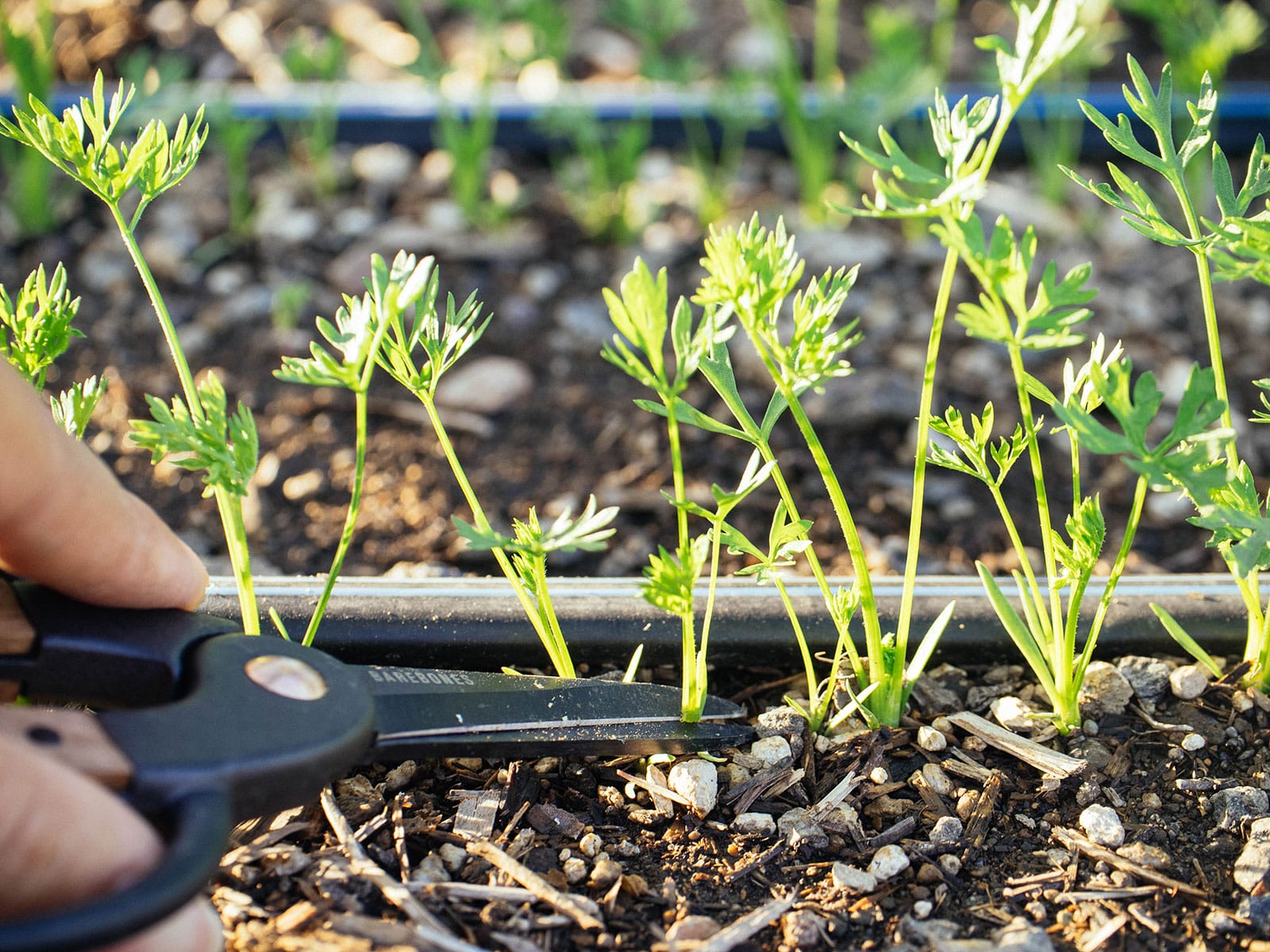
But here’s my secret: What I do now is an initial thinning to about every 1 inch, using a pair of spring-action micro-tip pruners (which makes the task go a lot quicker).
Recommended
Micro-tip pruners
The sharp blades, precise tips, and spring-action handle make easy work of light pruning and harvesting in the garden. Use this for herbs and plants with soft stems.
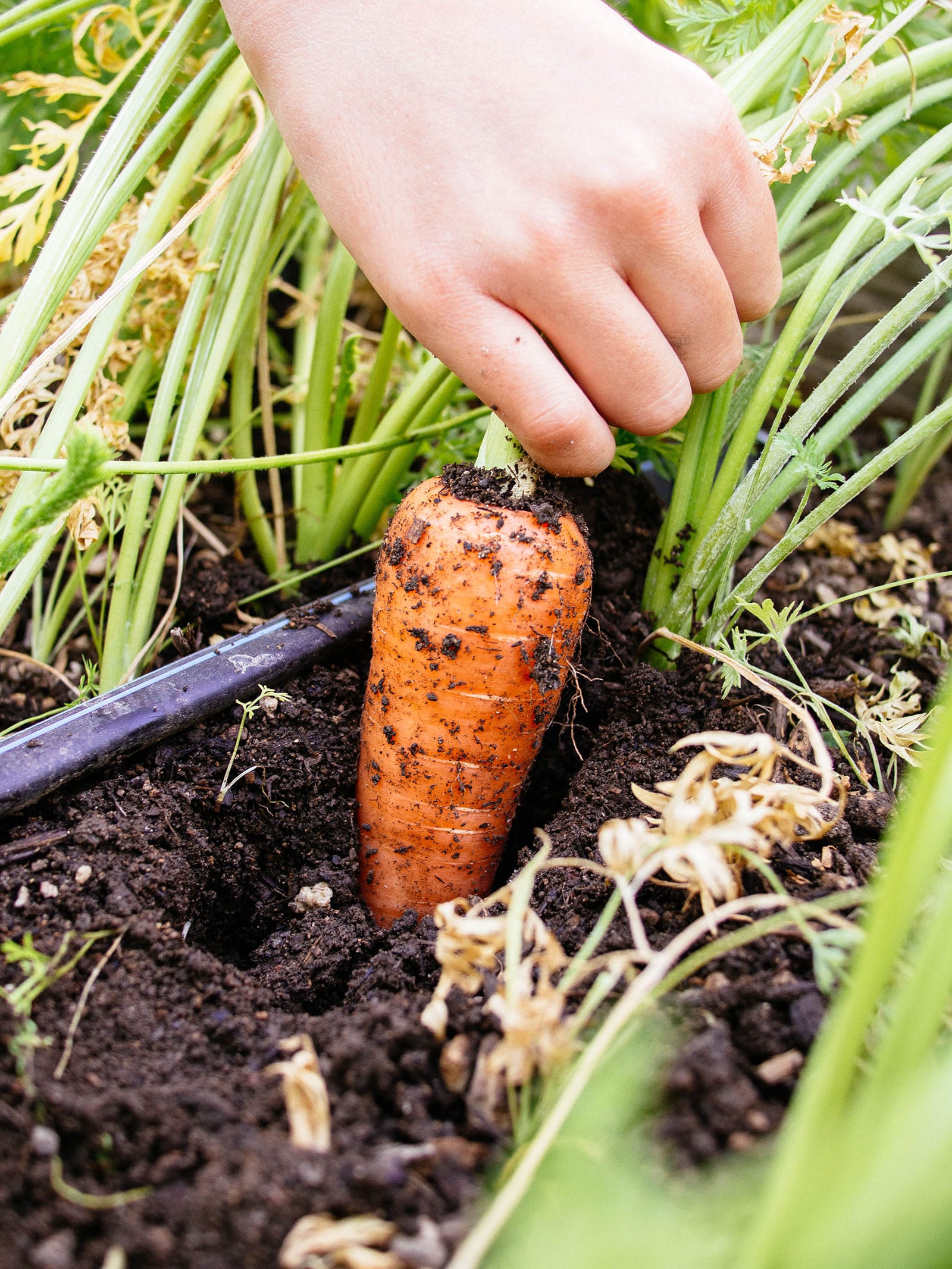
As the carrots continue developing in spring (or fall), I pick thumb-sized baby carrots to thin the rows to their final 2- to 3-inch spacing.
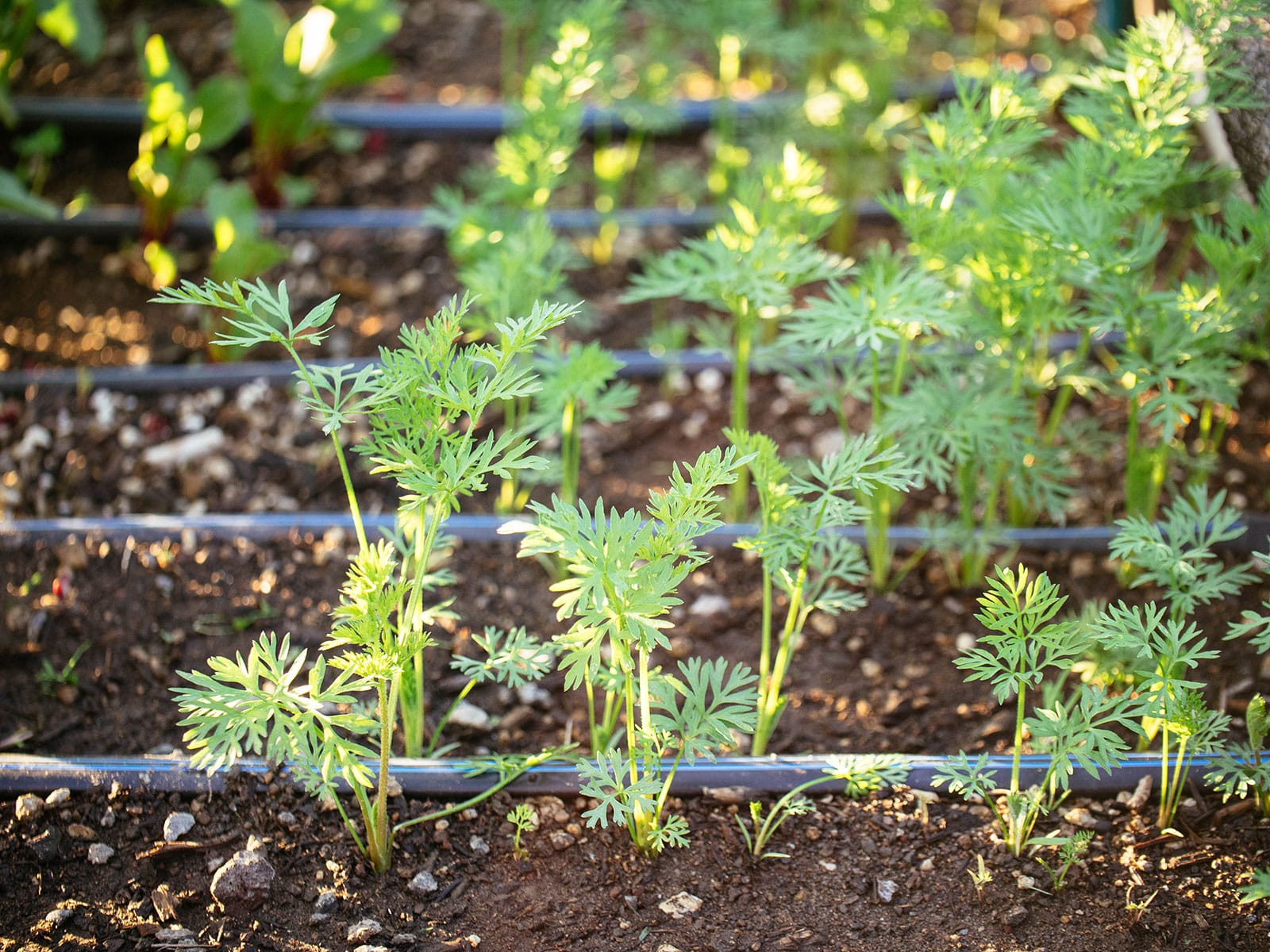
The rest are left to mature, so essentially I get two harvests: an early crop of small, snackable carrots and a later crop of full-sized carrots.
Sow new rounds of seeds for consistent harvests.
Carrots are an excellent candidate for succession sowing, the process of planting seeds at regular intervals so you have continuous harvests all season long.
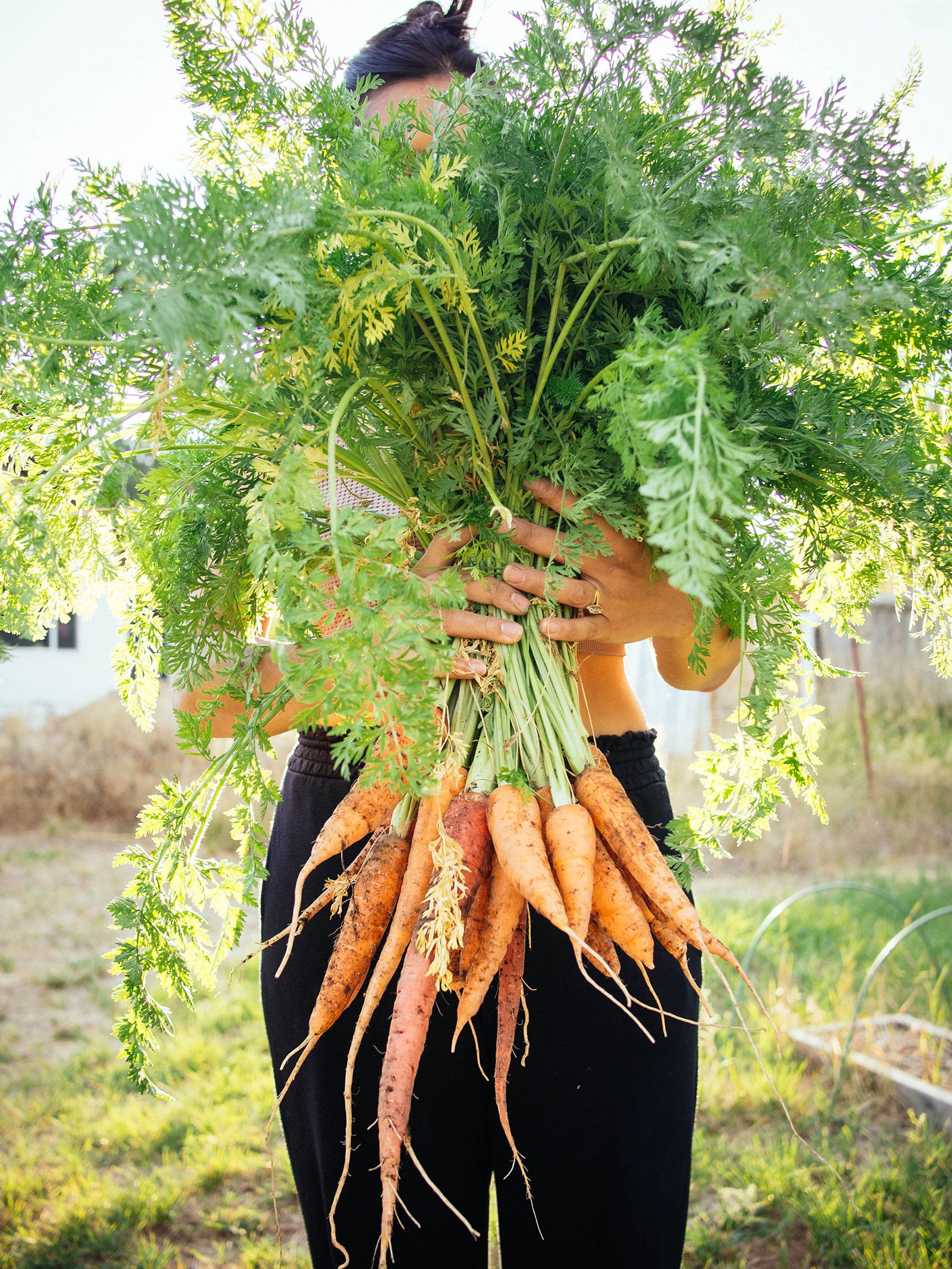
You can sow a new round of carrot seeds every three to four weeks from early spring through mid-summer so that when the first crop is harvested, another one is on the way.
Quick tip
If you live in an area with very hot summers, take a break from sowing because seeds will struggle to germinate in the heat and high temperatures can make carrots bitter.
Stop succession sowing carrots about 10 to 12 weeks before your first expected frost date. This final sowing ensures your carrots have enough time to reach maturity in fall when the shorter days slow down growth. In most regions, the last call for sowing is around mid-July but milder climates can go a bit later and harvest in winter.
Find out when your first frost is with my interactive lookup tool.




Thanks, great ideas! Can you do the same with beets so you can thin by pulling up little beets then let the rest grow to full size?
you have helped me to get much better harvests and even better seed germination. i’m no longer trying to plant everything at once, but can plant in stages, which gives me more food at various times. Thankyou so much!