


When we think of ground covers, we often think of fast-spreading, low-mounding plants grown in garden paths or between ornamental shrubs and trees to reduce weeds, conserve moisture, and beautify and unite a landscape.
But ground covers can also be grown in vegetable gardens and edible landscapes to serve the same function as organic mulches like wood chips, chopped leaves, or straw.
In an edible garden where I’m trying to use every square inch of growing space for food or beneficial plants, I sometimes feel like a layer of “regular” mulch is a missed opportunity to do more.
That’s where living mulches come in—specifically, edible living mulches, which are one of my favorite lazy gardening strategies for a low-effort, high-return food garden. When you interplant a ground cover you can eat among your vegetables, berry bushes, and fruit trees, you get all the benefits of mulching while enjoying double the harvest.
But choosing the right edible ground cover is key: You don’t want it to become the star, just the supporting character for your main crop.
What makes a good edible ground cover?
An ideal edible ground cover should be:
- Suitable for your climate and growing season
- Low-growing to form a dense mat that suppresses weeds
- Low-maintenance enough to not require additional watering or pruning
- Non-invasive and easy to remove when it’s no longer needed
The best choices for vegetable gardens, orchards, and other edible landscapes are long-season annuals or non-aggressive perennials that stay under 12 inches tall and have other benefits like attracting pollinators or repelling pests. You plant them once in the beginning of the season, and reap the benefits from first sprout through the final harvest.
Typically, you should match annual ground covers with annual crops, and perennial ground covers with perennial crops. But if a perennial ground cover won’t survive winter in your area, you can still grow it as an annual.
Read more: The best perennial vegetables for a low-effort garden
Here are my favorite edible ground covers that are both beautiful and delicious:
Alyssum

Did you know alyssum, an ornamental bedding plant that’s usually grown in annual flower beds and containers, is actually a member of the Brassicaceae family?
Also called sweet alyssum, Lobularia maritima is related to other brassicas like broccoli and kale. The plant is entirely edible, with leaves that have a slightly peppery flavor (similar to mustard greens) and flowers that taste a bit like radish.
I especially like the tiny flower clusters in a salad. There’s no need to deadhead spent blooms because alyssum is self-cleaning—that is, it drops old flowers and continues blooming all summer long without deadheading.
Alyssum grows between 6 to 8 inches tall with a spread of 12 to 18 inches. It’s the perfect “spiller” plant, so you can plant sweet alyssum on the edges of your raised bed or rock wall and let it cascade downward.
It’s also a good cold-hardy companion plant for other brassicas, acting as a trap crop to keep pests off your more desirable plants.
Violets

Despite their delicate appearance, violets (Viola spp.) are tough, low-maintenance plants that love to spread—perhaps a little too freely, depending on who you talk to. They propagate via underground rhizomes and seeds, so they aren’t necessarily a problem for annual vegetable gardens (though violets can migrate to other areas if allowed to grow unchecked in a yard).
Depending on the species, violets range from 4 to 8 inches tall and can densely fill in empty spaces around taller plants. They’re a pollinator magnet, providing early-season nectar for bees and butterflies. Many types of violets are cold-hardy, so you can plant them out and let them do their job of protecting the soil as your main crops grow in.
The leaves and flowers of violets are all edible, with violet flowers being one of the best-tasting edible flowers you can grow. They have a sweet, floral flavor that’s delicious in drinks and salads. The young leaves are mild and fresh-tasting, similar to lettuce or snap peas.
Roman chamomile

First, don’t confuse Roman chamomile (Chamaemelum nobile, a creeping perennial) with German chamomile (Matricaria recutita, an upright annual).
Roman chamomile grows only 6 to 12 inches tall and a particular dwarf cultivar, ‘Treneague’, is popular as a lawn substitute because it maxes out at 4 inches tall (though ‘Treneague’ doesn’t flower, so you lose the pollinator benefit). German chamomile, on the other hand, is less ideal as a ground cover because it grows 2 to 3 feet tall, easily overshadowing other crops in a vegetable bed.
If need to fill in bare soil between other edible perennials, Roman chamomile is a great choice for a ground cover, as it’s attractive, durable enough to walk on, and dotted with daisy-like flowers all summer.
The leaves and flowers are edible, with an earthy, slightly bitter taste, but if you’re looking to harvest chamomile for tea, know that Roman chamomile doesn’t flower as much as the German type and is typically more bitter.
Nasturtiums
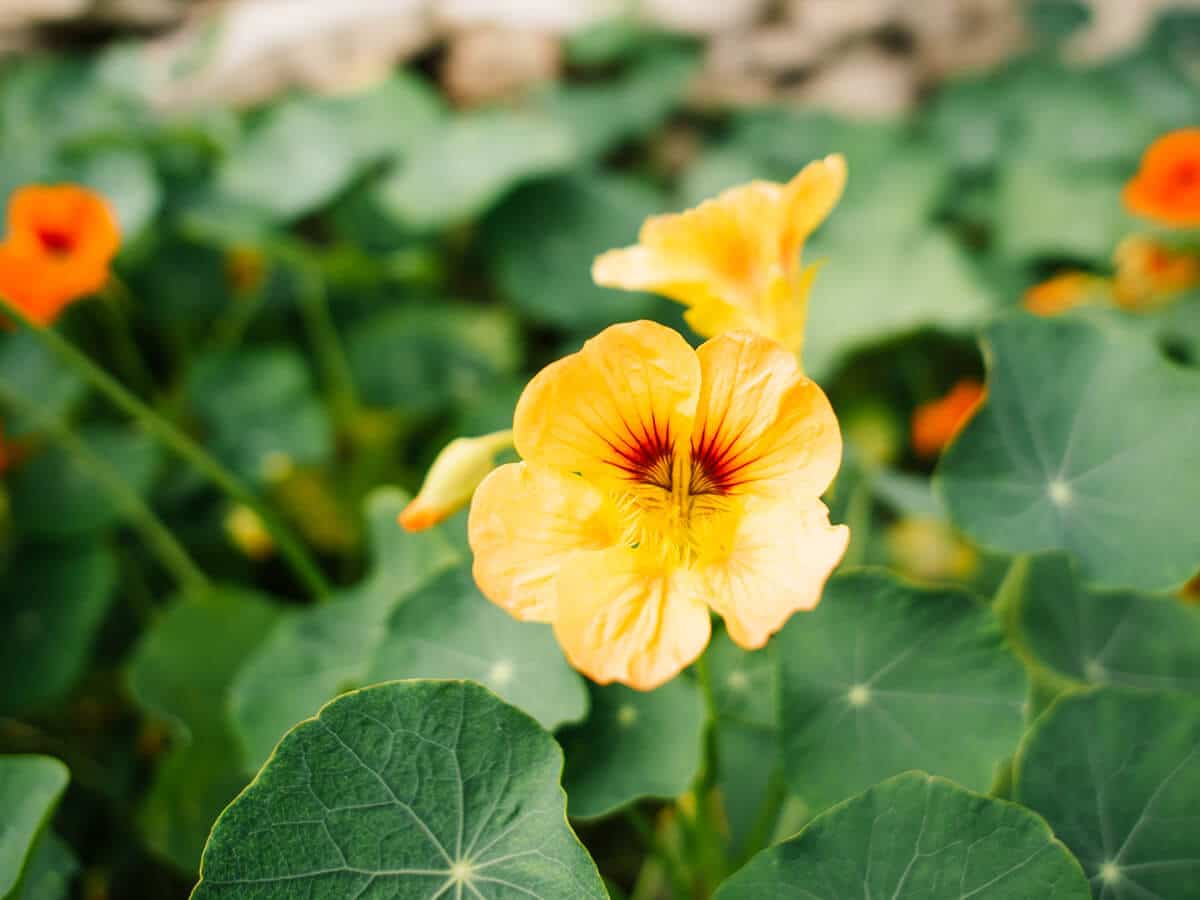
Most people think of nasturtiums (Tropaeolum majus) as flowers, but they’re one of the tastiest edible flowers in the garden and should be considered vegetables in their own right. (See my recipes for nasturtium pesto and poor man’s capers.)
These self-seeding annuals grow quickly on long, thin vines that drape over garden beds beautifully.
Their lush green leaves are reminiscent of lily pads, and when they bloom, the flowers attract pollinators all day long, making them a good option as a ground cover for berries, cucumbers, and other crops that need more than just wind for pollination.
Nasturtiums are also highly attractive to aphids, which may sound like a nuisance to some, but this is what makes them such a great trap crop to keep aphids off your more valuable crops.
Plant them around susceptible crops and as soon as you see an infestation on your nasturtiums, pull and trash the affected plants so the aphids don’t jump to your other crops.
Oregano, marjoram, and thyme
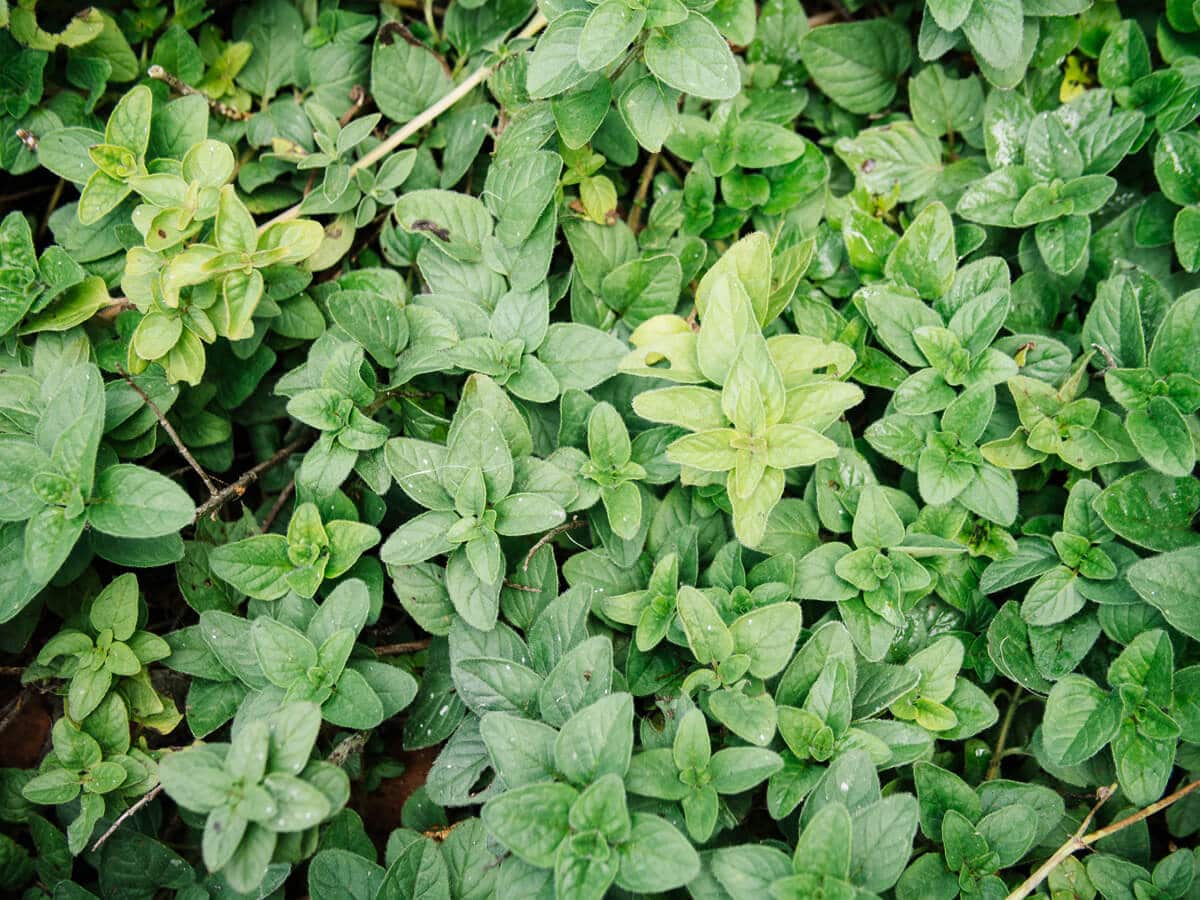
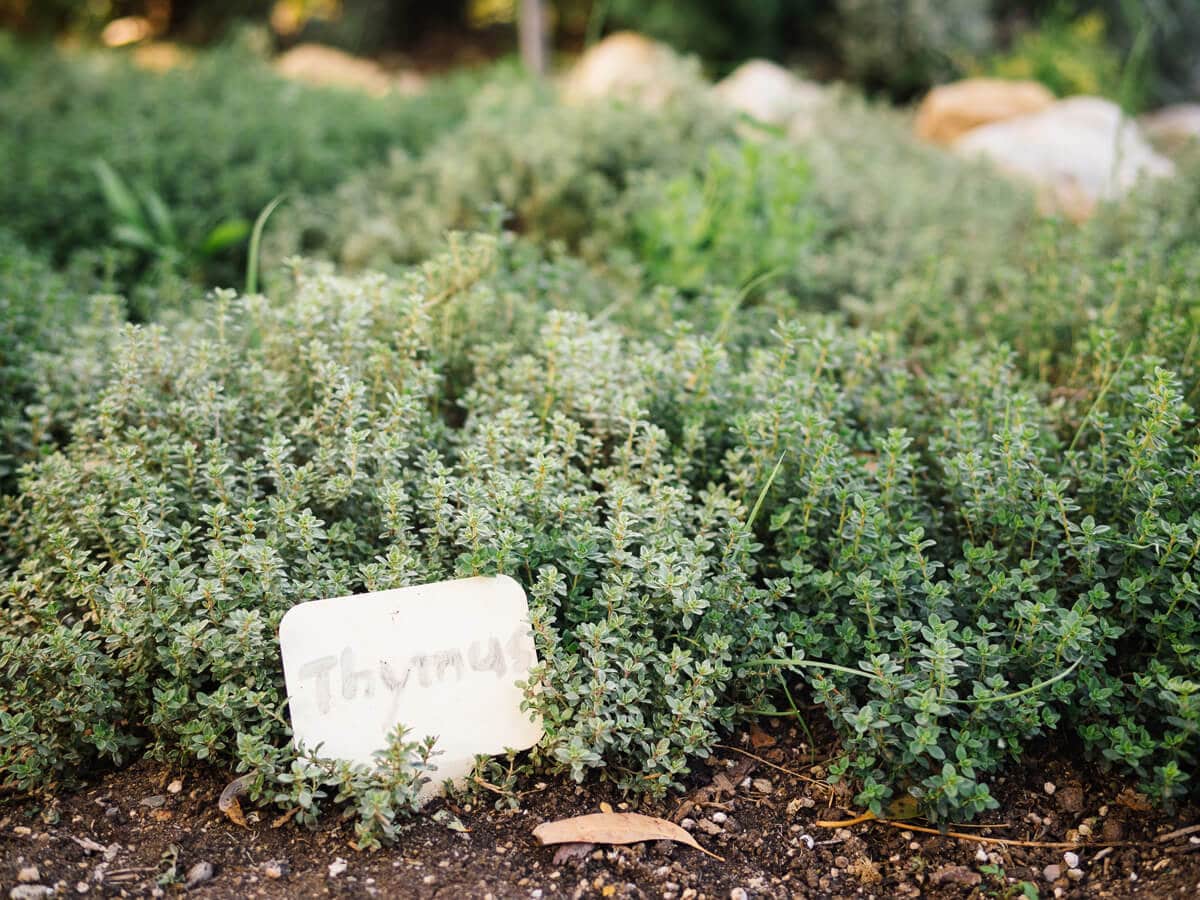
Mediterranean herbs like oregano, thyme and marjoram are ideal for in-ground garden beds that see some foot traffic. These types of ground covers can tolerate a little trampling and still be effective as ornamental and edible plants. In mild climates, oregano, thyme, and marjoram can be grown as evergreen ground covers to protect the soil year-round.
As a bonus: Stepping on these herbs releases their fragrance into the air, and it’s these same aromatic oils that help repel insects like fleas.
Creeping varieties (such as Origanum vulgare ‘Humile’, Origanum vulgare ‘aureum’, and Thymus serpyllum) quickly spread to form dense mats under 3 inches tall. Bees love the clusters of delicate flowers that bloom in summer. (For humans, the flowers make a fragrant and pretty garnish for soups, salads, and other dishes.)
All of these herbs are cold-hardy, drought-tolerant perennials that like well-draining soil and full sun (though they’ll also grow in partial shade).
That means they should only be used as ground covers for plants with similar low to moderate water needs, such as chard, okra, and artichokes. They also grow well with deep-rooted plants that don’t need to be frequently watered.
Learn more: Know how deep your vegetable crops go so you can plan your garden accordingly
True French sorrel
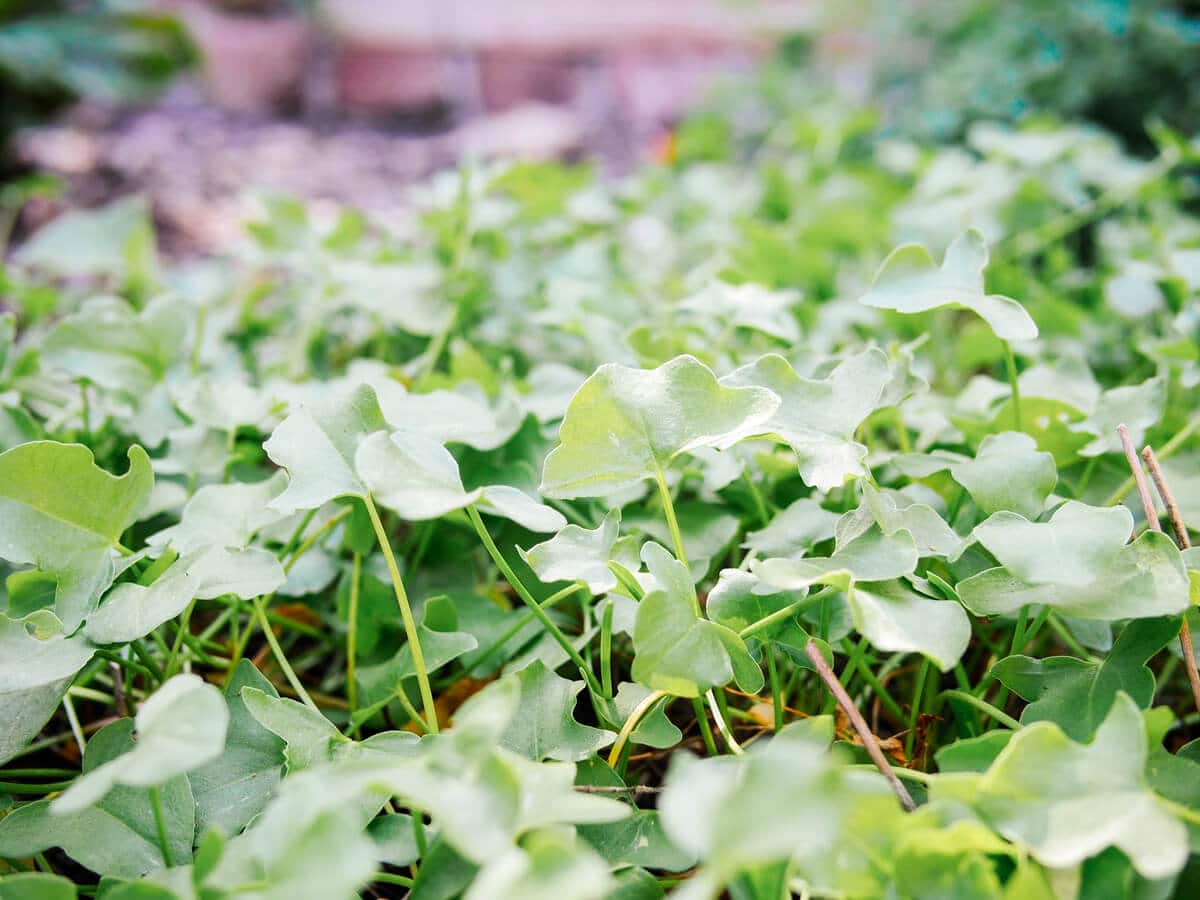
True French sorrel (Rumex scutatus) is what I sometimes call the uncommon sorrel, in contrast to the common sorrel or garden sorrel (Rumex acetosa) or red-veined sorrel (Rumex sanguineus, also known as bloody dock) that’s more readily available in garden centers.
The plant is a low-growing hardy perennial with distinctive shield-shaped leaves. A couple of small plants will quickly grow into a patch less than 12 inches tall. Under the shade of taller plants, True French sorrel may stay under 6 inches tall.
I love to grow it because it’s low-maintenance, not so common, and has a lemony flavor that’s unlike anything else in my garden.
As a ground cover, it stays a brilliant green year-round and the clumps can be lifted, divided, and replanted elsewhere when you need to fill in some space in your garden beds.
Wood sorrel
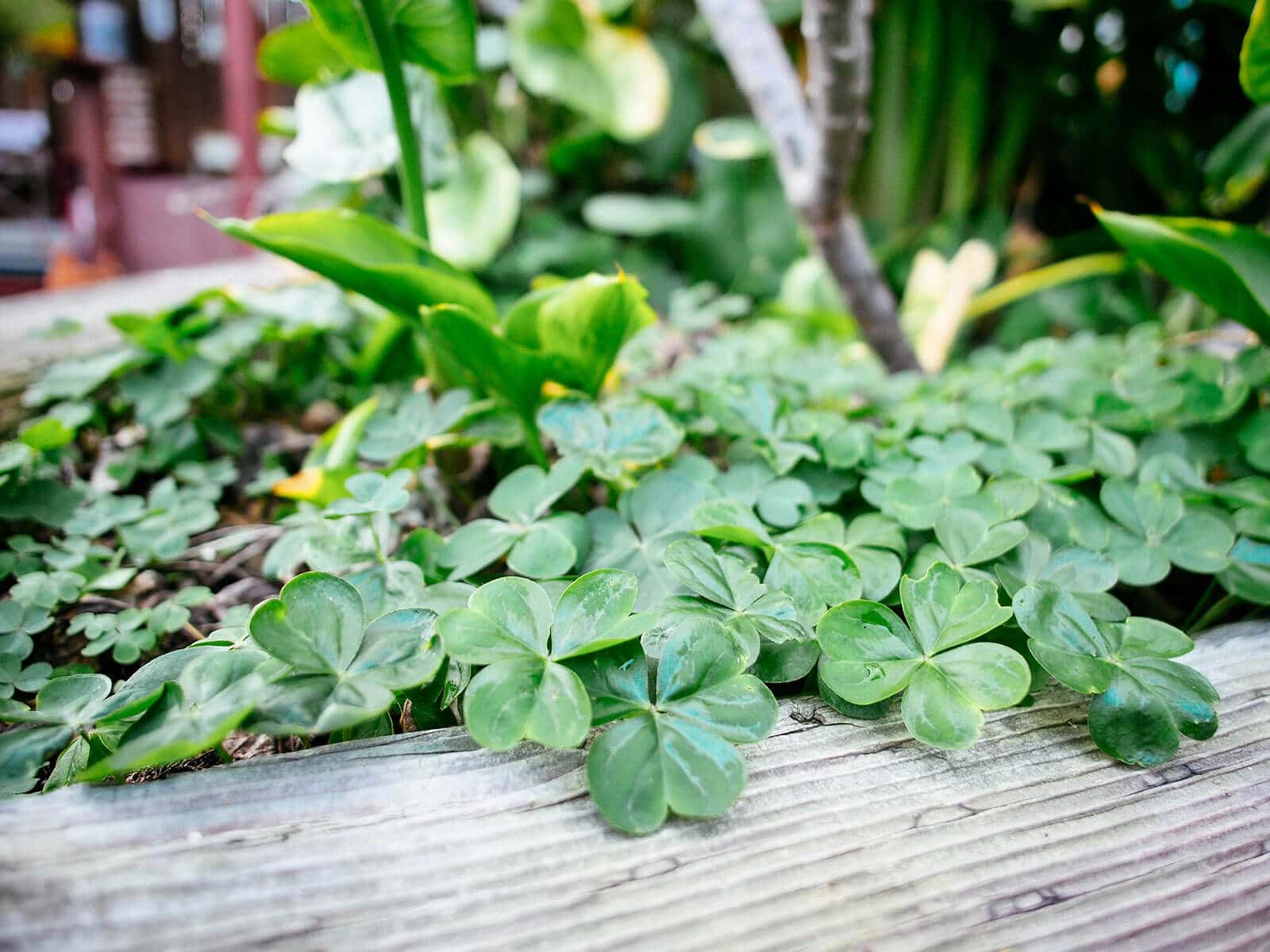
This type of sorrel (Oxalis acetosella) usually shows up as a perennial weed in most people’s gardens, and like other common garden weeds (dandelion and mallow, for example), wood sorrel is 100 percent edible.
Download now
Your guide to edible weeds
Did you know that many common weeds are not only edible, but delicious? Learn how to identify them and enjoy a free wild “salad bar” from your own yard with my PDF guide.
The heart-shaped leaves, petite yellow flowers, and immature green seed pods can all be eaten fresh, used as seasonings for salads and sauces, or steeped in hot water and sweetened with honey to make wood sorrel tea.
Its name, oxalis, means sour, and the high oxalic acid content in the leaves give them a fresh, lemony flavor.
People often mistake wood sorrel for shamrock because of its leaflets that fold upward in the center. However, true shamrocks (or Irish shamrocks) belong to the genus Trifolium, which are clovers.
Wood sorrel likes moist soil with partial shade (woodsy areas, being true to its name). Its leaves can grow up to 1 inch wide, and the plant spreads via underground runners to form a silky green carpet 6 to 12 inches tall, on average. It’s not an aggressive plant and can easily be pulled when it’s no longer desired in the garden.
Alpine strawberries
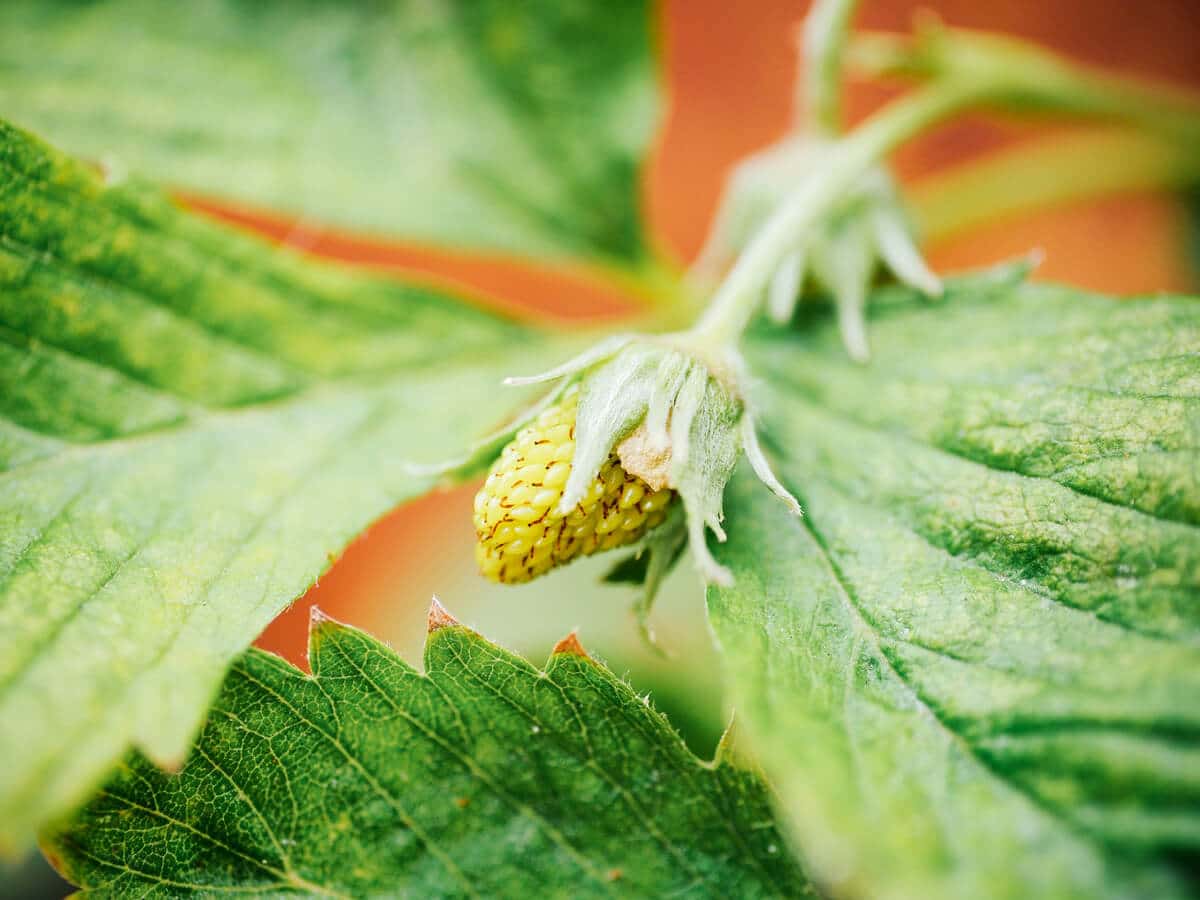
Unlike garden strawberries (Fragaria ananassa), most varieties of alpine strawberries (Fragaria vesca) don’t self-propagate via runners, making them a friendly option for intercropping.
Further reading: Get bigger, juicier berries with my plant spacing guide for strawberries
Since alpine strawberries produce tiny (yet delectably sweet and fragrant) fruit, many gardeners skip them in favor of big, juicy garden strawberries because they find the smaller, near-wild cultivars aren’t worth the effort.
It’s true that you would need several plants to harvest a single cup of alpine strawberries. But, I promise that it is worth the effort once you’ve tasted them! (Read more about the Yellow Wonder alpine strawberries I grew in my garden.)
As an edible ground cover, however, alpine strawberries tick off all the boxes: tough yet non-invasive, and able to tolerate a variety of soil conditions (especially if you forget to water for a short spell).
They have a low growth habit and tend to hold fruits up high, often above the leaves. Alpine strawberries are everbearing, so they’ll flower and fruit from spring through fall (or until the first hard frost).
Because of its pale color, the Yellow Wonder cultivar, in particular, doesn’t attract birds the way bright red strawberries do, leaving more berries for you!
Pumpkins, winter squash, and melons
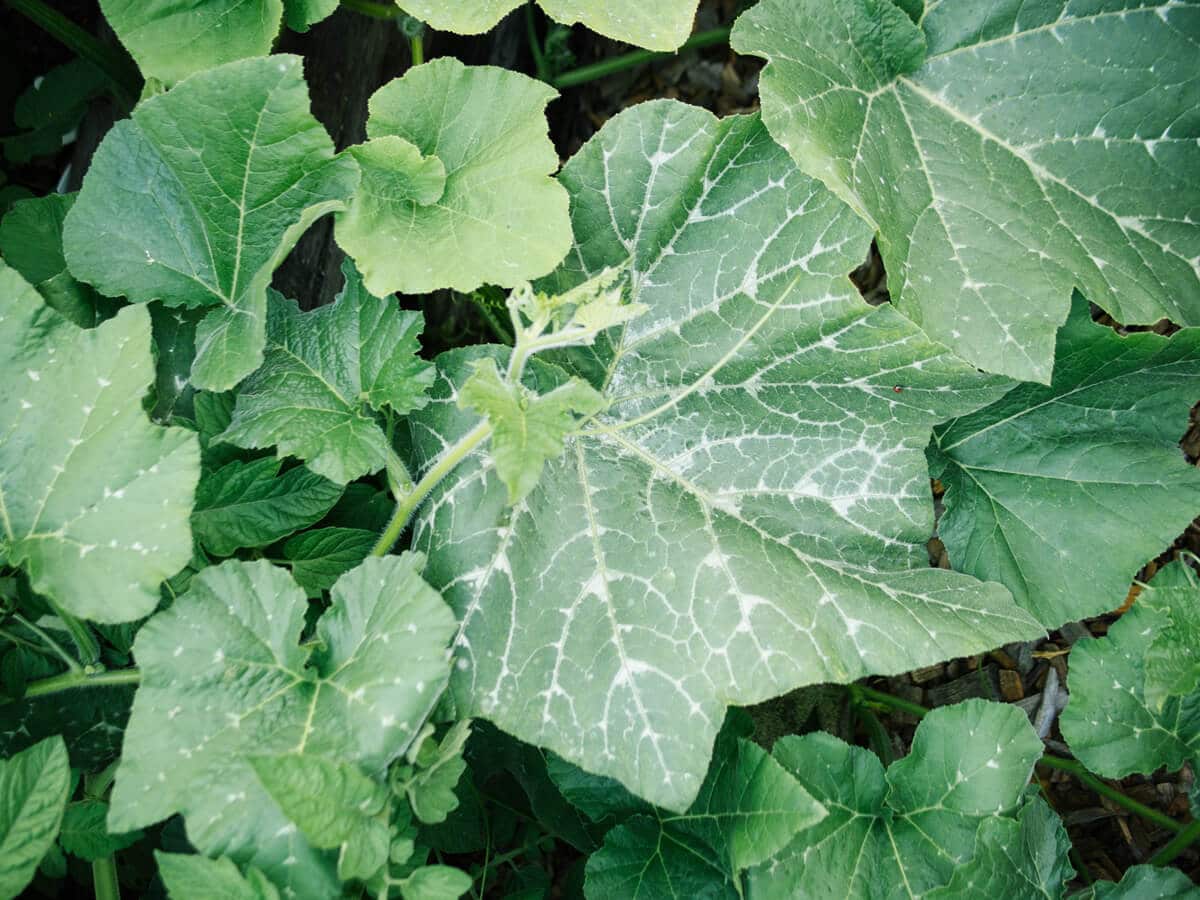
If you’ve ever grown a Three Sisters garden, it should come as no surprise that pumpkins, winter squash, and melons (Cucurbitaceae family) make excellent ground covers for large open spaces.
And that’s the important part: They should only be planted in large open spaces, otherwise they could make it difficult for you to harvest your other crops (not to mention the amount of real estate they take up).
The sprawling vines are thick and prolific (which is what makes them so effective as a ground cover) and have a tendency to climb, so they should be kept away from structures where their climbing habit isn’t desired.
In small spaces, consider planting another cucurbit as an edible ground cover: cucumbers.
Though we usually think of them as climbers, cucumbers grow perfectly fine along the ground. They still produce vigorous vines, but the smaller leaves and smaller fruits make them more manageable than winter squash and melons.
This post updated from an article that originally appeared on April 18, 2018.






Where did you find the creeping oregano. I have found one place on line that will sell me the plants pretty expensive but I will do it unless you have a seed source. Thanks for sharing all your info. I have raised beds I have done organically and have used LOTS of your information and passed if on.
I am wondering about Creeping Charlie. I have it, and I will never get rid of it. The pollinators love it. It looks really pretty, especially when in bloom (bluish purple flowers). It tries to take over my garden beds but is fairly easily pulled as long as I stick with it. It has uses as an herbal medicine. I’m just wondering if it can be allowed to truly cover the ground, even in garden beds, without robbing my other edibles of what they need. The roots seem pretty shallow. Any advice? And sheep sorrell…that’s all over the place here. Should I be trying to pull it or just let it go where it wants?
There’s an old study that suggests creeping charlie may have allelopathic qualities (that is, it “may” suppress germination of seeds and affect the growth of nearby plants). But in my view, that’s exactly what a ground cover is meant to do! So I’m on the fence about letting it spread freely as a ground cover. If you stay on top of managing it, I think creeping charlie could work well growing around established or larger plants. But it may try to take over smaller plants that don’t have good root systems yet, and I’m guessing most of your edibles start as seedlings in the garden. I think it’s worth testing in a smaller area first, perhaps with perennial edibles.
As for sheep sorrel, that will also spread pretty quickly if you don’t manage it BUT… it’s also a delicious edible weed! I wrote more about it here: https://gardenbetty.com/edible-weeds/
What are good ground cover choices for a sloped area where I plan to use metal troughs for raised beds. I would like to see the soil around the metal troughs covered with flowers, green leaves, creeper, or fragrant vines. Heard radish or peanut plants really mend the soil and make it rich. Soil in these beds is very hard, erosion issues because of Steep. slope. I wish I could share a picture with you
I have violets, Peppermint and dandelion around my raised beds. I mow them after May. Pretty in the spring and smells great when mowed.
I was thinking today, while trying to decide what type of low growing plant would work nicely with my newly planted blueberries, I thought, “edible ground cover!!” That’s how I found this WONDERFUL article!!
Thank you! Love all the details and the pics are just beautiful!
Now, I hope I can find these lovely plants in my area!!
I am enjoying all your latest posts about gardening!
I’m so happy to hear that! Thank you for reading!
Another excellent ground cover is sweet potato. If you plant the vining type they can run up to 4 to 10′ in each direction. Plant one every 18″ or even as far apart as 3′ and your ground will be covered in no time. It is a beautiful ivy looking plant, pest/disease resistant and will keep looking good until the weather gets too cold for them. One year I grew them in the front yard, and they cascaded over my retaining wall, garnering many compliments. I grow them in extra large ceramic pots flanking my front door – most people have no idea there is food under the pretty vines. Harvest time you just whack them back, find the crowns and dig away. Word of warning – once grown you will have them forever unless you search very diligently for all the roots. Not a bad problem to have honestly. 🙂
Sweet potato vines make a lovely ground cover! And the leaves are edible too!
Are you talking the ornamental variety or the ones with edible darker green leaves?