


The first book I ever wrote was called The CSA Cookbook. The concept was inspired by the many readers who emailed me every summer to ask what to do about the mystery produce in their CSA boxes.
Did you know?
I got the book deal from this very blog you’re reading right now, three years after I’d started blogging. Were you around back in 2015 when I did a cross-country book tour? If so, high-five!
CSA, in case you’ve never heard the term, stands for Community Supported Agriculture. It’s a way for people to support their local farmers by paying for a “share” of the farm’s production before the growing season begins. You give the farmer the capital they need to grow your food, and in exchange, they commit to giving you a “share” of their harvest all season long.
It’s kind of like a seasonal subscription for hyperlocal food. And it’s an amazing way to get the highest-quality, sustainably-grown vegetables direct from the farm.
The only problem is… Sometimes you just don’t know what to do with everything that comes in your CSA box. Traditional CSA boxes arrive with whatever’s in season and ready to pick that week, which means each delivery is a fun little surprise.
Check out: My visit to the very first CSA farm in the country
So if your CSA this season feels a bit daunting… if you’re unsure what some of those gnarled roots or oddball veggies are… if you’re scrambling to find ways to prepare and cook all that fresh food before it goes bad, this post is for you.
What to do with…
Tough greens: braise them
Collards, kale, turnip greens, and even the occasional broccoli greens, squash shoots, or winter radish greens can be tough, which is exactly what makes them stand up to braising. This technique cooks food slowly in liquid to tenderize it, and while it’s often associated with big hunks of meat, you can also braise sturdy greens instead of—or alongside—your choice of protein to bring out their sweetness.

To braise tough greens:
- Trim any thick, fibrous stems or veins, then coarsely chop the leaves.
- Add oil, onion, and garlic to a deep pan or dutch oven and cook for a few minutes until fragrant.
- Stir in the chopped greens, then deglaze the pan with broth, white wine, or water. (I typically start with around 1/2 cup liquid for each bunch of greens.)
- Cover and simmer until the greens become tender, then season to your liking.
Tender greens: serve them raw
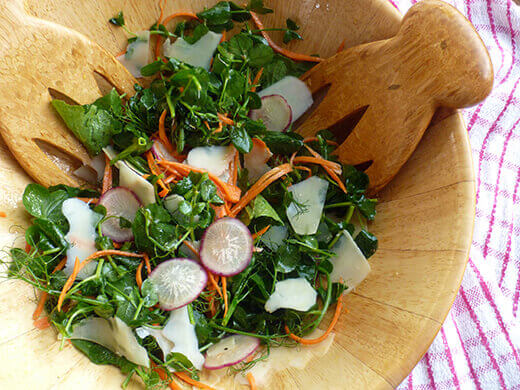
Baby kale, baby chard, dandelion greens, radish tops, young beet greens, and young Asian mustards like mizuna and tatsoi can be served raw. If you find mystery greens in your box that look young and feel tender, throw them in a salad with your favorite vinaigrette.

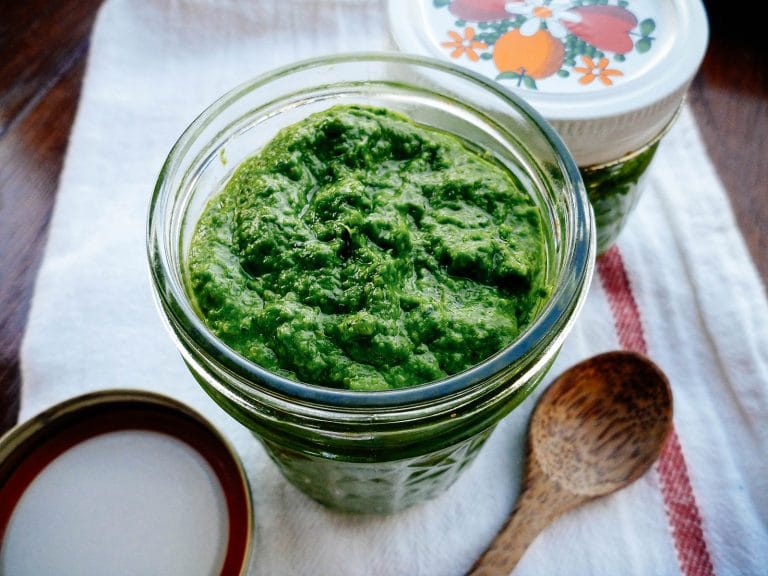
Sweeter, milder greens, like pea shoots and fava bean leaves, can also be turned into a pesto with your choice of nuts (or seeds) and cheese. When I’m not using basil, I like to deviate from the traditional recipe by subbing walnuts, almonds, pistachios, sunflower seeds, or pepitas for the usual pine nuts, and either pecorino romano, asiago, or another salty hard cheese for the parmesan.
Quick tip
I’m a big fan of “salad pizza.” It’s as easy as piling dressed salad greens (of any kind) on top of whatever pizza I’m having.
Wilted greens: revive them
Sometimes, lettuce, arugula, radicchio, and other salad greens or soft herbs arrive looking a bit… tired. Or maybe they sat in your car (or the fridge) a bit too long.
Related: Cooked lettuce is a different and delicious way to eat it
If your leafy greens have wilted but you don’t really want to cook them, you can easily bring some vivacity back to those greens with a simple soak.
To revive wilted greens:
- Fill a large bowl with water and dump in all the leaves.
- Swish them around and let them rehydrate while you go do something else. They’ll crisp up like new in 15 to 30 minutes!
This method works for any type of green that’s gone more limp than you’d like.
Root vegetables: roast them
Root vegetables range from the common (carrots, radishes, beets, turnips) to the obscure (parsnips, rutabaga, celeriac, burdock roots). If you’re stumped on how to cook one of the more unusual roots, remember this: they may look tough and intimidating, but root vegetables are naturally sweet and it just takes some heat to bring that out.
(And before you ask, yes, you can cook radishes! If you’ve never had a roasted radish, you’ll be surprised at how much the flavor mellows out in the oven.)

To roast root vegetables:
- Peel off any tough skins and chop the vegetables into thick slices or 1-inch pieces.
- Toss with oil and seasonings until the vegetables are evenly coated.
- Roast at 400°F to 425°F for 20 to 40 minutes until fork-tender and lightly browned.
- Stir them up once or twice (or rotate the baking sheet) so the vegetables cook more evenly.
Any vegetables: make a gratin
Potatoes au gratin is probably the best-known gratin recipe, but you can actually turn anything into a gratin. A gratin is essentially a dish of layered vegetables, topped with cheese and bread crumbs, and baked until the top forms a crisp golden crust.
If you have leafy greens, roots, tubers, buds, florets, or yet another zucchini that you just don’t know what to do with, make a gratin!
Here are a few ideas to inspire you:


To make a gratin:
- Thinly slice your hard vegetables, or chop your soft leafy vegetables into bite-sized pieces.
- Layer them in a baking dish with garlic, seasonings, and grated cheese between each layer.
- Pour your choice of liquid over the top so that it reaches just below the top layer of vegetables.
- Cover with foil and bake at 350°F for 45 to 60 minutes until the main ingredient is almost tender.
- Remove the foil, sprinkle bread crumbs over the gratin and more cheese if you’d like, then bake for another 15 to 20 minutes until bubbly and golden brown.
While classic potatoes au gratin uses heavy cream or milk as its liquid, you can go lighter with chicken or vegetable broth instead. (If you do this, I recommend adding pats of butter for richness.)
Extra vegetables: make a soup
My go-to meal—for any occasion, in any place, year-round—is soup. Souptember is my favorite month. I grew up eating all kinds of Asian soups for breakfast, and now as a busy mom, nothing is more satisfying than a huge pot of soup on the stove that I can simmer and eat all day long.
So when I have an excess of vegetables but not enough of one to make a complete meal, I turn them into soup. I’m a fan of hearty soups with meat and noodles (or pasta, or rice…), but you can make a simple vegetable soup too.

My foolproof “soup formula” goes something like this:
- Protein, browned in oil (chicken, crumbled Italian sausage, pork ribs, or meatballs are my usuals)
- Onion and garlic (or sometimes leeks and shallots, if I have those around)
- Vegetables, chopped and seasoned with salt
- Chicken broth
- Herbs and spices (such as bay leaves, Italian seasoning, crushed red pepper, or ginger)
- Optional: egg noodles, elbow macaroni, orzo, acini di pepe, or another itty-bitty pasta
- Secret ingredient: a splash of soy sauce or Worcestershire for a boost of umami (or a dash of lemon juice or vinegar to brighten a flat-tasting broth)
If you need more ideas for using up your CSA box (or all the vegetables you grow), my vegetable-focused cookbook can help you incorporate all that beautiful food into your cooking. I have all kinds of ideas (and easy recipes) for your basic everyday produce, as well as:
- More unusual vegetables (like kohlrabi and fennel)
- Unusual parts of vegetables (like squash shoots and pepper leaves)
- Unusual preparations (like cooked cucumber and roasted radishes)
- And unusual ways to eat the “scraps” (like chard stalk hummus and watermelon rind kimchi)
You’ll also find my popular “produce matrix” that helps you create any combination of pesto or vegetable stock using what you have on hand.
The CSA Cookbook (2015) was revised and republished as The No-Waste Vegetable Cookbook (2020), and you can order it online or wherever books are sold.
Recipes by Linda Ly
The No-Waste Vegetable Cookbook
A must-have guide for anyone with a CSA box or their own garden.
Want to support your local bookseller? Ask them to order The No-Waste Vegetable Cookbook by Linda Ly or buy it through Bookshop.org, a marketplace for local independent bookstores.






Hi Linda, thanks so much for the idea of a baked vegetable gratin: this is now a staple in our home. I do not get a CSA box, but at the end of some weeks, I do have a vegetable drawer that sometimes gets full of slightly wilty broccoli and carrots, half a cabbage or cauliflower or pumpkin that needs eating up, plus an orphaned potato, red pepper etc. Slicing and lightly steaming up the vegs and tossing them into a pyrex dish, (except the potato which is then thin sliced on top), filling it half full of milk, making a quick cheese sauce with mixed herbs to go on top with some sliced or grated tasty cheese. Once baked for half an hour in a hot oven, it becomes quite a gourmet dish that can be eaten on its own hot or cold, or to accompany any sort of baked or roast meat cooked at the same time.
I can see this could have added watered-down curry paste, wine, coconut cream, tomato passata with basil, vegetable or bone stock, etc etc etc. The variations are endless. Thanks again
I’m so glad this helped you in that end-of-the-week fridge cleanout! Gratins are a favorite of mine and I’ll sometimes make them with a broth/white wine blend instead of cream. SO many variations once you get started with this.