


If you ever come across plants with tiny, irregular holes or divots in the leaves (almost like they were shot up with tons of little bullets) or see tiny, shiny beetles crawling all over your vegetables and flowers, you have a new pest to deal with: flea beetles.
These minuscule insects can be black, brown, bronze, bluish, or metallic gray, and some species have spots or stripes. True to their name, they use their large hind legs to jump like fleas from plant to plant when disturbed. (They’re not the type of fleas that bite your dogs and cats.) And despite their size, flea beetles have voracious appetites that can weaken or outright kill small plants.
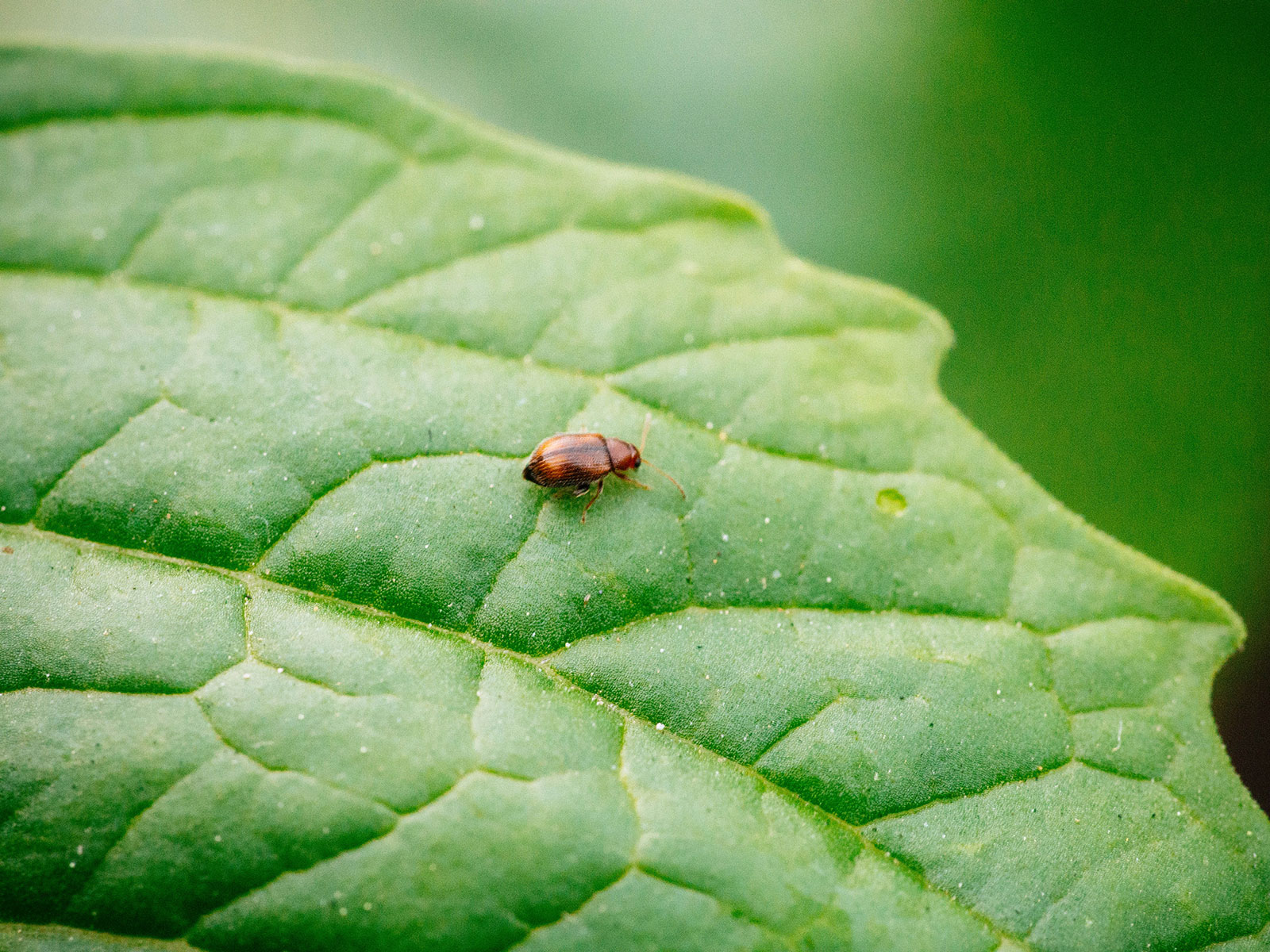
I used to struggle with flea beetles in my garden and once gave up growing tomatillos because I couldn’t control the outbreaks. They’re most active in spring and early summer, though they’ll stick around for the whole summer if there’s plenty of food and no predators to stop them. (I’ll get into this in a moment.)
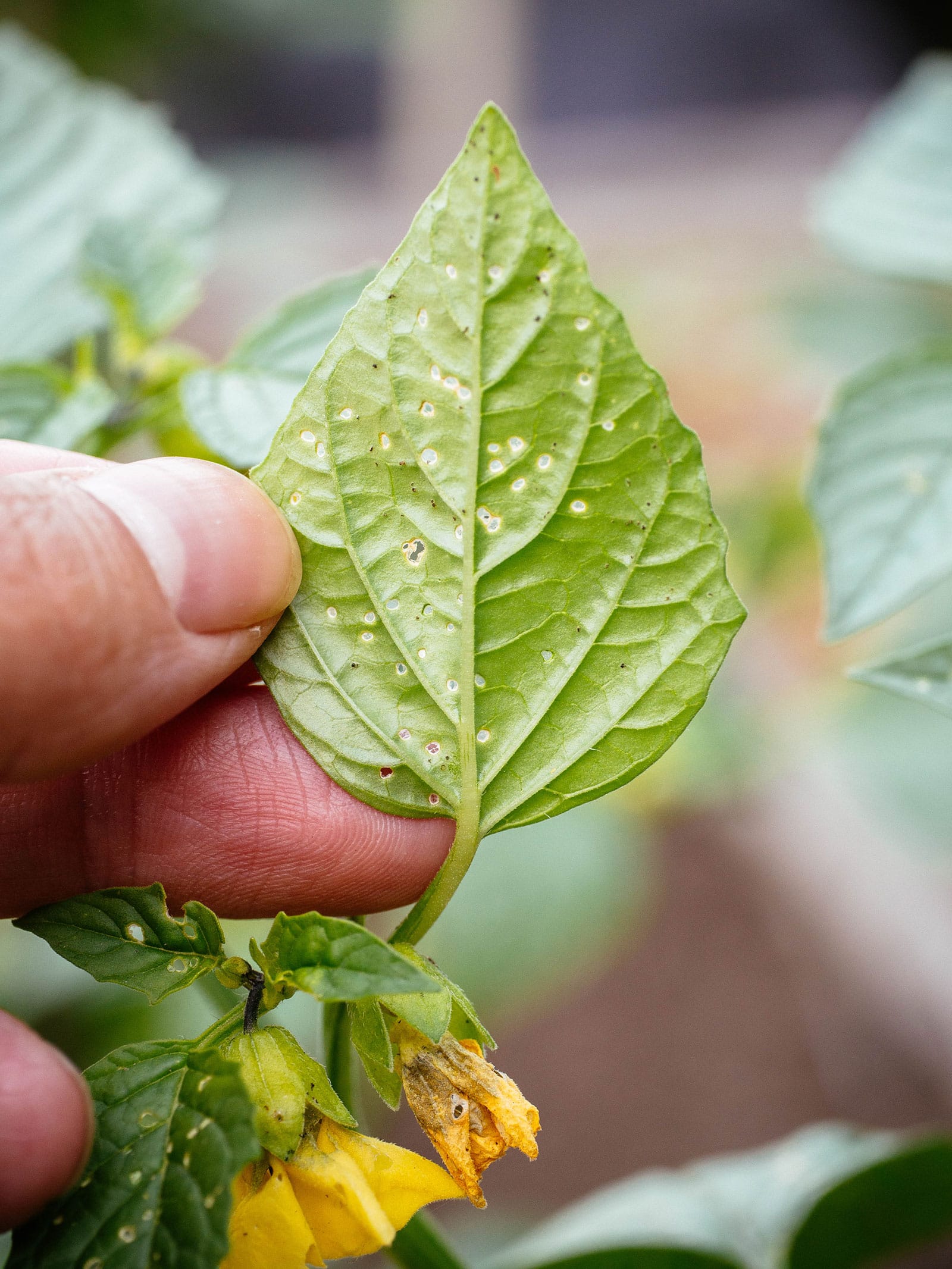
But over time, I realized they can be easily controlled with a few simple (and non-toxic) methods. The key is catching them early so your plants have a chance to recover. Here’s what I’ve learned and how you can keep them from devouring your garden.
Disclosure: If you shop from my article or make a purchase through one of my links, I may receive commissions on some of the products I recommend.
Cover your plants early
Success starts with prevention, and this method works best if you cover your garden bed right from the start before any flea beetles have moved in. As soon as you sow seeds or transplant seedlings, cover them with floating row cover (insect netting) or lightweight frost cloth. Doing this prevents adult flea beetles from landing and laying eggs.
Where to buy
Combine this method with a sprinkle of diatomaceous earth on top of dry soil (more on that below) to ensure you don’t accidentally trap any emerging flea beetles under the cover. Once your plants have grown to a large enough size to survive pest damage, you can remove the cover.
Keep weeds under control
Flea beetles often start off the year feeding on early spring weeds before migrating to your vegetable garden. So, it’s worth the effort to keep your property free of weeds in spring and early summer to discourage the pests. A tidy yard leaves fewer breeding grounds for flea beetles and helps disrupt their lifecycle.
Welcome predatory insects to your garden
Flea beetles have plenty of natural predators, and you can make your yard a welcoming place for these types of beneficial insects by growing plants they prefer.
Little-known beneficial insects like lacewings, friendly braconid wasps, and tachinid flies are especially attracted to plants with umbrella-like clusters of flowers, such as yarrow, lantana, fennel, cilantro, and dill. I also grow perennial sea kale, salad burnet, chives, and thyme, which give me some of my earliest blooms in the garden (because you don’t want to wait until summer before you get flowers).
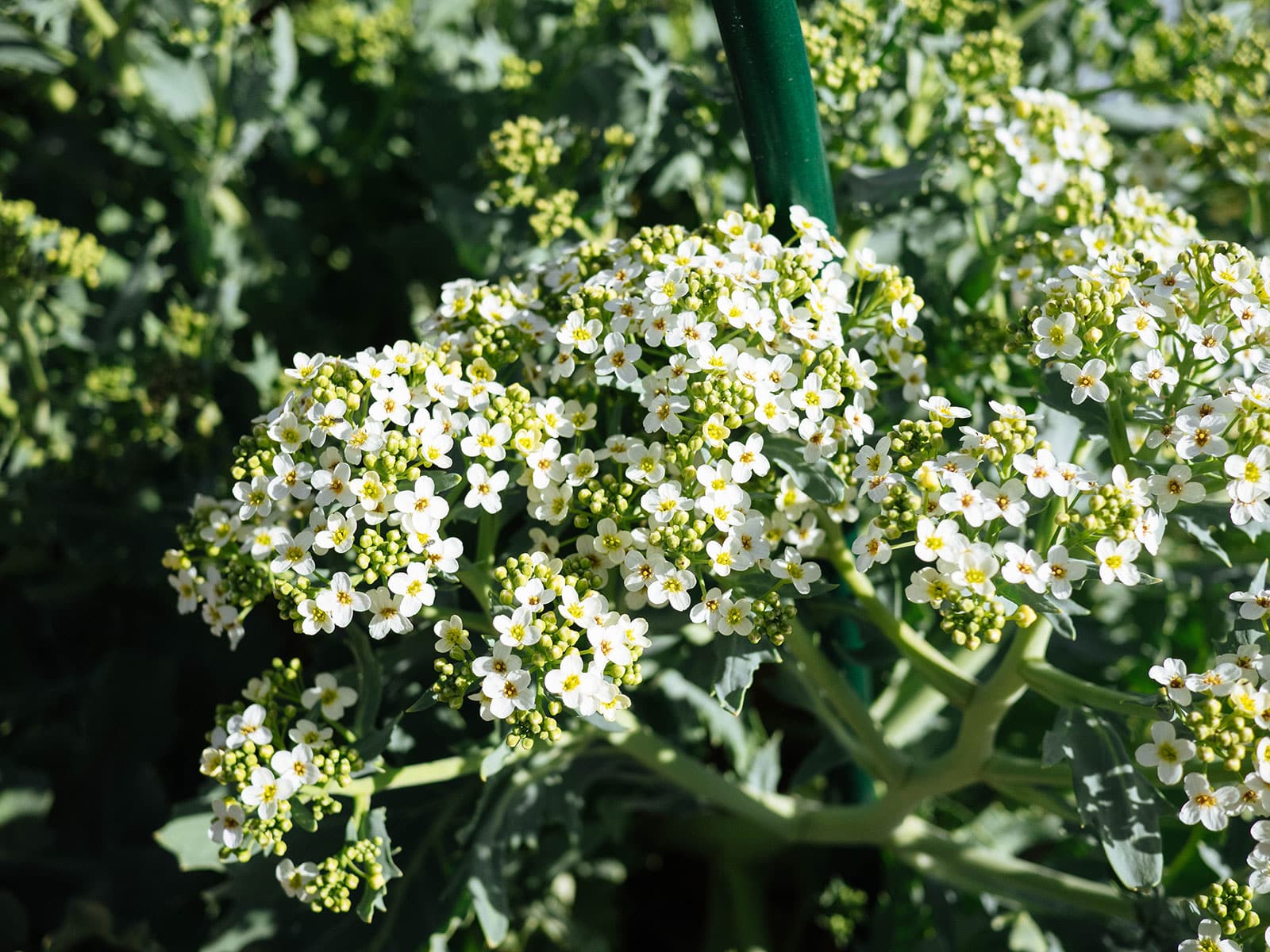
A bonus of bringing these beneficial bugs into your garden is that they’re also natural predators of other pests like aphids, thrips, and leaf hoppers. That means less work for you and a more balanced ecosystem in the long run.
Know their preferred host plants
Certain species of flea beetles will feed on certain types of host plants. You can manage infestations more effectively by grouping these plants in one bed (to make them easier to cover) or by growing them far away from each other (to minimize damage to entire crops).
In my experience, flea beetles most commonly feed on plants in the Brassicaceae family, such as cabbage, kale, broccoli, kohlrabi, and turnips.
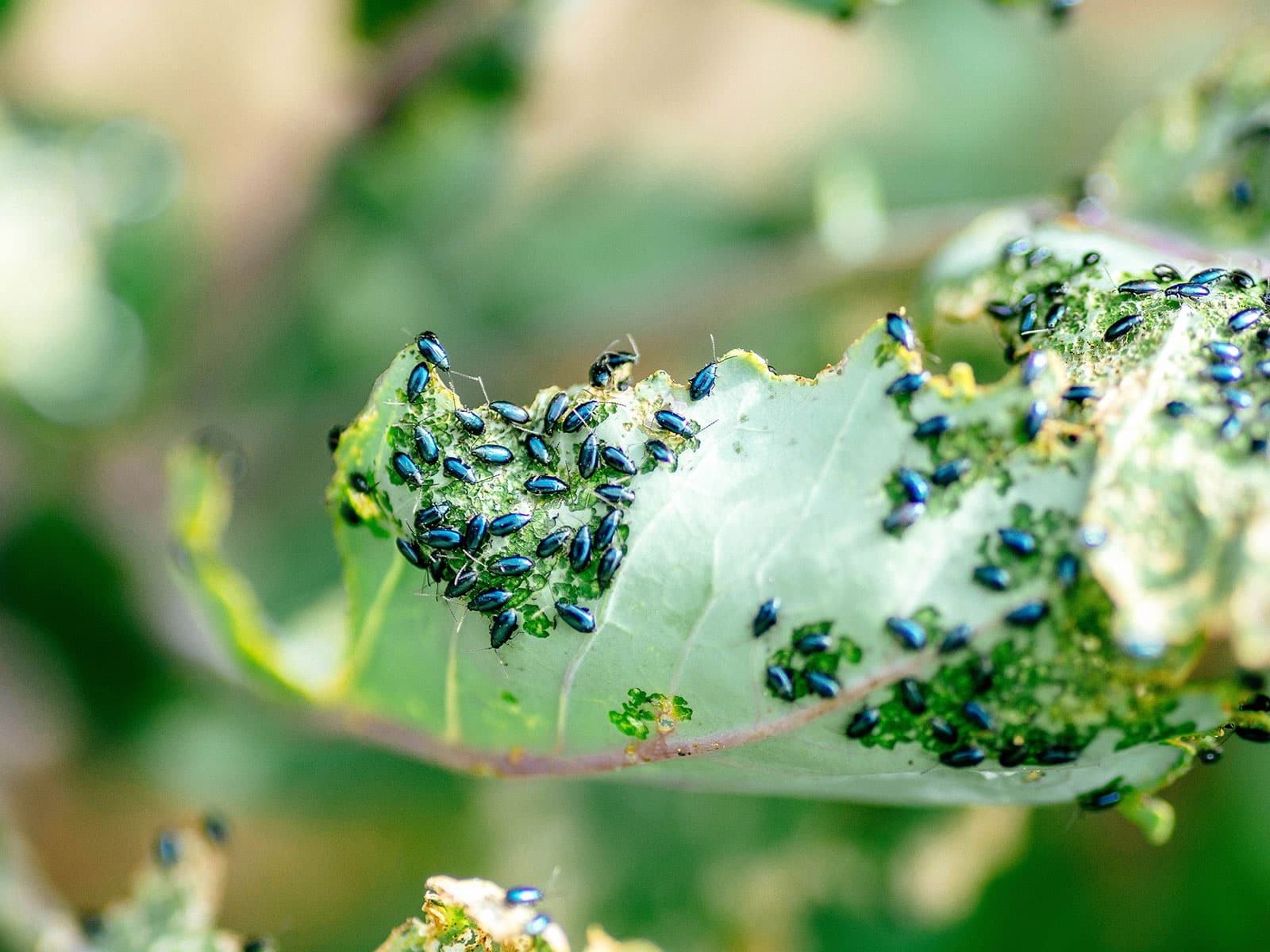
Since none of these leafy vegetables rely on pollinators, they can be protected with floating row covers for the entire season (or until they’re large enough to withstand pest damage). Just be sure you don’t already have flea beetles coming up from the soil underneath the row covers—a light sprinkling of diatomaceous earth on the soil should help take care of that (see my tips for this below).
Flea beetles also attack plants in the Solanaceae family, such as tomatoes, tomatillos, peppers, eggplants, and potatoes.
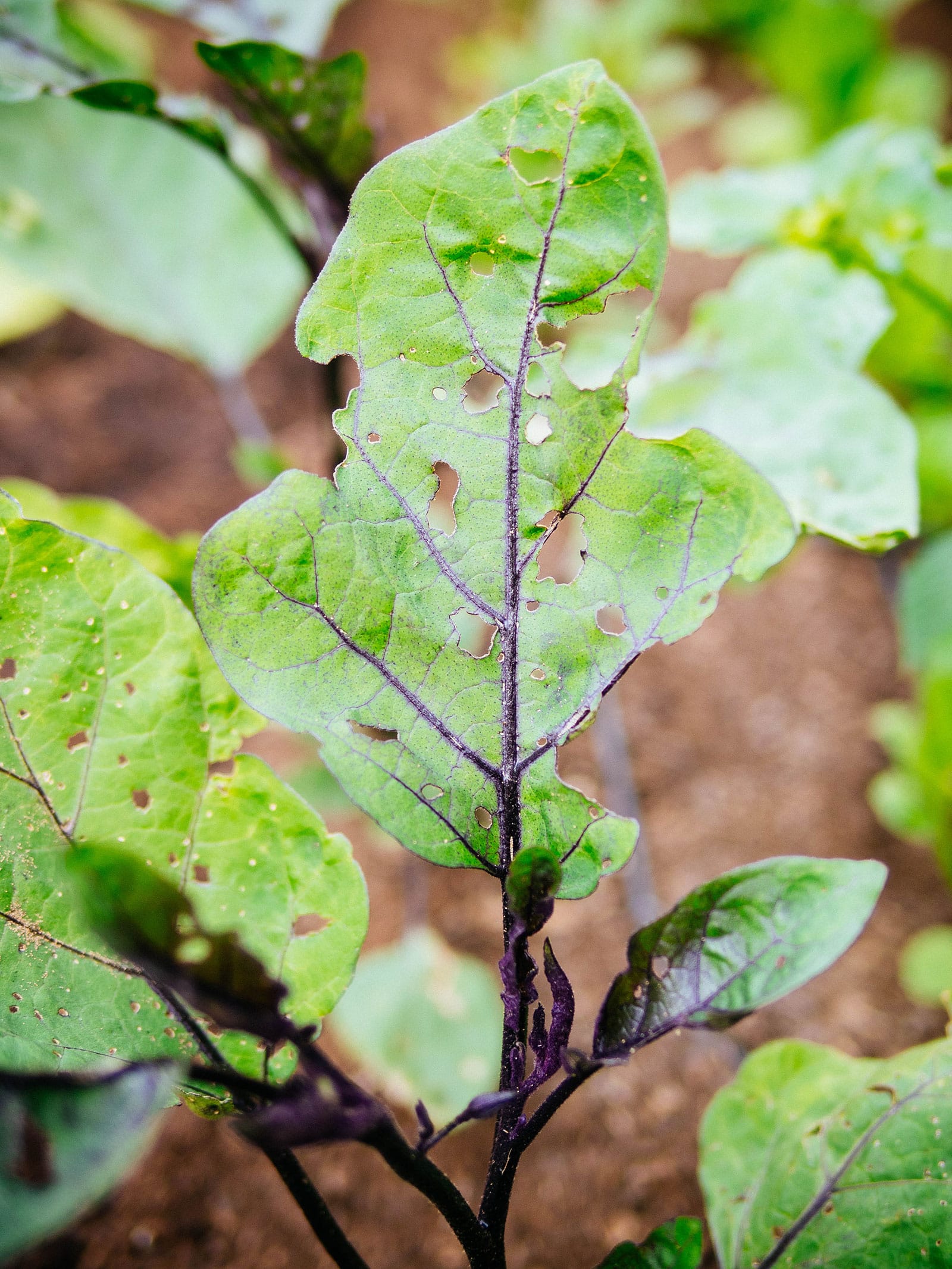
Although flea beetles usually target these two plant families, some species will eat squash and melon leaves, and generalist species will readily feed on other crops if they’re especially hungry with no other options around.
One way to reduce your chances of pests on their preferred crops is to transplant them in the garden later in the season, when flea beetle numbers are lower and your transplants are larger. Which leads me to…
Plant earlier or later in the season
Flea beetles typically produce two overlapping generations per year and understanding their lifecycle can help you time your plantings strategically.
- Spring emergence (April to May): Overwintering adults emerge in early spring once daytime temperatures reach 50°F. This first wave of flea beetles begins feeding on whatever’s available in their host range, including weeds and the cotyledons of new seedlings.
- Egg laying (May to July): Adults lay eggs in the soil near the base of host plants and continue feeding in this peak foliage window.
- Second generation (July to September): A new generation of flea beetles emerges and feeds through summer and fall before overwintering in yard debris.
Because they hop around and feed so rapidly, flea beetles can decimate seedlings in a matter of days. You can try to minimize their feeding window by starting seeds earlier or later in the season and/or transplanting larger plants that can shrug off a little flea beetle damage.
Interplant trap crops
You can protect vulnerable plants by interplanting trap crops that attract flea beetles and keep them off your more valuable crops.
One such trap crop that works incredibly well along the edges of your garden bed is nasturtium. Flea beetles love nasturtiums and will swarm them by the hundreds!
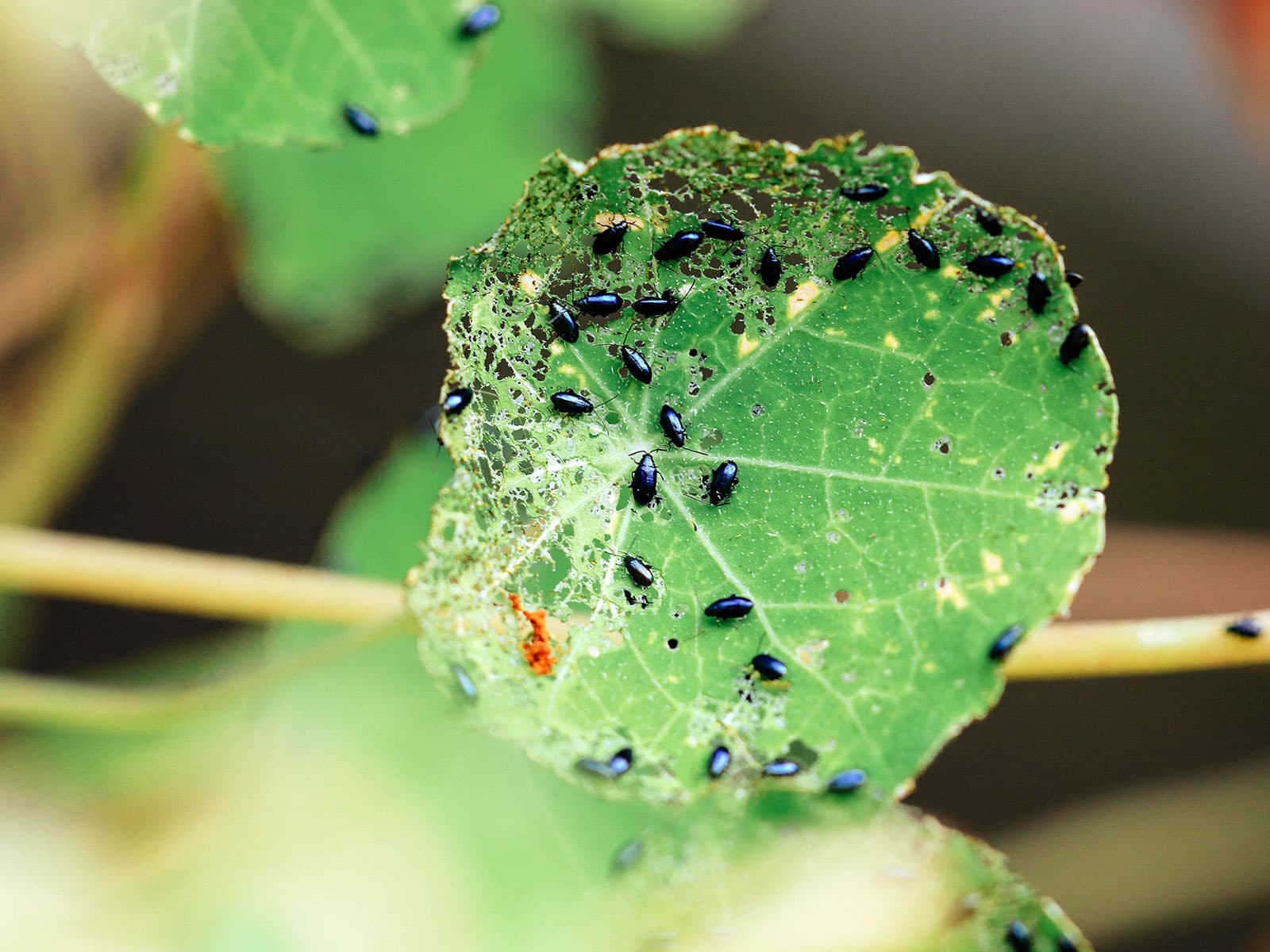
They also love cruciferous vegetables, especially arugula and radishes, which are fast-growing and easy to sow between rows of tomatoes and other valuable crops.
No, your trap crops won’t look pretty after a while, and that’s the whole point: They’re sacrificial plants that “trap” the flea beetles to save your other plants. Once a trap crop has been infested, you can pull it up and discard it in the trash (not the compost pile) or let the flea beetles have at it until their dwindling numbers no longer pose a threat to mature plants.
Apply diatomaceous earth to plants
Already dealing with a flea beetle infestation? Don’t wait too long to treat it.
Diatomaceous earth (DE) is a natural, highly absorbent, chalk-like powder made from the fossilized skeletal remains of diatoms (microscopic aquatic organisms). Though it may feel soft to us humans, DE is actually quite sharp and abrasive since the skeletons are composed of silica.
When diatomaceous earth is used as an organic form of pest control, the silica particles scratch the protective outer layers of insects, absorb their body oils, and cause them to dehydrate and die. DE works on contact, and any moisture will render it ineffective.
That means it’s important you apply diatomaceous earth directly on dry leaves where you see flea beetles and around the base of the plant where they fall in the soil (and where the adults emerge after pupation). You’ll need to reapply DE after a dewy morning, rainfall, or irrigation, so it’s not the easiest method but it’s the easiest way to see results.
I’ve found that the best way to apply DE is by “dusting” the plants using a powder duster (which I’ve linked below). A few puffs on the leaves and a sprinkling on dry soil usually does the trick.
Where to buy
Use beneficial nematodes
Some beneficial insects work above ground as they feed on adult flea beetles. But others work below ground and attack flea beetle larvae before they develop into destructive adults.
Beneficial nematodes are soil-dwelling predators that actively hunt beetle larvae while being harmless to plants. Specifically, the entomopathogenic nematode species Heterorhabditis bacteriophora and Steinermena carpocapsae target the larval stage of flea beetles and can be applied around the base of host plants as a soil drench.
Where to buy
You’ll want to make sure you apply beneficial nematodes when the larvae are actually in the soil (but not too old) so the nematodes have something to feed on. That means late spring to early summer (May through July) after the eggs have hatched.
If you’ve been dealing with flea beetles for years, I highly recommend using beneficial nematodes in the soil (which also work for other pests like squash vine borers).
You might not need to use all of these methods to control flea beetles. But for me, the triple threat of covering my seedlings, planting more annuals and perennials to attract beneficial insects, and using beneficial nematodes completely took care of my flea beetle problem.









Great info, thank you!!!
Also, I accidentally discovered that catnip works as a deterrent. I let the volunteers stay, and interplant my brassicas around them. I had never had flea beetle issues in CA, but now living in ID they are horrendous. I think it is due to the canola grown here (using pesticide of course).