
Do you grow squash? Do your plants go crazy and produce so much squash that your family’s sick of eating it and you secretly drop zucchini on your neighbors’ doorsteps just to use it all up? If so, this post is not for you.
This post is for the gardener who struggles to get a good squash harvest. Not because they’re having trouble with pollination (here’s a guide to help you hand-pollinate the flowers) and not because they keep getting blossom drop (which affects squash just as much as tomatoes)—but because a destructive pest called a squash vine borer gets to their crop first.
Here’s how to put a stop to that.
Disclosure: If you shop from my article or make a purchase through one of my links, I may receive commissions on some of the products I recommend.
Recognizing squash vine borer damage
Squash vine borers (not to be confused with squash bugs, an entirely different pest) are highly prevalent in the southern United States because the extended egg-laying window and mild winters mean they’re able to produce two generations per year. (Contrast that with northern regions, which typically only see a single generation.)
But squash vine borers can be found all over the country, including the midwest and eastern United States, and they attack both summer squash and winter squash crops.
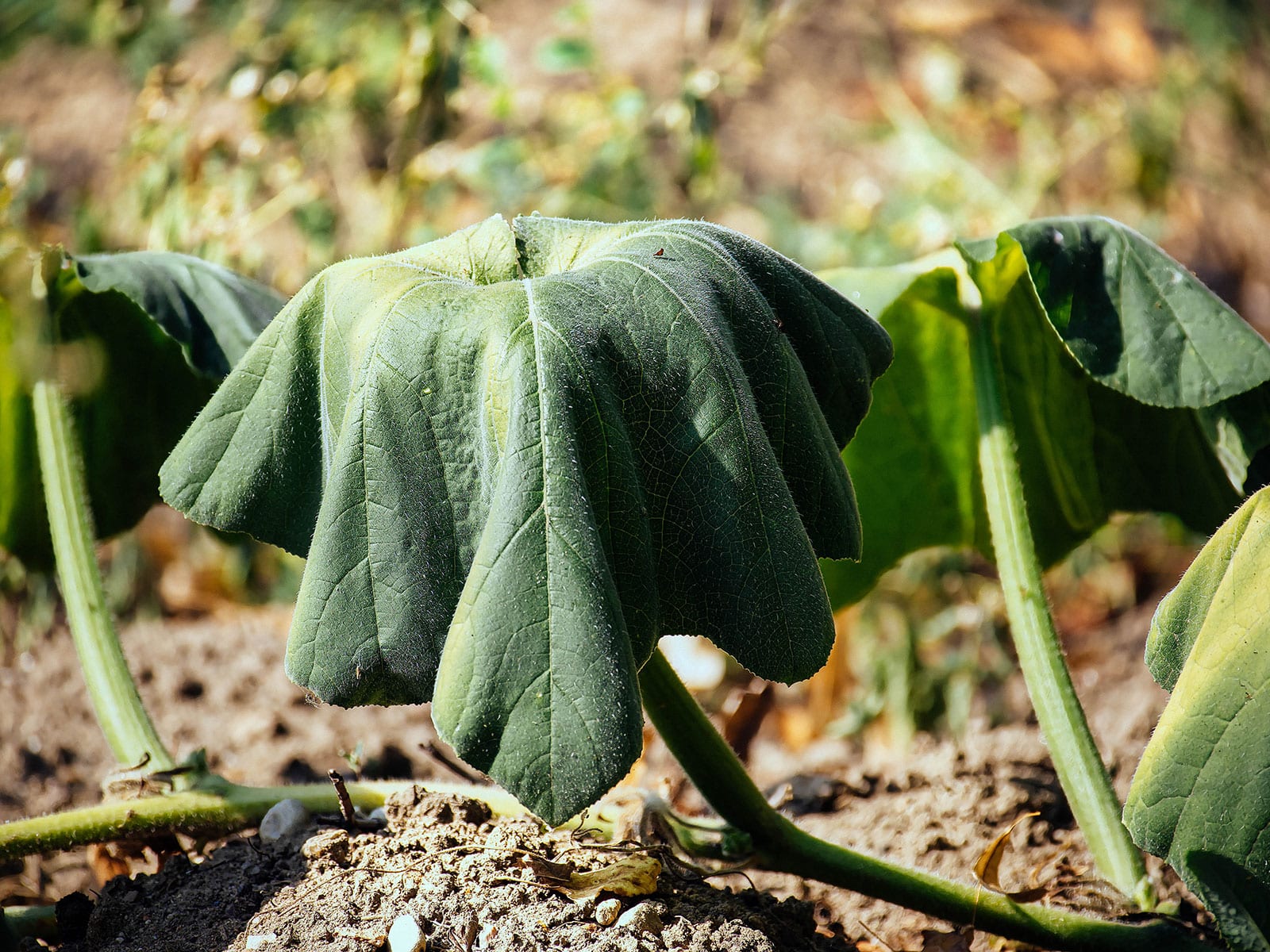
The first sign of squash vine borer damage is an otherwise healthy squash plant that’s suddenly and unexpectedly wilted. It sometimes goes unnoticed at first, because squash leaves do go droopy in hot midday sun before perking up again as temperatures cool.
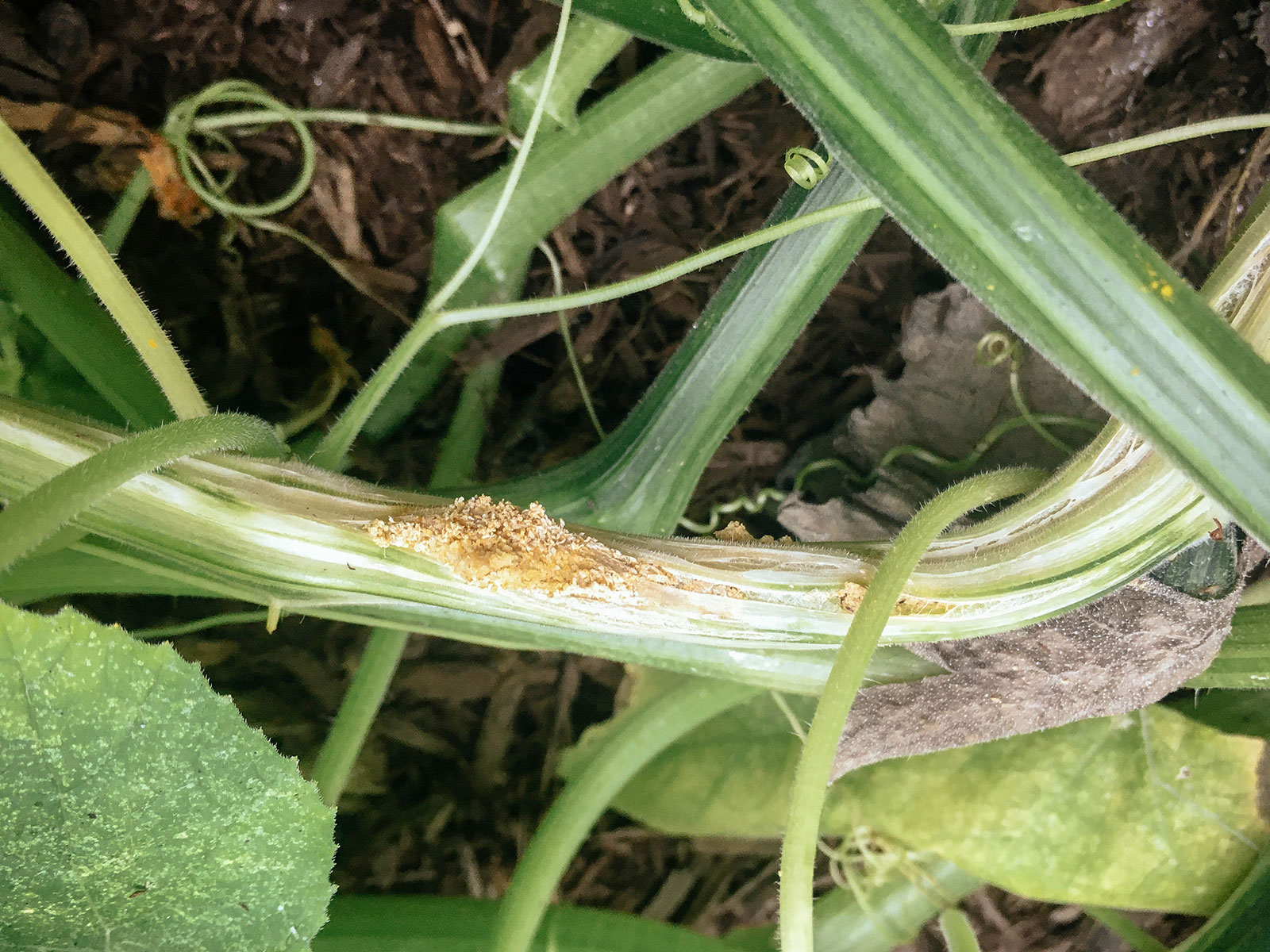
But if you take a closer look, you might find the unmistakable sign of a squash vine borer making its home in your plant: a moist, sawdust-like, orange substance piled near the base of the stem. This substance is called frass—a euphemism for insect poop.
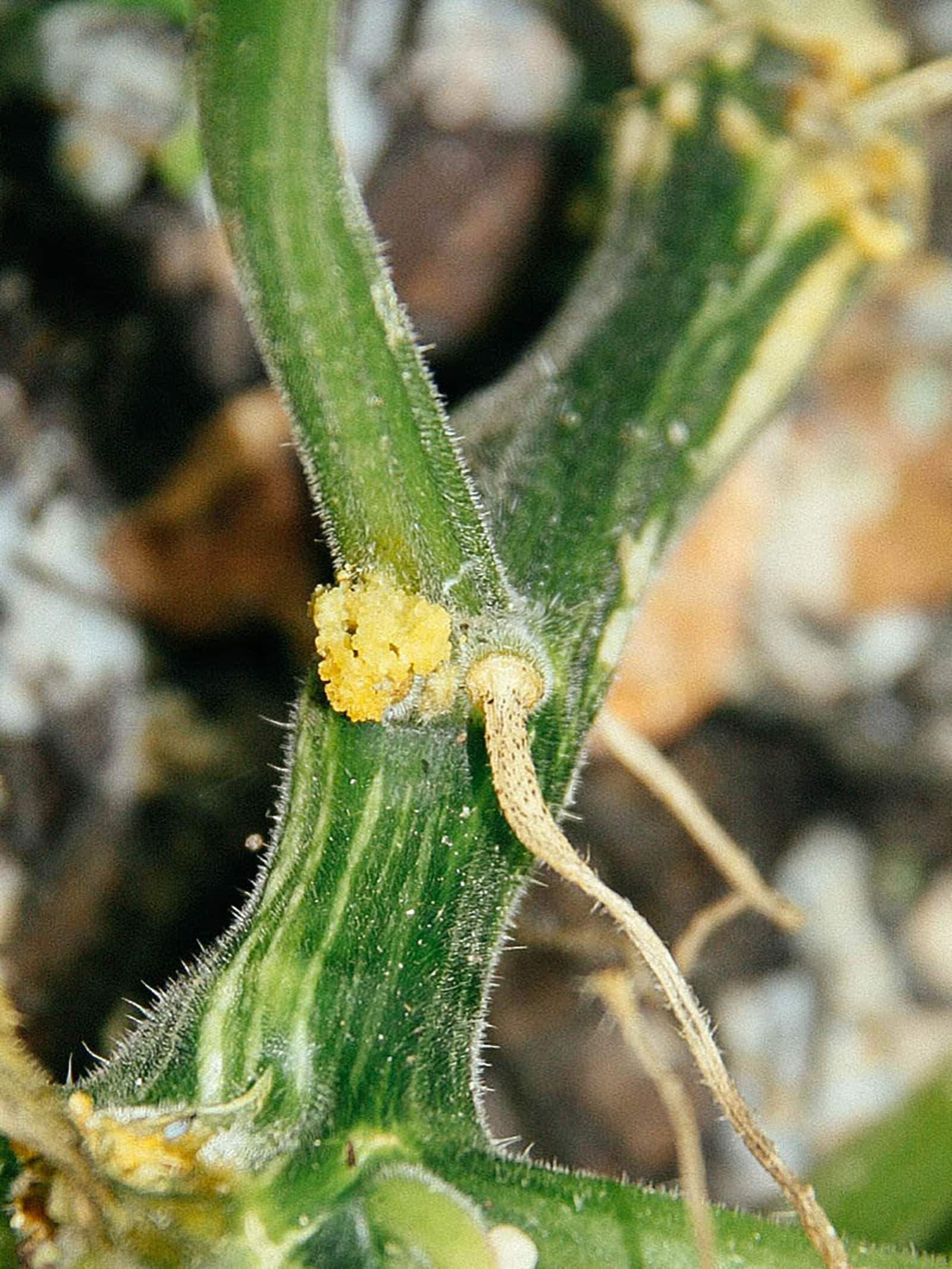
You might also find small holes in the stem where the pest has bored its way inside. The stem might feel mushy or begin to split or rot at the base. If the damage is extensive and the stem has already broken apart, the culprit might be visible: a plump, cream-colored, segmented caterpillar with a dark brown head, the larva of the squash vine borer moth (Melitta cucurbitae).
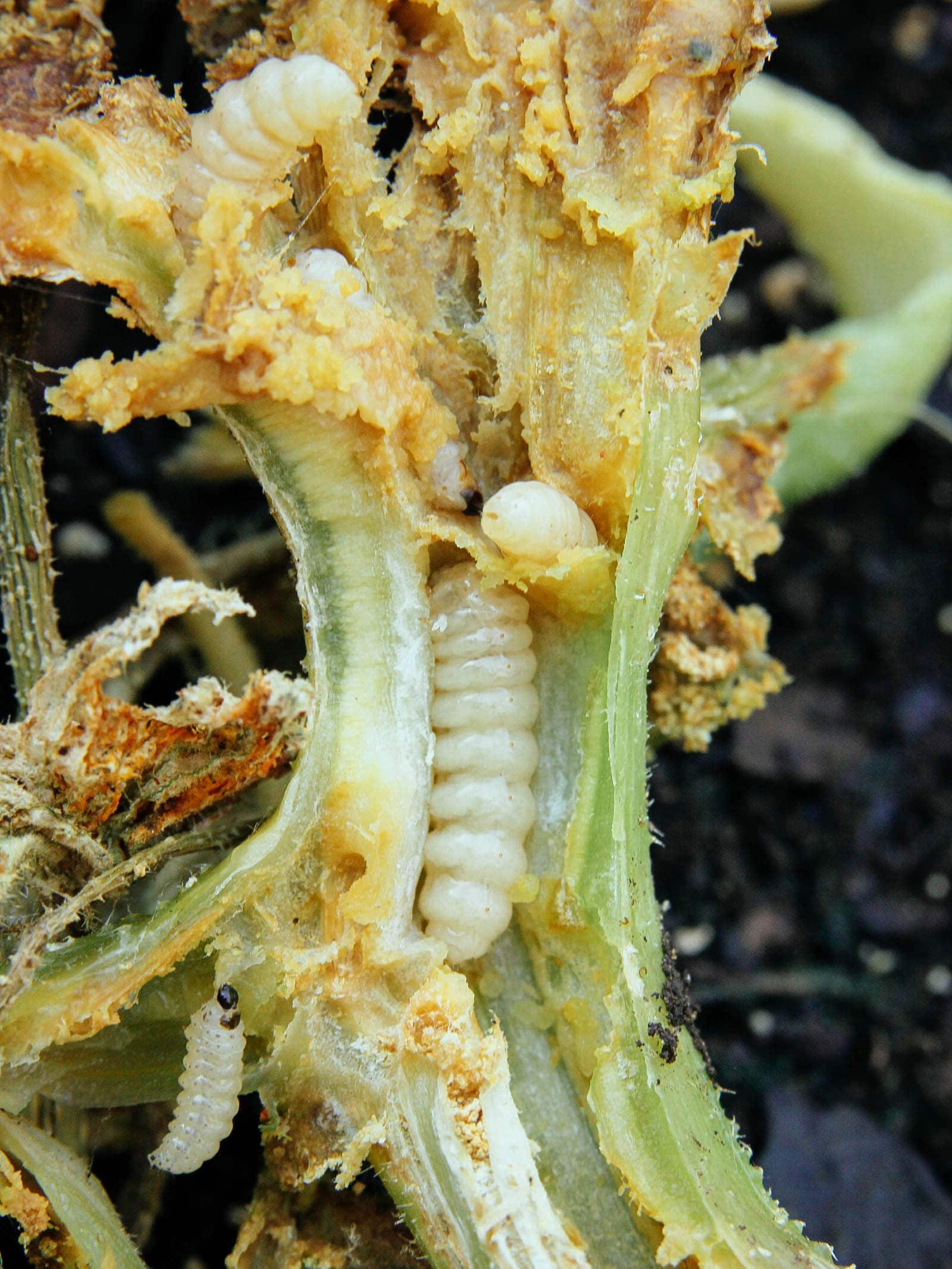
It might look small at first, but it’s a devastating pest, devouring the “marrow” of your squash vines for four to six weeks (and growing up to 1 1/2 inches once it’s mature) before burying itself in the soil to emerge as an adult the following year.
Once you see it, it’s too late to save your plant. But you can keep squash vine borers from plaguing next year’s plants with this one simple trick…
Grow a different species of squash
Squash vine borers attack the hollow vines of Cucurbita pepo and Cucurbita maxima. This includes summer squash types (classic zucchini, crookneck squash, and pattypans) as well as winter squash types (pumpkins, delicata, spaghetti, buttercup, and acorn squash).
But you know what squash vine borers don’t and can’t devour? The dense, solid stems of Cucurbita moschata.
Swap your squash plants for different varieties of Cucurbita moschata and you’ll never battle squash vine borers again.
Before you lament the loss of your favorite zucchini, know that you can eat many types of winter squash (and even gourds) as summer squash. You just pick them when they’re young and small (that is, green and immature).
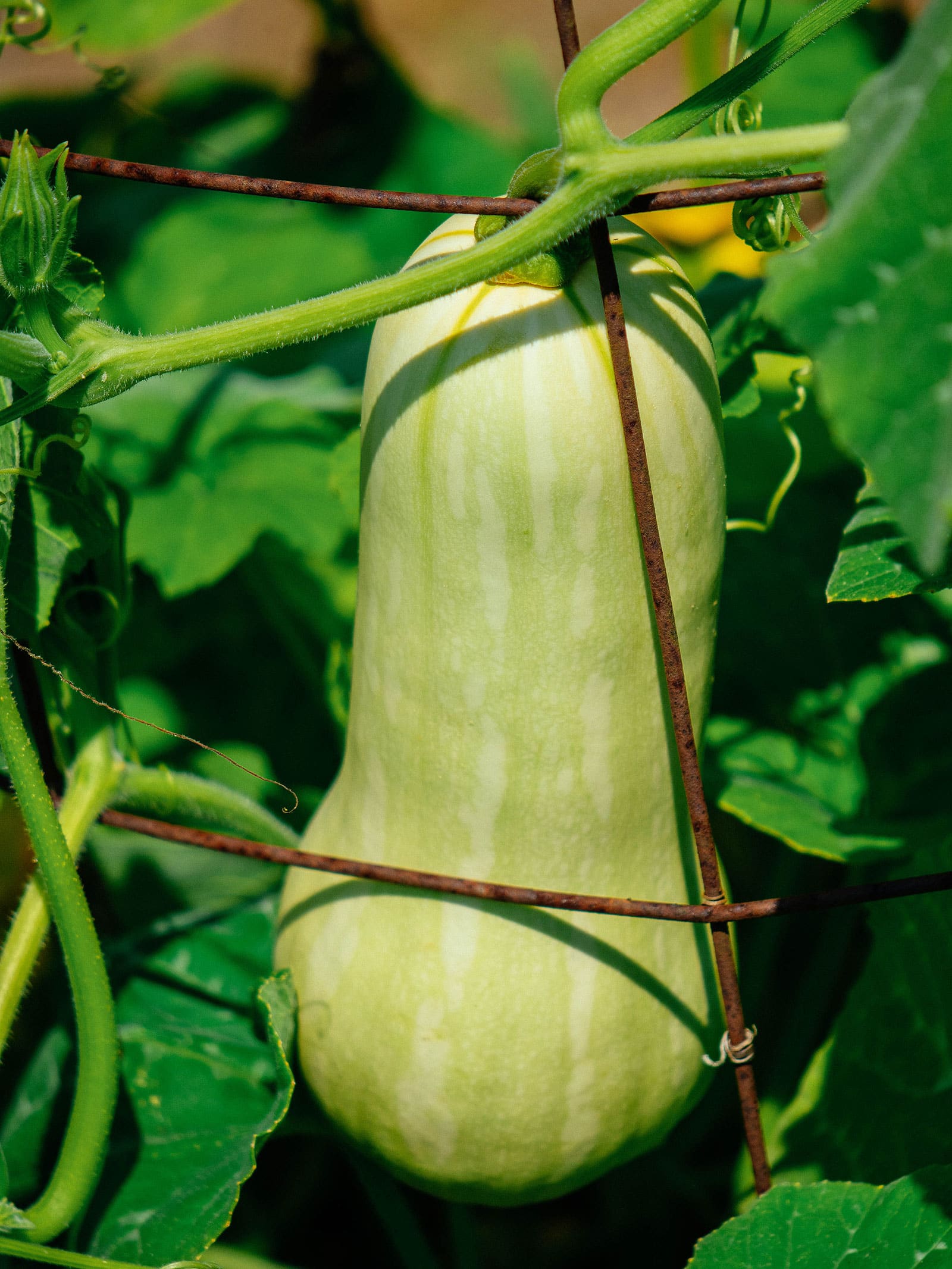
Immature squash are still delicious and 100 percent edible; they just won’t have the deep sweetness and richness of a fully mature and cured winter squash. And that’s exactly what makes them taste like summer squash (with a tad longer cooking time).
Immature winter squash make good substitutes for summer squash, and my hands-on favorite is an easy-to-grow variety called Zucchino rampicante (also known as Tromboncino), which I’ve written about on my blog. This prolific squash can be picked at any stage of ripeness, and is especially good on the grill.
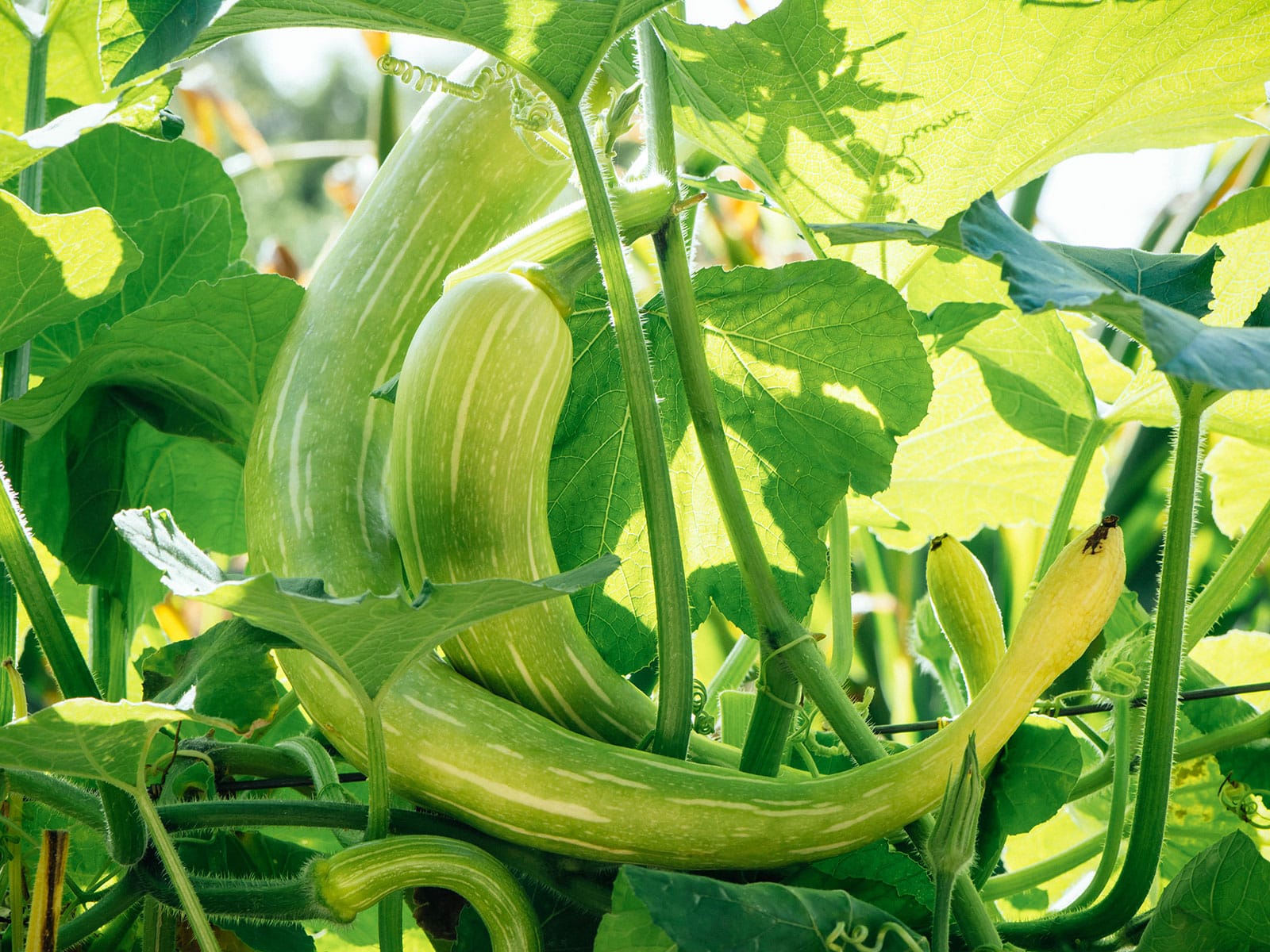
A zucchini lookalike that also belongs to C. moschata is aehobak (Korean zucchini). It can be eaten raw or cooked and has a similar mild flavor and tender texture.
Of the winter squash varieties, I love Black Futsu (a Japanese heirloom squash I’ve also written about), Honeynut (a mini butternut type), and Waltham (the standard for butternut squashes). When these varieties are picked young, the flesh is just a slightly lighter yellow/orange.
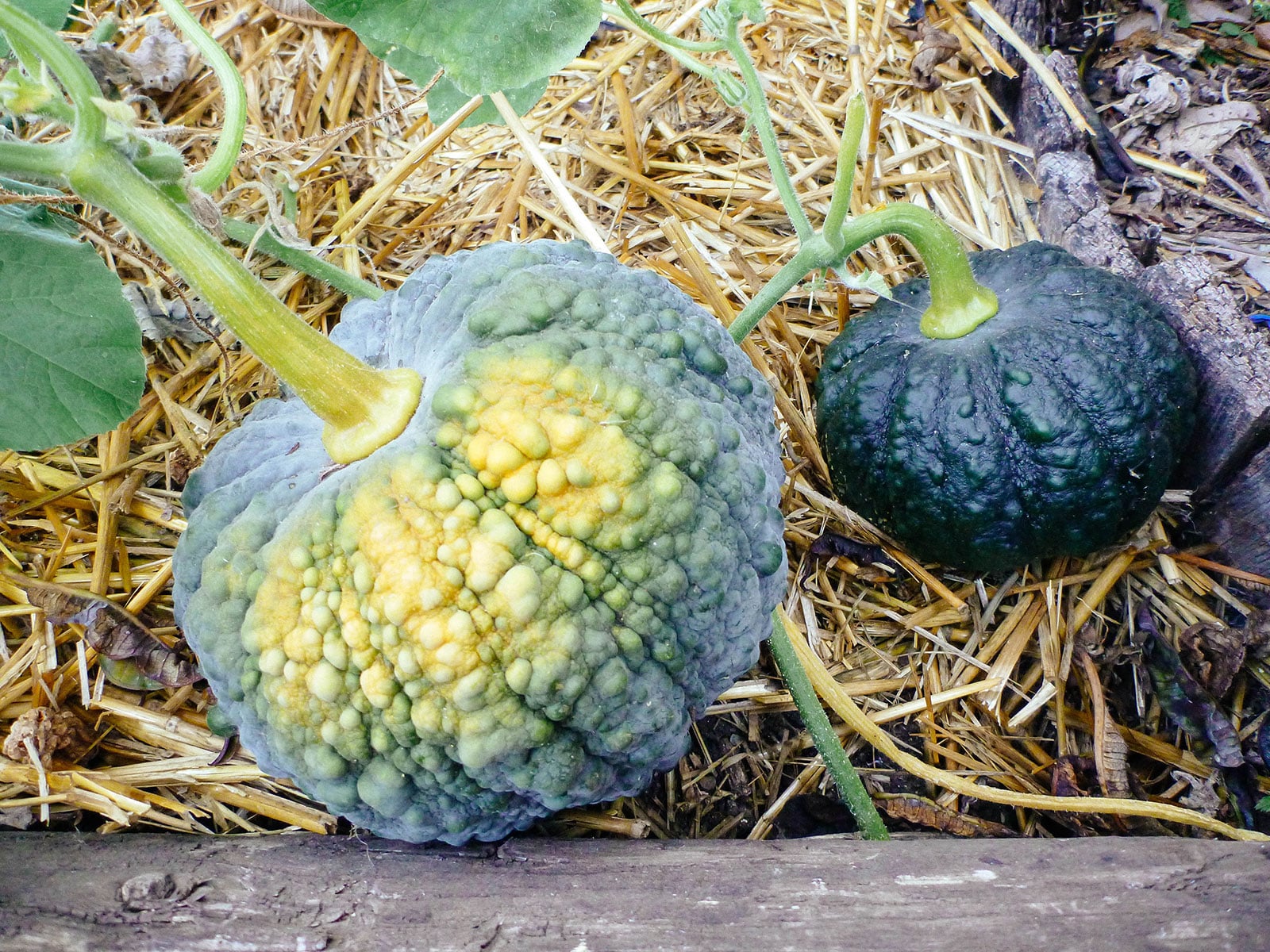
If you want to branch out beyond the C. moschata species, you can try other members of the cucurbit family:
- Sechium edule – You’ve likely seen this at the grocery store as chayote squash, and its taste and texture is very close to zucchini.
- Lagenaria siceraria – This edible bottle gourd is also known as calabash, cucuzza, or opo squash, and it’s another great stand-in for zucchini. Cucuzza usually refers to the longer, more slender Italian variety, while opo squash is more commonly used in Asian cuisines and has a shorter, wider shape.
I’ve linked to all my recommended squash vine borer-resistant varieties below.
Where to buy
More ways to outsmart squash vine borers
Growing C. moschata is not the only way to control squash vine borers organically. Here are four more things you can do to prevent future damage:
1. Plant late.
Depending on your climate, adult squash vine borers emerge from their underground cocoons in May (in warmer southern regions) or between mid June to early July (in cooler northern regions). They proceed to lay their eggs at the base of their host plants and one week later, the larvae tunnel into the stems and start doing their damage.
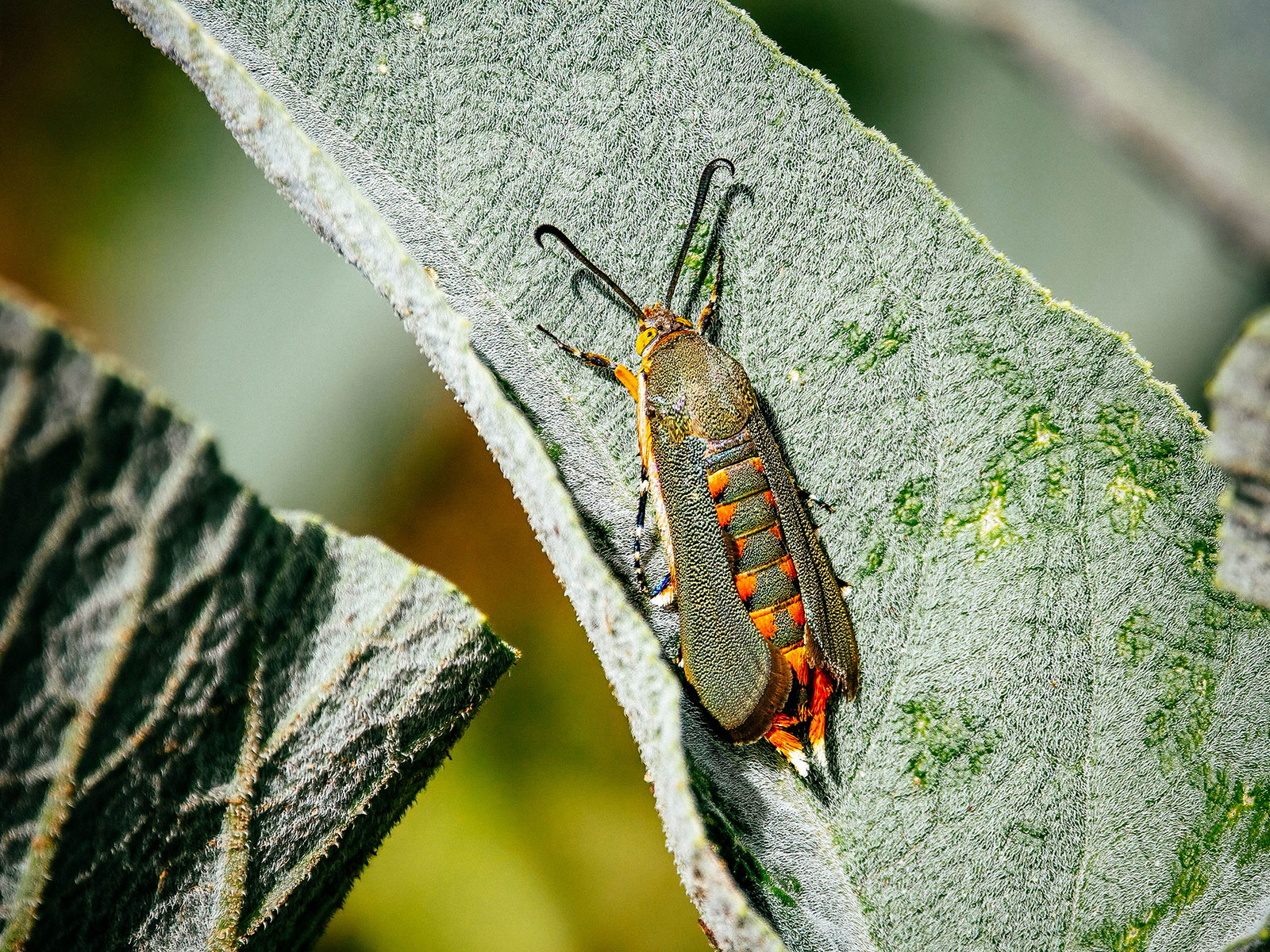
You can thwart their lifecycle with late sowings of summer squash, which will mature after the adult borers have laid their eggs. Starving them out will eliminate squash vine borers from your garden.
Choose an early variety if you have a shorter growing season, and you won’t have a problem getting a good crop before frost. I personally don’t sow summer squash until mid to late June in my zone 5 microclimate (with a first frost in September), and I always get more squash than I can eat.
Where to buy
2. Cover your plants.
If you prefer to sow squash earlier in the season, cover the bed with a floating row cover to prevent adult squash vine borers from laying eggs on the stems. Just be sure to remove the cover once your plants start flowering.
Where to buy
3. Catch the grub.
If you see obvious squash vine borer damage, dig around the base of the plant and look for the fat white grub. Discard the entire plant, grub and all, in the trash (not the compost pile) to prevent the pest from coming back as an adult.
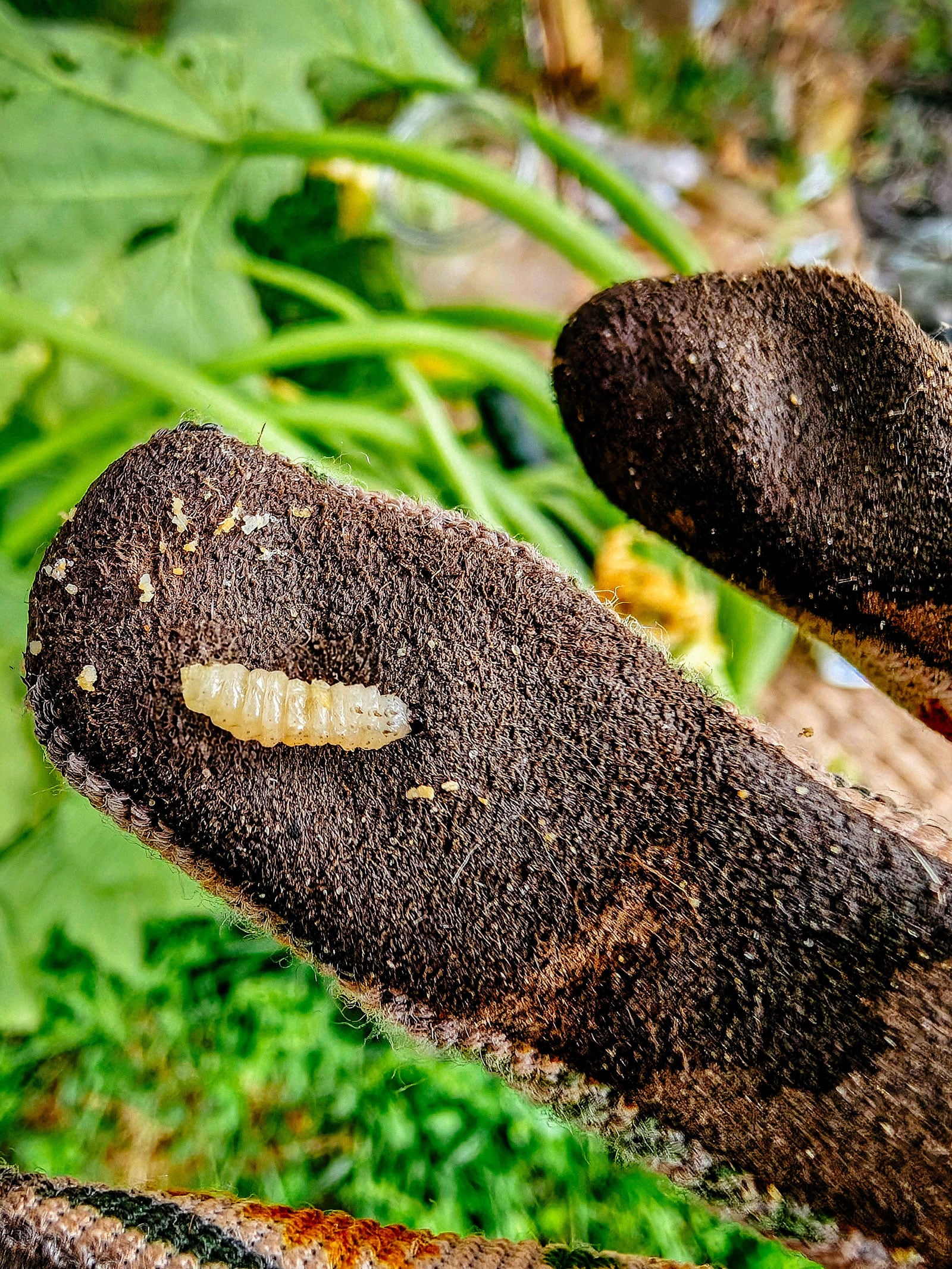
Leave the soil empty and uncovered for a couple weeks to give birds a chance to feast on any lingering grubs in the ground.
4. Use beneficial nematodes.
Want to make sure you really get all the grubs out of your soil? Employ beneficial nematodes for a final cleanup.
I’ve written about using beneficial nematodes to control root-knot nematodes and fight fungus gnat larvae in your soil.
This type of biological pest control is harmless to humans, pets, and wildlife, but effectively manages targeted pests by introducing millions of predatory nematodes (the good kind) to your soil via a watering can or hose-end sprayer. These nematodes seek out the pupae of squash vine borers and release bacteria that destroy their hosts. The nematodes then reproduce and their offspring continue the cycle until there are no pupae left.
If you want to try using beneficial nematodes, look for a product containing Heterorhabditis bacteriophora, an insect-pathogenic nematode species that controls vine borers. (Oftentimes you’ll find a product with a blend of different beneficial nematodes that tackle several types of pests.)
Where to buy
I don’t recommend using Bacillus thuringiensis (also known as Bt—because who has time to inject this stuff into their stems?) or chemical controls for squash vine borers. I think they’re easy enough to get rid of with preventative measures and strategic timing of your plantings, and if you follow the five key methods I suggest in this post, you’ll effectively keep squash vine borers out of your garden.