Every fruit tree tag seems to come with a number. One says 400 chill hours, another says 800. A third just says “low chill” and leaves you to guess what that means. And unless you know your own winter’s number, that tag is about as helpful as a recipe that says “bake until done.”
So I built a tool that calculates chill hours automatically for any given location in the United States. Enter your zip code below and you’ll see an estimate of the chill hours your area gets each winter, your USDA hardiness zone, and a list of fruit tree varieties sorted by how likely they are to thrive where you live.
Before you go shopping though, stick around for a few minutes. The number you get is an estimate, not a promise, and knowing why is key to growing fruit trees successfully.
Find your chill hours
Chill hours are hours at or below 45°F from Nov. 1 through the end of Feb, averaged over the 1996-97 to 2025-26 winters. Estimates come from ERA5 reanalysis temperatures (Copernicus Climate Change Service, ECMWF) via Open-Meteo.com. They describe your general area, so elevation and microclimate can shift your real number. Hardiness zones are from the 2023 USDA Plant Hardiness Zone Map, produced by the USDA Agricultural Research Service and Oregon State University. Variety zones are nursery ratings and are a guide, not a guarantee.
How to use your results
- Start with “Reliable here”: These are your safest bets for chill.
- Treat “Worth a try” as an experiment: If you’ve fallen in love with a variety in this group, give it your warmest spot (a south-facing wall, out of the wind) and expect some off years.
- Skip “Probably not enough chill” unless you’re curious and patient: It’ll come up short in at least half of winters.
- Cold climate? Expect fewer options: The tool checks each variety’s hardiness against your zone before it looks at chill. Trees rated for milder winters than yours land in “Probably not hardy enough here,” even if the chill hours match.
- Check locally before you buy: Your county extension office and independent local nurseries know which varieties fruit reliably in your area, and so do neighbors with old trees.
How this tool works
Type in a zip code and the tool gives you three estimates of your winter chill plus your hardiness zone, then sorts 189 fruit tree varieties into 4 groups.
Your three numbers
Winters aren’t identical from year to year, so I compiled the data into three numbers that give you a better picture:
- Typical: The average of roughly the last 30 winters. This is the long-run picture of your climate.
- Recent: The average of the last 15 winters. If winters are warming where you live, this one will usually come in lower than typical, and it’s the one I’d plan around.
- Low-chill winter: What a mild winter looks like in your area. About 1 winter in 10 comes in at or below this number.
You’ll also see a label for your area: Low (under 300 hours), Moderate (300 to 699), High (700 to 999), or Very high (1,000 or more). Those are my own cutoffs, meant to give you a quick sense of where you land. There’s no official standard for them, and nurseries use the same words loosely (more on that below).
Your hardiness zone
Along with your chill numbers, you’ll see your USDA hardiness zone, which tells you how cold winter nights get in your area. Every variety in my list has a coldest zone it’s rated for, based on nursery and extension listings.
The tool checks zone first, then chill. A tree that can’t survive your coldest night goes into “Probably not hardy enough here,” no matter how perfect its chill hours look.
Your four variety groups
- Reliable here: The variety’s chill requirement is at or below your low-chill winter (or your recent average, if that happens to be lower). Even in a mild year, it should get enough cold.
- Worth a try: The requirement sits above a mild winter but at or below your recent average. It should get enough chill most years, just not every year.
- Probably not enough chill: The requirement is higher than your recent average, which means it’ll come up short in at least half of winters.
- Probably not hardy enough here: The variety is rated for milder winters than your zone. A sheltered spot and winter protection can help, but expect damage in a hard freeze. Each variety shows the coldest zone it’s hardy to, so you can see how close it is.
Quick tip
“Reliable here” means the tree meets the chill requirements and is rated hardy for your zone. It doesn’t mean it won’t bloom too early or that your summer is long enough to ripen the fruit.
How my tool calculates this
For every winter, the tool counts each hour the temperature sat at 45°F or below, from November 1 through the end of February. Every one of those hours counts the same, whether it was 44°F or 4°F.
The temperatures come from ERA5, a climate dataset produced by the European Centre for Medium-Range Weather Forecasts through the European Union’s Copernicus program. ERA5 is what’s called a reanalysis, which is a fancy way of saying scientists took decades of real-world observations (weather stations, satellites, weather balloons, aircraft) and fed them into a weather model to fill in the gaps. The result is an hour-by-hour temperature record going back to 1940 for every spot on the map, including places with no weather station nearby.
The catch here is resolution. ERA5 divides the map into grid squares roughly 15 miles across. The tool matches your zip code to the center point of its zip code area, picks a nearby land grid square at a similar elevation, and adjusts the temperatures for the elevation of that center point.
So the number describes your general area, not your yard. The elevation adjustment helps, but it can’t see what happens on a calm winter night, when cold air drains downhill and pools in low spots. It can’t tell where a south-facing wall soaks up sun and gives it back after dark. And if your garden sits a few hundred feet above or below your zip code’s center point, your real number can drift up or down. Valleys and mountain terrain are where the estimate is weakest.
To see how far to trust these numbers, I checked them against hourly readings from airport weather stations in Bend, OR; Seattle, WA; and Santa Rosa, CA, over the last 10 winters. In Bend and Seattle, my estimates landed within about 1 percent of what the thermometers recorded. Santa Rosa was the wildcard, coming in about 40 percent low. My best guess is that the valley traps cold air in a way the weather grid can’t capture. If you garden in a mild-winter valley, treat your number as a baseline.
Subscribe to Garden Betty
Sign up to get my free weekly emails and I’ll teach you how to keep your plants alive, maximize your garden bounty, and preserve the harvest.
What are chill hours?
Chill hours are the total number of cold hours below 45°F that a deciduous fruit tree racks up over winter. Every variety (cultivar) needs a certain amount before it’ll grow, flower, and fruit normally in spring.
So what’s really happening inside the tree? In fall, apples, peaches, cherries, and their kin drop their leaves and go dormant. Their buds are packed with growth-blocking hormones that keep them shut tight, even if a warm week rolls through in December. Steady exposure to cold slowly breaks those inhibitors down. Once the tree has banked enough cold, the brakes come off, and the next stretch of warm weather tells it to leaf out and bloom.
Think of it as a kitchen timer that only ticks in the cold. Until it dings, a January heat wave won’t fool the tree into blooming. After it dings, the tree waits for enough warmth to get going. It’s a clever bit of insurance, since a tree that bloomed at the first warm afternoon would lose its flowers to the next freeze almost every year.
The 45°F baseline goes back to the 1940s and ’50s, when USDA researcher J.H. Weinberger worked out peach chilling requirements in Fort Valley, Georgia. He’d cut peach twigs after they’d spent a measured number of hours at or below 45°F, bring them into a greenhouse, and watch which ones woke up. That simple threshold stuck, and the Weinberger method is still behind most of the numbers you see on nursery tags today.
Low chill, moderate chill, high chill
Nurseries love these labels, but they aren’t standardized. One major fruit tree grower, Dave Wilson Nursery, calls anything needing 500 hours or fewer “low chill.” Plenty of other sources draw that line closer to 300. My tool uses:
- Low: Under 300 hours
- Moderate: 300 to 699 hours
- High: 700 to 999 hours
- Very high: 1,000 hours or more
So if a tag says “low chill” with no number attached, use my ranges as a rough guide.

What fruit trees need the most chill hours?
Apples, pears, and sweet cherries are the high-chill heavyweights. Many traditional varieties want 800 hours or more, and some need well over 1,000.
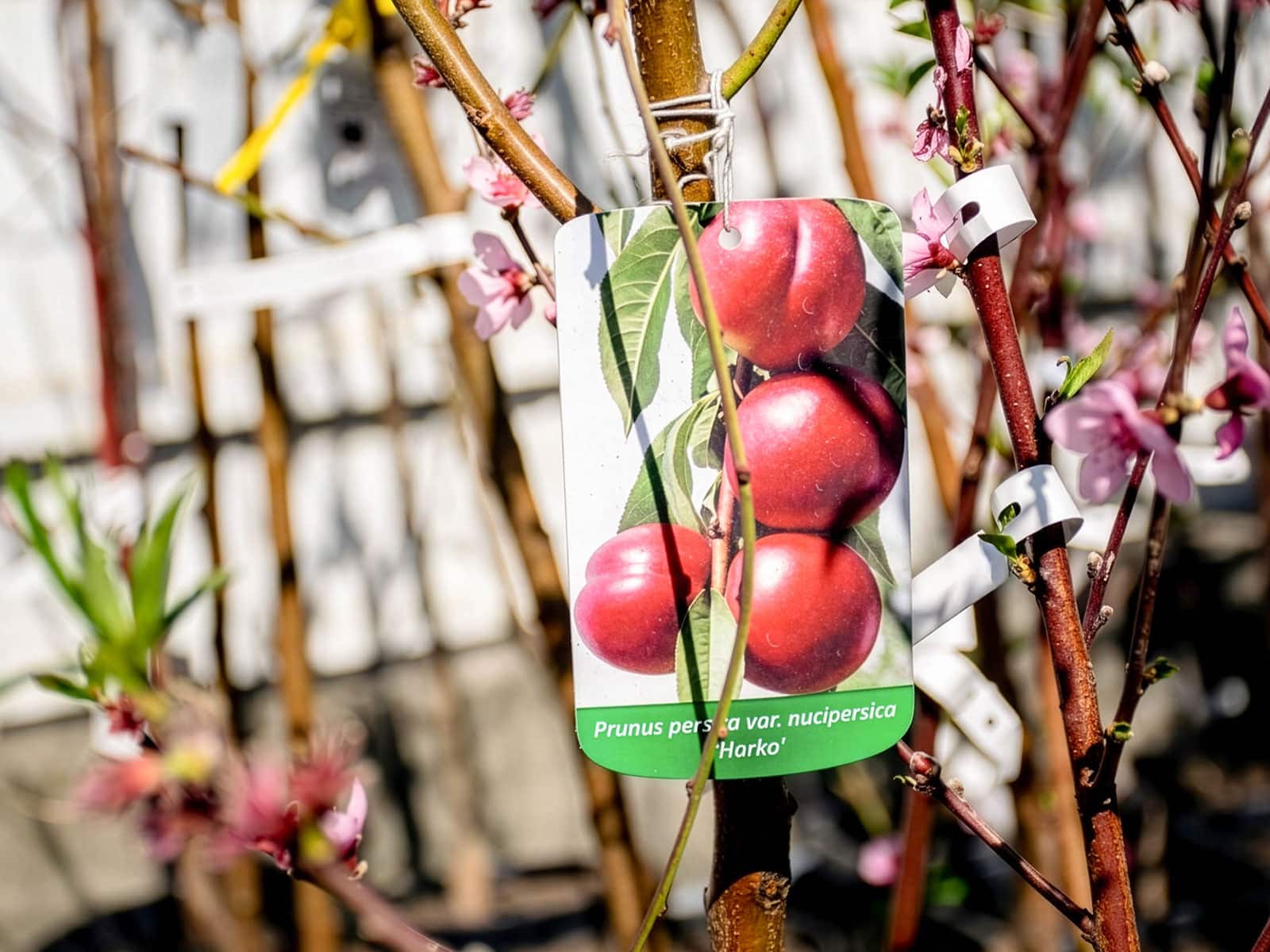
In the middle are the stone fruits that cover the widest range: peaches, nectarines, plums, and apricots. Peaches are the extreme example, with varieties needing anywhere from about 50 hours to 1,400 hours. That’s why “Can I grow a peach here?” almost always has the same answer: yes, but which peach?
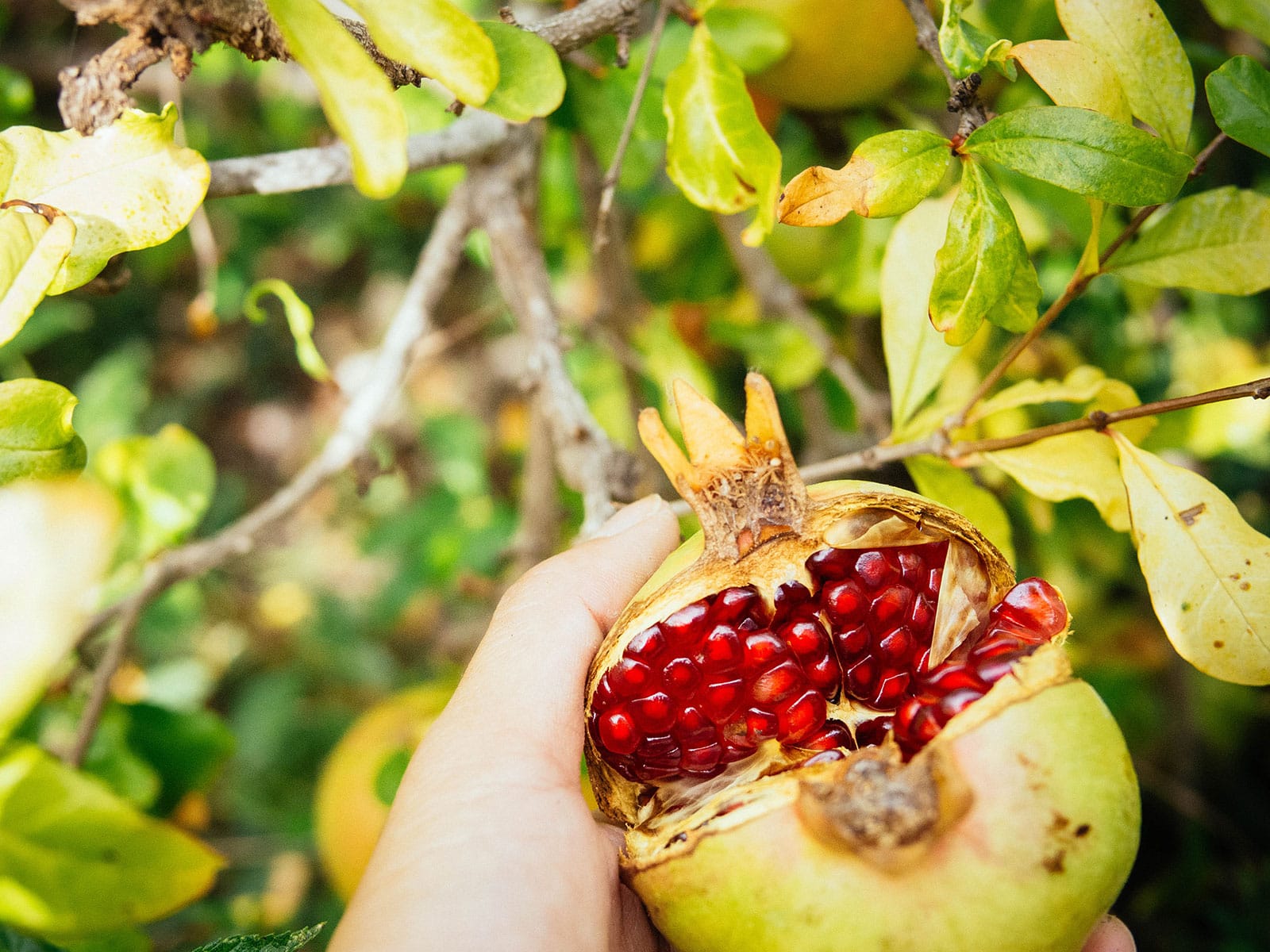
At the low end, you’ll find figs, persimmons, and pomegranates, which get by on a few hundred hours or less. Pomegranates are a special case. Most varieties don’t need winter chill at all, and the University of Georgia says nobody can pin down a minimum for them yet. Blueberries (shrubs, but they follow the same rules) split by type, with southern highbush and rabbiteye on the low-to-moderate side and northern highbush much higher.
Then there’s citrus, which doesn’t play this game. Lemons, oranges, and their relatives are evergreen and don’t go dormant the way deciduous trees do, so they need little to no chill. Their limit is frost, not cold hours.
One thing to keep in mind is breeders have spent decades creating low-chill versions of high-chill fruits for warm-winter growers. So the fruit type gives you a ballpark, but the variety is what decides it. That’s why my tool sorts by variety and not by fruit.
What happens if a tree gets too few chill hours?
A tree that comes up short on chill wakes up groggy: late, uneven, and half-hearted. The buds never fully get the “winter’s over” signal, so the tree stumbles into spring instead of bursting into it.
The classic signs include:
- Delayed leaf-out: The tree sits bare well into spring, sometimes with little tufts of leaves at the branch tips and nothing below them for a foot or more.
- Late, stretched-out bloom: Instead of one big flush of flowers, you get a few here and a few there over weeks, which makes pollination spotty.
- Poor fruit set: Fewer flowers turn into fruit, and some drop early.
- Lower-quality fruit: Even the fruit that does form can come out smaller, misshapen, or soft.
The good news is one short winter usually only means a disappointing year (and not a dead tree). The bad news is that a tree planted where it falls short most years will keep having disappointing years, and stressed, slow-to-leaf trees are weaker trees. There’s no pruning trick or fertilizer that makes up for it, so always make sure you plant a suitable variety for your area.
Subscribe to Garden Betty
Sign up to get my free weekly emails and I’ll teach you how to keep your plants alive, maximize your garden bounty, and preserve the harvest.
What if a tree gets more chill hours than it needs?
Extra chill doesn’t hurt a tree by itself. Once the requirement is met, more cold is just more cold, and some research suggests a long, chilly winter can even mean a stronger bloom.
The trouble is timing. Picture a low-chill peach that needs 300 hours planted somewhere that gets 1,500. That tree’s timer dings sometime in early winter. From then on, the only thing holding it back is the weather.
A sunny week in February? Bloom. Then the cold snaps back, and the flowers (and your crop) are gone. So the risk with a low-chill tree in a cold place isn’t too much chill, it’s an early wake-up call followed by frost.
That said, a low chill number alone doesn’t doom a tree in a cold climate. How fast a tree blooms after its chill is met depends on how much spring warmth it needs, and that varies by variety too. Some of the most cold-hardy fruit varieties have surprisingly low chill requirements, but they stay put because they need a lot of heat before they’ll bloom.
Unfortunately, nursery tags rarely list that heat requirement, and my tool doesn’t know it either. What you’ll see instead are bloom-time descriptions like “late blooming,” and in a frosty climate, that’s what you need to look for.
Disclosure: If you shop from my article or make a purchase through one of my links, I may receive commissions on some of the products I recommend.
Where to buy fruit trees
The trick to choosing fruit trees for your area
My advice is to play it safe and pick varieties whose chill needs sit comfortably below what your area gets in a mild winter, and plant a few with different needs so no single winter wipes you out.
Run the bad-winter test
I call it the bad-winter test: if this winter turns out mild, will this tree still get enough cold? That’s why “Reliable here” is built into my tool.
Every year, winters are getting milder in a lot of fruit-growing places. A fruit tree you plant this spring could be producing for the next 20 or 30 years, so it makes sense to plan for the winters it’ll live through, not the ones your grandparents had. That’s also why I’d lean on the recent number over the typical one.
Spread your bets
No winter is average. If every tree in your yard needs the same amount of chill, one warm year can leave all of them bare at once. So mix it up: a couple of varieties well under your number, maybe one closer to the edge.
In a mild year, the low-chill trees won’t fail you while in a cold year, everything fruits. If you can, mix bloom times as well (early, mid, and late), so one frosty night can’t take out every flower in the yard.
Don’t forget to consider bloom time and growing season
If you live in a place that gets late frosts, a tree with compatible chill hours might not work if it tends to bloom early. If you live in a place with a short growing season, you’ll want to pay special attention to ripening time, as a late-ripening variety may run out of summer before it’s harvestable.
Read more: Check when the last frost is for your area with my other tool
Chill hours vs. USDA hardiness zones
Chill hours are not the same thing as hardiness zones, which only tell you whether a tree can survive your coldest night. Zones are averages, so a cold snap can still dip below your zone’s range. A zip code can span more than one zone, and the tool shows the one for the zip’s center. If you live in a tricky area with wide temperature swings, I recommend going one zone colder, just in case.

Not all chill hour estimates are the same
If you look up your chill hours somewhere else and get a different number than mine, neither one is necessarily wrong. Different sources simply count chill in different ways.
Some count every hour at or below 45°F, like my tool does (and like most nursery tags). Others skip any hours below freezing, figuring a frozen bud isn’t doing much. Some start counting in October instead of November. And researchers have newer methods that give certain temperatures more credit than others, which produces a number on a different scale entirely.
In mild-winter areas, these differences barely change the total. In cold climates, they can add up to hundreds of hours, but nearly every tree gets enough chill there no matter how you count it. The weather data also has its limits. In mild-winter valleys, these estimates tend to run low.
The chill hours listed for each variety are estimates as well. When sources disagreed, I went with the higher number so the tool errs on the side of caution. And if you see citrus, avocado, banana, or other tropicals listed at 1 hour, that’s only because the tool can’t display zero. They don’t need chill hours at all and their limitation is frost.