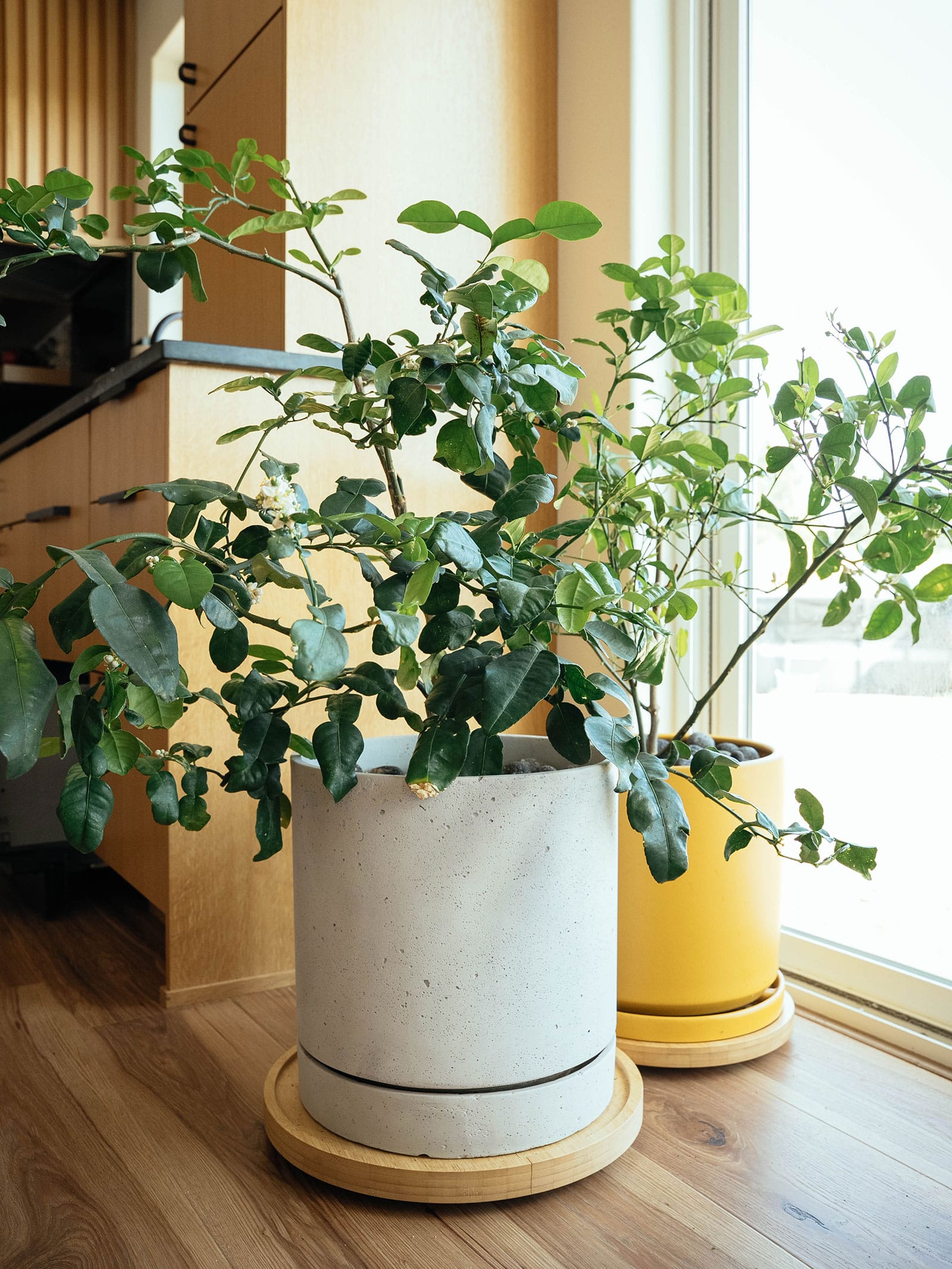
I spent more than a decade on the Southern California coast surrounded by beautiful citrus trees of all kinds in my yard. So when I moved to the Central Oregon high desert, I knew I had to bring my favorites with me—nearly 1,000 miles north. A few of my potted citrus are older than my kids!
Citrus, of course, can’t survive winters in our zone 5 microclimate. (They can’t even make it through our chilly fall nights.) Citrus is hardy to zones 10 and above, which means anyone living anywhere else has to move their trees indoors in fall. I call this seasonal shuffle the “transition”—a couple weeks of acclimating my potted citrus to indoor life again.
Disclosure: If you shop from my article or make a purchase through one of my links, I may receive commissions on some of the products I recommend.
When to start
For zones 7 and below, the transition starts around early to mid-October, while zones 8 to 9 should bring their citrus in between mid-October to mid-November.
If you’re one of us—the people who have to overwinter their beloved citrus every year—this is one task you can’t put off on your fall gardening checklist. Start watching the forecasts and transitioning your tree as soon as temperatures consistently hover around 40°F to 50°F (and definitely before the first frost in your area).
Some varieties of citrus are more cold-sensitive than others. They can usually handle 25°F to 32°F for brief periods but key limes, for instance, sulk if it gets below 32°F. If it’s colder than 32°F for more than a few hours at night, you may very well lose your key lime tree.
Prepare your citrus
Going from bright outdoor sun to a more dimly-lit home is a big shift for any plant, so get your citrus tree used to lower light levels well ahead of when you have to bring it in. Move it from that sunny spot to a covered porch or a shadier location against your house, for example, or hang shade cloth over your tree.

This is what my setup looks like in early fall: all my citrus in their containers, grouped together under a piece of 40 percent shade cloth clipped between two chairs. Nothing fancy, but it works!
Where to buy
After about two weeks, your citrus tree is almost ready to come inside. But first…
Check for insects
I like to spray my citrus thoroughly with water and let it drip dry for a day or two. Spray the tops and undersides of the leaves as well as the trunk to remove dust and any bugs that may be hiding on the tree.


Check the soil, especially around the base of the trunk, for any bugs you may have missed. (Aphids and scale are very common on citrus.) If you spot any hitchhikers, pick them off and treat the tree with insecticidal soap.
(Here’s how to make your own insecticidal soap with just two ingredients.)
Subscribe to Garden Betty
Sign up to get my free weekly emails and I’ll teach you how to keep your plants alive, maximize your garden bounty, and preserve the harvest.
Bring your citrus indoors
Citrus trees like lots of sun, and this is even more important in winter when we get fewer daylight hours and the sun is lower on the horizon. So find a spot in your house that gets the most sun exposure, ideally eight hours or more a day.

If you don’t have a sunny window for your potted citrus to sit in front of for the next few months, consider adding a full-spectrum LED grow light. It’s an inexpensive investment that will keep your tree much healthier through winter.
Where to buy
Everbearing citrus (like lemons, limes, and calamondin/calamansi) can bloom year-round and fall is one of their peak seasons. Without sufficient light, these trees won’t flower or fruit indoors. The smell of citrus blossoms in the house is heavenly, so you don’t want to miss out on that!

Maintain the right temperature and humidity
Generally, any ambient room temperature that you feel comfortable in (without a coat) will be comfortable for your citrus. So even if your only sunny spot is, say, a bright mudroom or sunroom that stays around 50°F, your citrus should be fine—though its sweet spot is 60°F to 65°F.
Temperature is actually less of a problem than (lack of) humidity is. In winter, our heating systems eat up humidity, and the warm air blowing through our homes dries the air considerably.
Citrus trees like a range of 50 to 60 percent relative humidity, and this is especially important if the plants are in bloom. If it’s too dry in your home, your citrus won’t hold on to their blossoms.

I’ve seen many suggestions over the years on how to increase humidity for plants in winter, so I’ll say this: The only thing that works is turning on a $40 humidifier for a few hours a day, which surprisingly makes a big difference in winter.
Things that don’t work and are actually myths:
- Misting your plants
- Drying laundry near your plants
- Boiling a pot of water (it needs to be big and wide and has to simmer all day)
- Pebble trays
None of these methods provide the consistent humidity that keeps citrus trees happy. Some (like misting your plants) only raise humidity as long as there’s water on the leaves—so unless you want to hang around your tree all day with a spray bottle, this often-cited trick is a no-go (and may even cause fungal issues).
The easiest solution is to run an ultrasonic humidifier near your citrus, which also helps other tropical plants you might be overwintering.
Where to buy
Other (less effective) options include grouping your plants to raise humidity or moving your plants to the bathroom, which can help a bit if you love to take long, hot showers. (But then you can’t look at them the rest of the time, and you still need a strong light source in the bathroom.)
Winter care
For the most part, potted citrus are pretty low-maintenance in winter (aside from their humidity requirements).
They don’t need to be watered more than once a week, and before you do that, always check that the first 2 inches of soil are dry first. (Many people tend to overwater indoors.) They don’t need to be fertilized until late winter, just before their next bloom and when you’re ready to move them back outside.

Indoor citrus trees do sometimes suffer from pests, especially when they’re stressed from too little light or not enough humidity.
- Fungus gnats usually result from overwatering. As soon as you see the first signs of fungus gnats, back off with the watering and follow my guide on how to get rid of gnats.
- Spider mites cause stippling (tiny white or yellow spots) on leaves as they feed. See my guide here on dealing with spider mites.
- Scale insects (like mealybugs) may appear in winter, particularly if your other houseplants are infested with them. You can treat mealybugs using these non-toxic methods.
Frequently asked questions