Fall garden cleanup comes with a long to-do list: pull the stakes, coil the hoses, stash the tomato cages, and put the beds to bed for winter. Most cleanup checklists also tell you to yank every spent plant out of the ground, roots and all, and give the root ball a few good whacks against the side of the bed to knock the dirt off.
That’s the one task I happily skip.
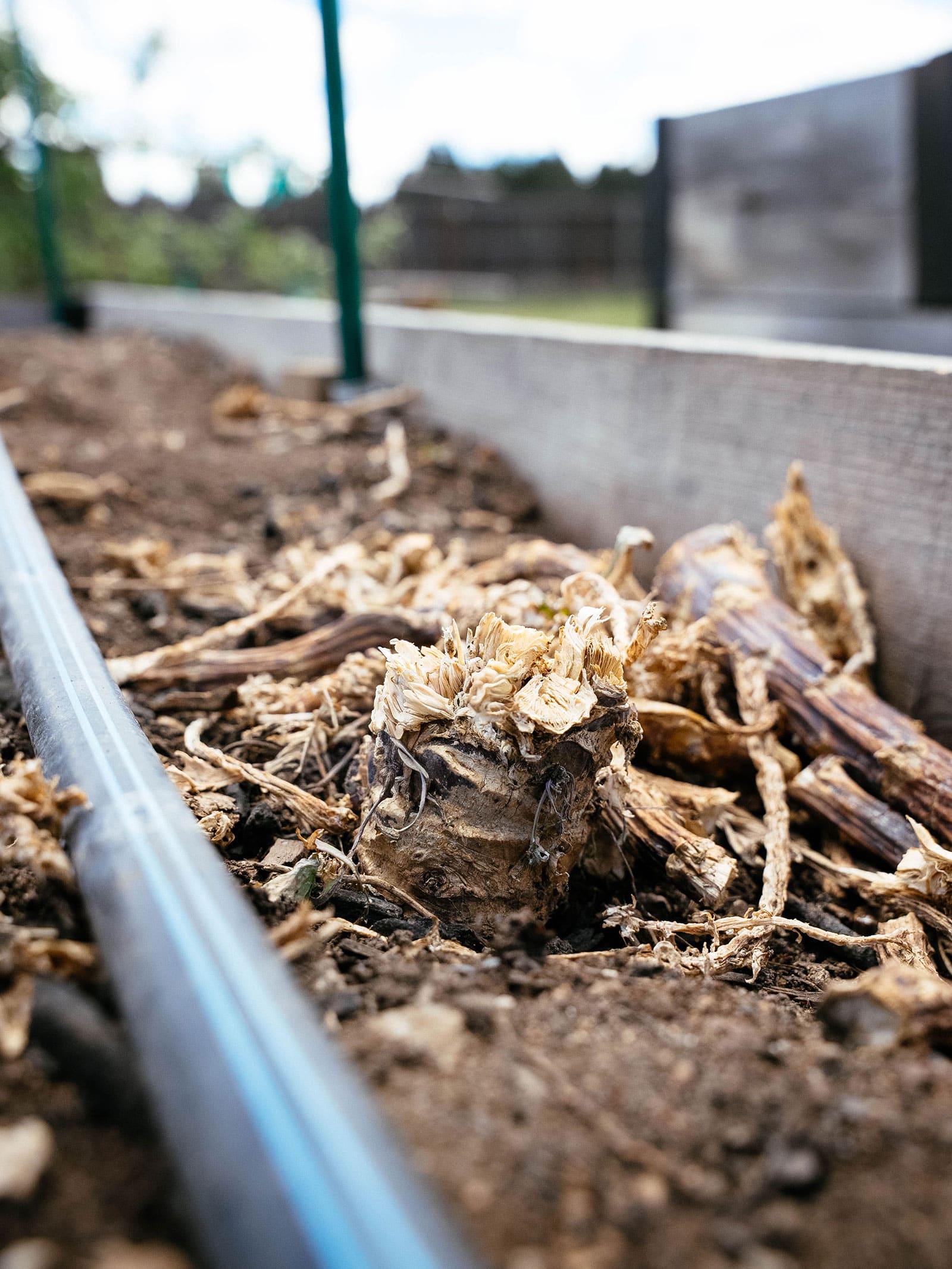
When my tomatoes, squash, beans, and zinnias are done for the year, I cut them off at the soil line and leave their roots exactly where they grew. No digging, no shaking, no wheelbarrow full of root balls headed for the compost pile. (And no sore back the next morning, which is its own reward.)
This isn’t a fall-only habit, either. Any time an annual plant finishes up—a row of bolted lettuce in June, the last of the spring peas in July, a bush bean patch you’re clearing for fall brassicas—you can cut it and leave the roots behind. The same rules apply year-round, to pretty much every annual flower and vegetable you grow.

Here’s why those old roots are worth more in the ground than in your compost bin, plus the two situations where they really should come out.
What’s so special about plant roots?
A spent root system is free organic matter, already buried exactly where your soil needs it. You couldn’t work compost that deep into a bed without a shovel and a lot of sweat—but a single tomato plant has already threaded its roots through the top couple of feet of soil all summer long.
And root matter sticks around longer than you’d think. Soil scientists have found that roots contribute more to long-lasting soil organic matter than the leaves and stems above them.

In one study of hairy vetch (a common cover crop), researchers tracked where the plant’s carbon ended up: nearly half of what came from the roots stayed in the soil, compared with only 13 percent of what came from the shoots. Roots break down underground, pressed right up against soil particles and the microbes that process them, so more of that carbon gets locked into the soil instead of drifting off into the air.
Roots feed your soil microbes
While a plant is alive, its roots leak a steady stream of sugars, amino acids, and other compounds called root exudates. (Think of them as the plant paying rent to the microbes that help it find water and nutrients.) The thin zone of soil hugging the roots, called the rhizosphere, is one of the busiest places on the planet, packed with bacteria, fungi, and the tiny critters that eat them.
When the plant dies, the whole root system becomes the next meal. Bacteria and fungi break it down, then nematodes, mites, and earthworms eat those bacteria and fungi, and every step of that food chain releases nutrients in a form your next crop can use.
Along the way, the microbes produce sticky byproducts that glue soil particles into crumbs, or aggregates. That crumbly structure is what lets water soak in instead of running off, and gives roots room to breathe.

Then there are the tunnels. As old roots rot away, they leave behind a network of empty channels—ready-made highways for air, water, earthworms, and next season’s roots. It’s like plumbing you didn’t have to install.
Less digging means healthier soil
Yanking out a root ball is a mini tilling session. It tears through the soil structure your plants spent all season building, and it rips apart the fine fungal threads of mycorrhizal fungi, which partner with most garden plants to extend their reach for water and phosphorus. Those threads, called hyphae, also produce a gluey protein that helps hold soil aggregates together.
Research on tillage shows that breaking up the soil physically severs these hyphae, and fall disturbance is especially hard on them, since the fungi have no living plant to regrow from until spring.
Disturbing the soil also drags buried weed seeds up to the surface, where light tells them it’s time to sprout. Every root ball you pull is basically a weed-planting service for next year. (Plus, it takes a little of your best topsoil with it, no matter how hard you shake.)
Did you know?
Leaving bean and pea roots in the ground won’t give your soil the nitrogen boost you’ve probably heard about—unless you grow them as cover crops. If you grew legumes to harvest the pods, most of the plants’ stored nitrogen went to their seeds. The roots are still great organic matter—just don’t count on them as fertilizer.
Related: How to cover crop with fava beans and field peas
What to do instead of ripping roots out of the ground
I call it cut, drop, and top. It takes less time than pulling plants, and you’ll never wrestle a stubborn root ball again.

- Cut: Snip each plant at the soil line with a pair of pruners. For thick stalks like sunflowers, corn, and overgrown kale, grab loppers or a hori-hori (a Japanese soil knife). Cut just below the surface for anything that might resprout from its base, like kale, chard, and other biennials.
- Drop: Chop the spent foliage into pieces about 6 to 12 inches long and lay them right back on the bed as mulch. That layer shields bare soil from pounding rain, insulates it through freeze-thaw cycles, and gives earthworms something to pull underground all winter.
- Top: If you’re replanting right away, or you just want a tidier bed come spring, spread 1 to 2 inches of finished compost over everything. It hides the stumps, covers the mulch, and gives your next crop a fresh, fine surface to grow into.
That’s it! The roots stay put and gradually turn into soil while you do something more fun with your weekend.
Quick tip
When it’s time to plant, set new transplants a few inches to the side of any old stumps instead of directly on top of them. If a root is in your way (tomato stumps can be stubborn), slice straight down through it with a hori-hori and plant into the gap. Seeds sown in rows don’t mind old roots at all.
One caveat before you start cutting: this method is for healthy plants. If a plant spent the season fighting off a disease or a pest infestation, a couple of extra steps keep those problems from following you into next year.
Subscribe to Garden Betty
Sign up to get my free weekly emails and I’ll teach you how to keep your plants alive, maximize your garden bounty, and preserve the harvest.
What about diseased plants?
Whether the roots stay or go depends on where the disease lives. Most garden diseases fall into one of two camps:
Leaf and stem diseases like early blight, Septoria leaf spot, powdery mildew, and downy mildew spend the winter on infected plant debris, then splash back onto new plants with the first spring rains. For these, cut the plant at the soil line as usual, but bag up all the foliage, stems, and fallen leaves and send them out with the trash.

Don’t use them as mulch, and don’t toss them in your compost bin. Most backyard piles don’t stay hot enough, long enough, all the way through to destroy plant pathogens. The roots of these plants can generally stay in the ground, since the disease was living up top.
Root and soilborne diseases are the exception to the leave-the-roots rule. Clubroot, which swells the roots of brassicas into knobby, distorted lumps, is the classic example. Fusarium wilt and Verticillium wilt (fungi that invade through the roots and clog the plant’s water-conducting tissue) belong here too. For these, dig the roots out, get as much of the root system as you can, and put it in the trash.

Clubroot galls are worth the extra effort: as they rot, each one releases millions of long-lived spores back into the soil. According to Oregon State University Extension, most of those spores die within 5 to 7 years, but some can hang on for up to 20.
Then, clean your tools before moving to another bed so you’re not carrying contaminated soil along with you.
Rotate by plant family, not just by plant
After a disease problem, keep that crop out of the bed for at least three years (five or more for clubroot). The catch is that “that crop” means its entire plant family, because related plants share the same diseases. If your tomatoes had Fusarium wilt, the bed is off-limits to peppers, eggplants, and potatoes, too.
- Nightshades: Tomatoes, peppers, eggplants, potatoes, and tomatillos
- Brassicas: Broccoli, cabbage, kale, cauliflower, Brussels sprouts, turnips, radishes, and arugula
- Cucurbits: Cucumbers, squash, zucchini, pumpkins, and melons
Verticillium is a sneaky one, since it also infects strawberries. A bed where Verticillium-infected tomatoes or potatoes grew isn’t a good spot for a new strawberry patch.
And if a soilborne disease keeps coming back, look for resistant varieties. On tomato seed packets and plant tags, the letters after the variety name tell you what it resists: V for Verticillium, F for Fusarium, and N for root-knot nematodes.
Read more: A regular person’s guide to common seed abbreviations
What about plants that had tons of pests?
Ask yourself one question: where does this pest spend the winter? The answer tells you exactly what to clean up, and it’s rarely the roots.
Pests that overwinter in plant debris: Squash bugs are the poster child here. The adults hunker down under old vines, dead leaves, and anything else that gives them shelter, then emerge in spring ready to mate. Flea beetles pull a similar trick in leaf litter.

If either one plagued your garden, cut the plants at the soil line and bag up every bit of the foliage instead of leaving it as mulch. The roots can stay since that’s not where the bugs are.
Pests that overwinter in the soil: Squash vine borers spend the winter as cocoons an inch or two underground, and Colorado potato beetle adults burrow into the soil near last year’s potato patch. By the time you’re cleaning up, these pests have already left the plant, so pulling the roots does nothing except disturb your soil.

Your better bet is to move those crops to a different bed next year and cover young plants with floating row cover until they flower. (Squash needs pollinators, so uncover it once the blossoms open.)
Pests that live in the roots: Root-knot nematodes are the one pest that earns a root-pulling. These microscopic worms cause beadlike swellings on the roots of tomatoes, chard, carrots, beans, and plenty of other crops. (They’re easy to confuse with clubroot galls on brassicas, so take a close look.) Dig out the infested roots and trash them, then plant nematode-resistant varieties in that spot next season.
Read next: The main causes of carrot deformities

There’s another reason not to clear-cut the whole garden at the first sign of bugs: that same debris shelters ground beetles, spiders, and other predators that keep pests in check. Unless a debris-loving pest gave you serious trouble this year, leave the mulch where it is and let the good guys move in for the winter.
The next time you’re tempted to tug a spent plant out by its stem, reach for your pruners instead. Cut it, drop it, top it, and let those old roots keep feeding your soil long after the harvest is over.